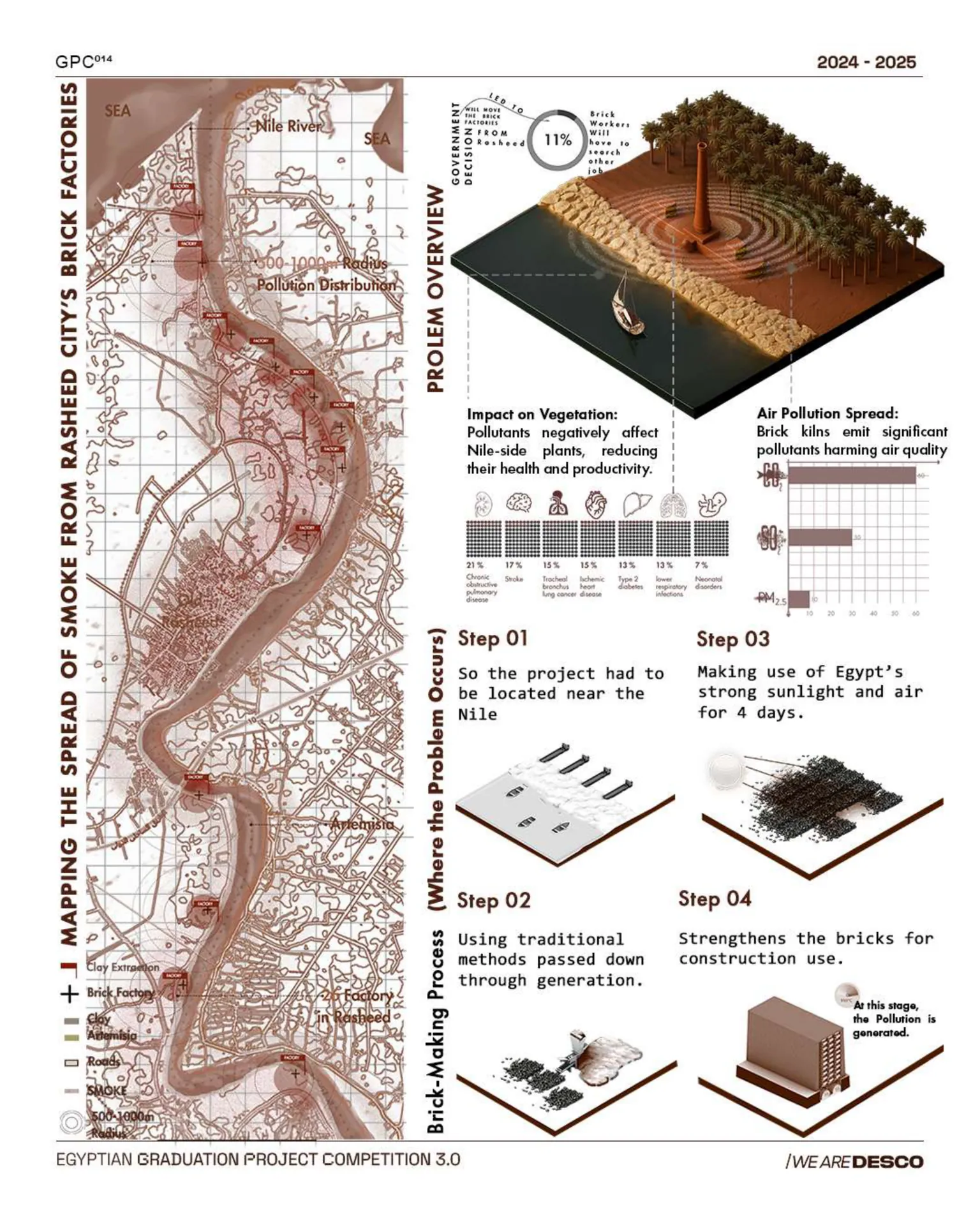
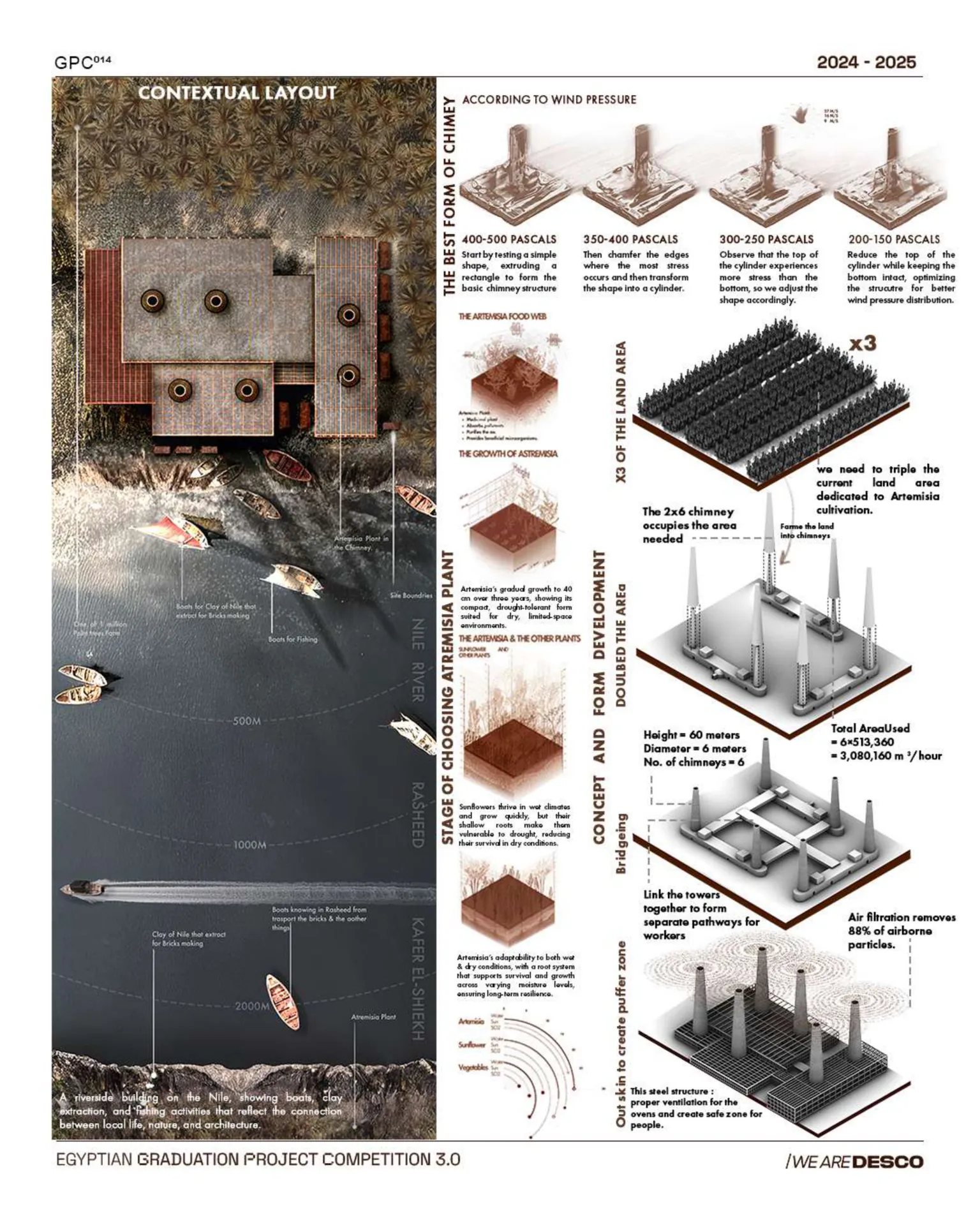
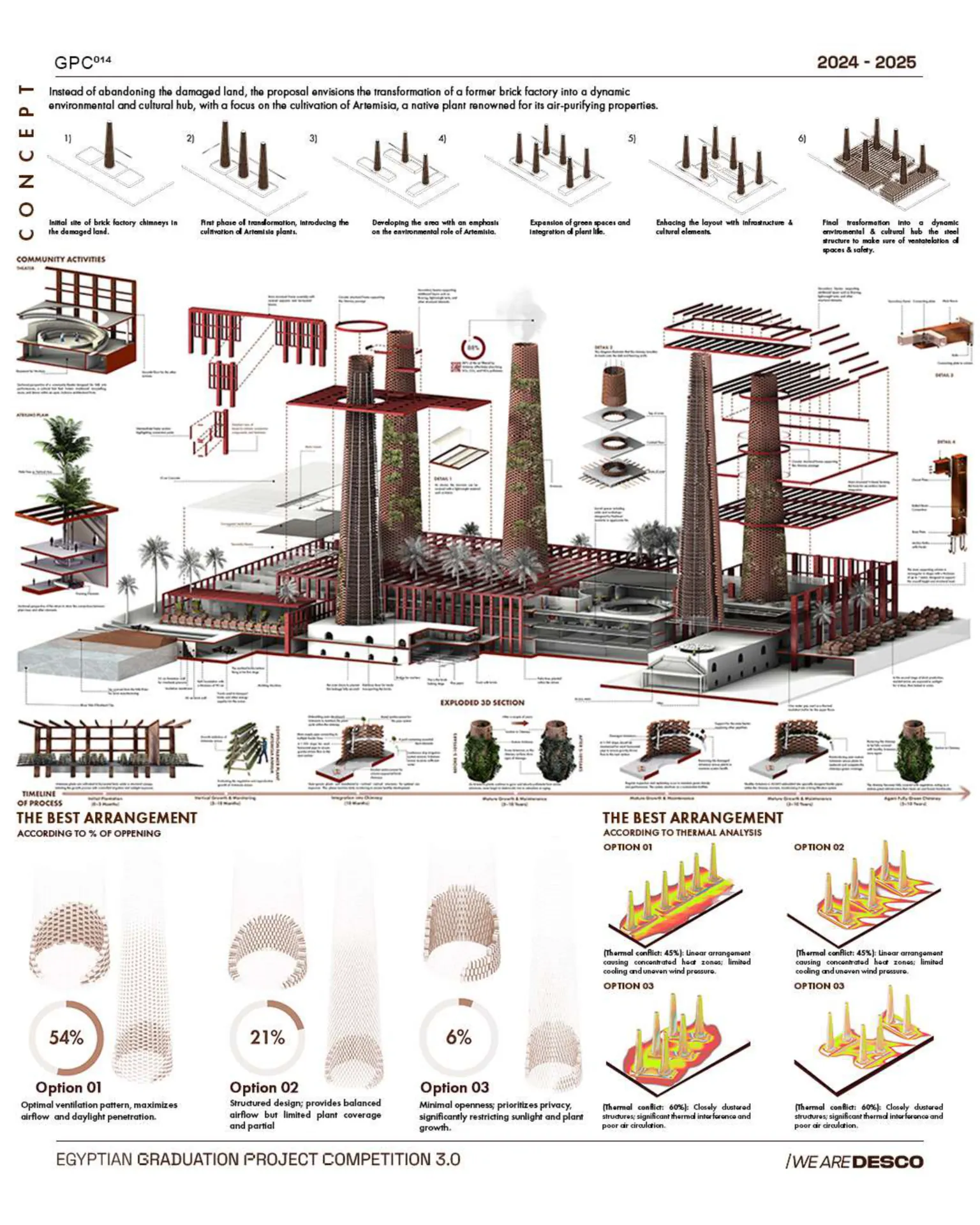
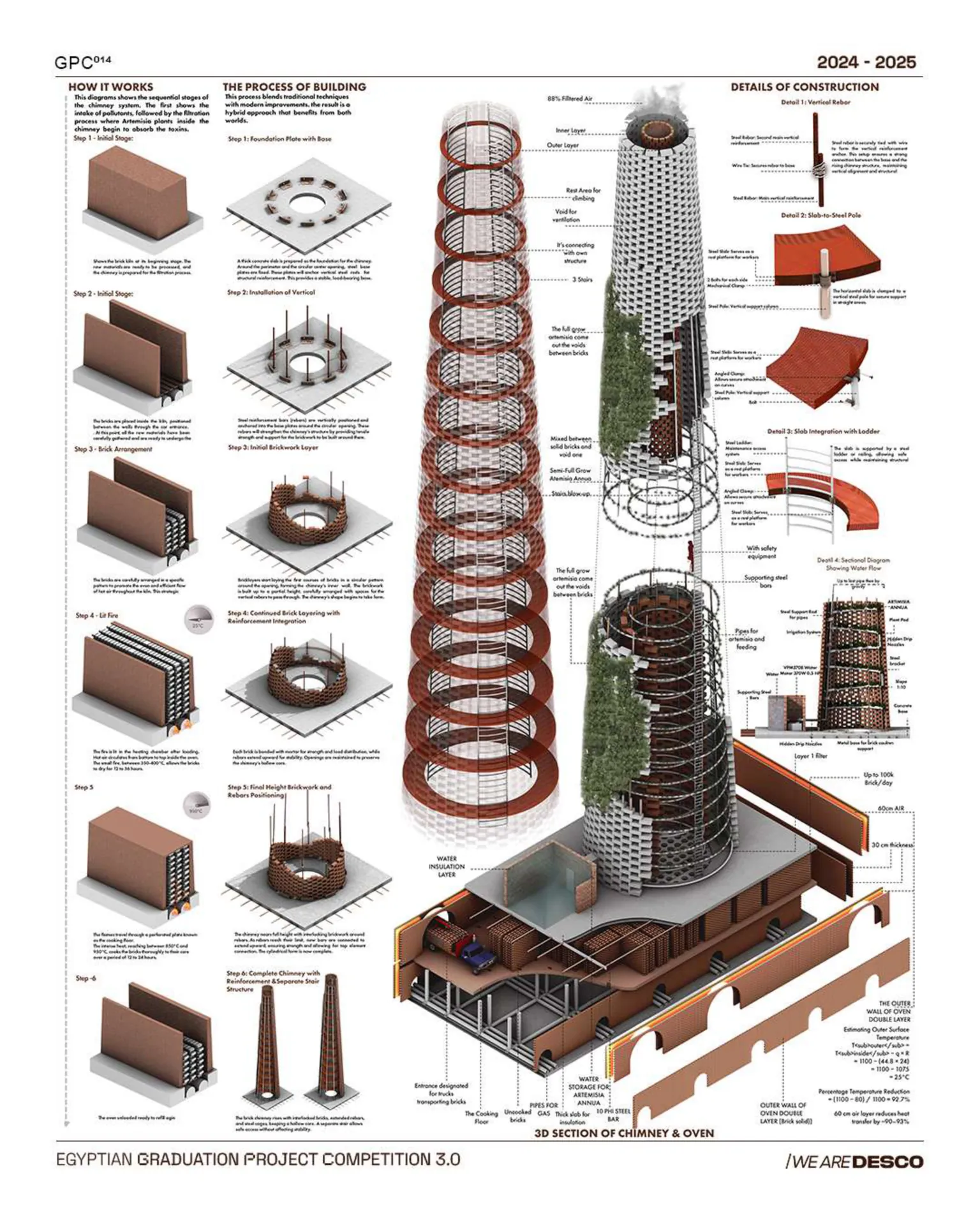
2024 - 2025

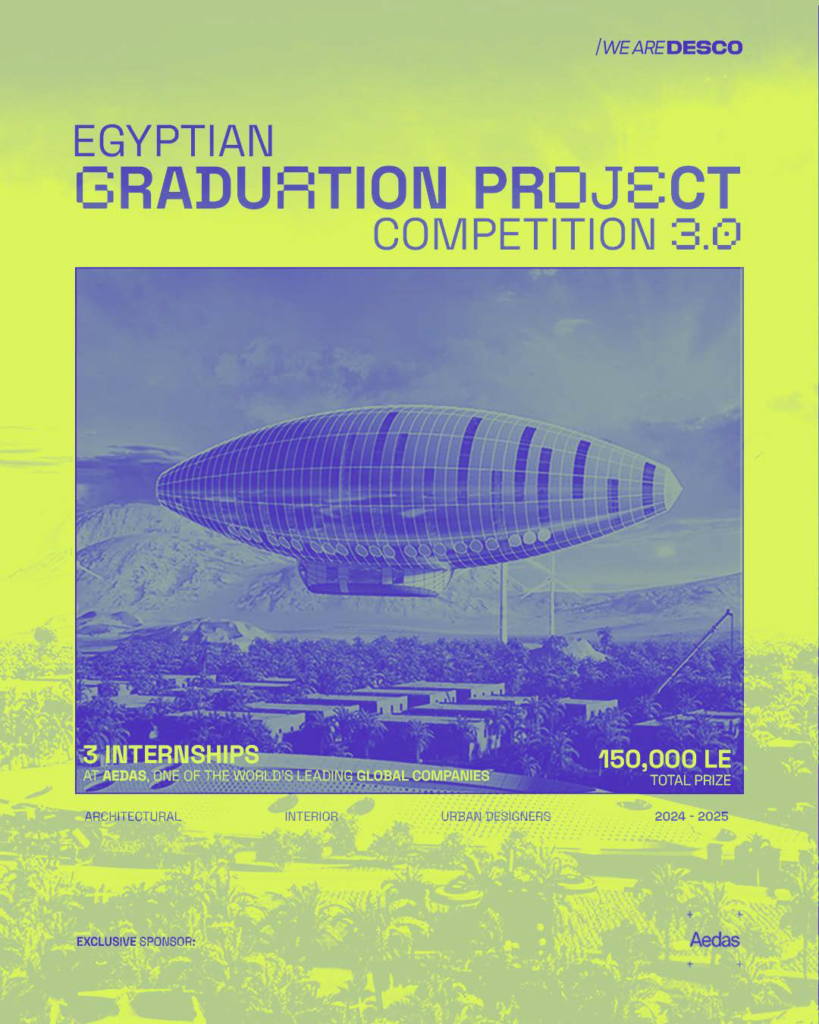
Egyptian Graduation Project Competition 3.0

Exclusive Sponsor: Aedas
Graduation Project Competition 3.0_Cover
Brief

The Competition is designed to spotlight the creativity, innovation, and talent of young Egyptian architecture graduates. This initiative aims to bridge the gap between the academic and professional worlds, offering students the recognition, exposure, and career opportunities they truly deserve.

BRIDGING THE GAP
Designed to support young architects as they move from academia into the professional world, creating a bridge between graduation and real industry opportunities.
SHOWCASE YOUR TALENT
Present your graduation project to industry leaders, leading firms, and the wider public, highlighting your creativity, innovation, and design problem-solving skills.
INNOVATION & CREATIVITY
Shaping the future of design in Egypt by contributing bold, forward-thinking ideas that inspire and elevate the national design discourse.
STEP INTO OPPORTUNITY
Gain valuable exposure, connect with leading architecture professionals, and open doors to internships, industry connections, and future career opportunities.
Jury

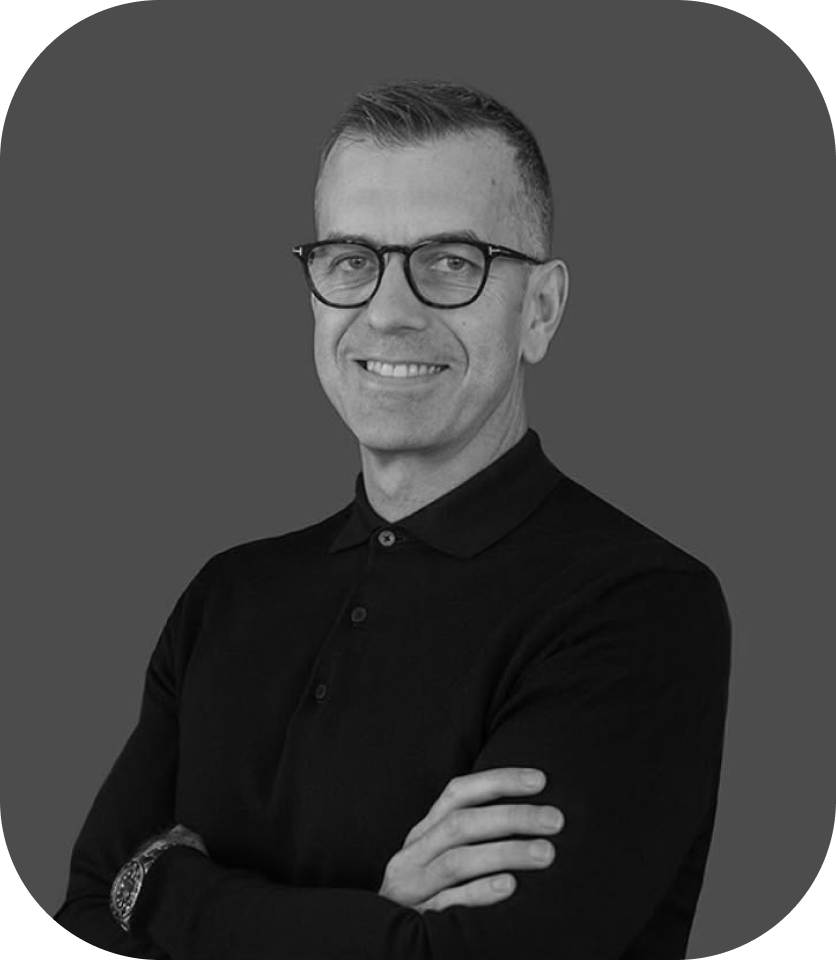
Jury Members.

Christopher Waite
Christopher Waite
Ignacio Gomez
Ignacio Gomez
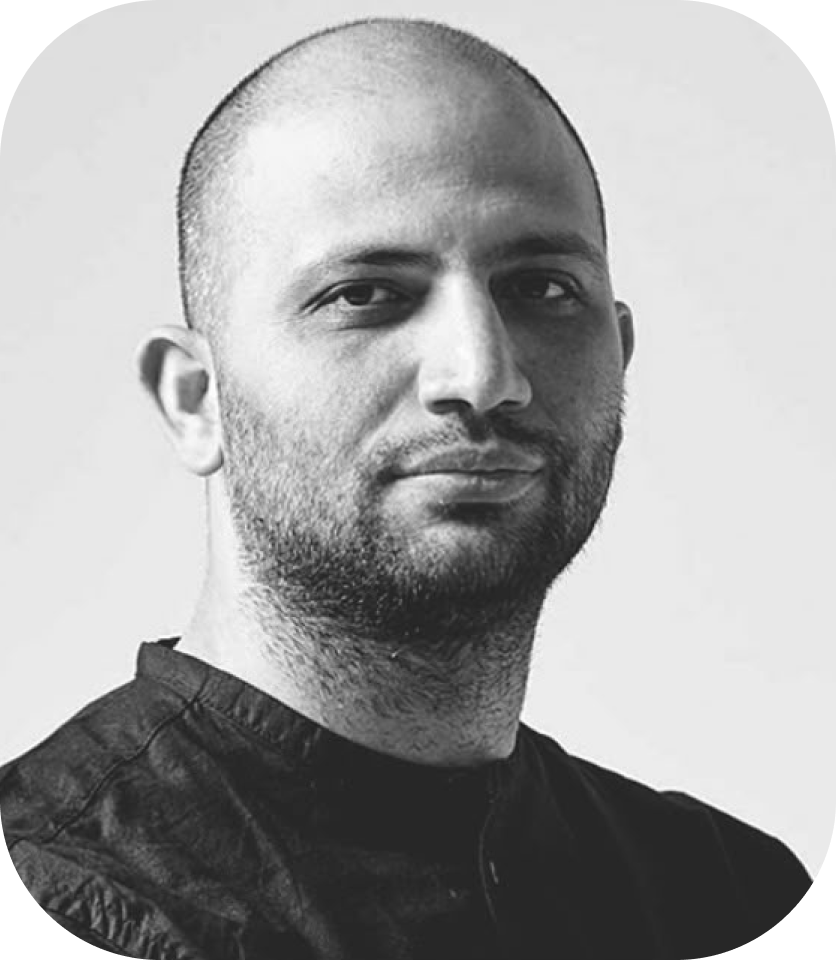
Islam El Mashtooly
Islam El Mashtooly
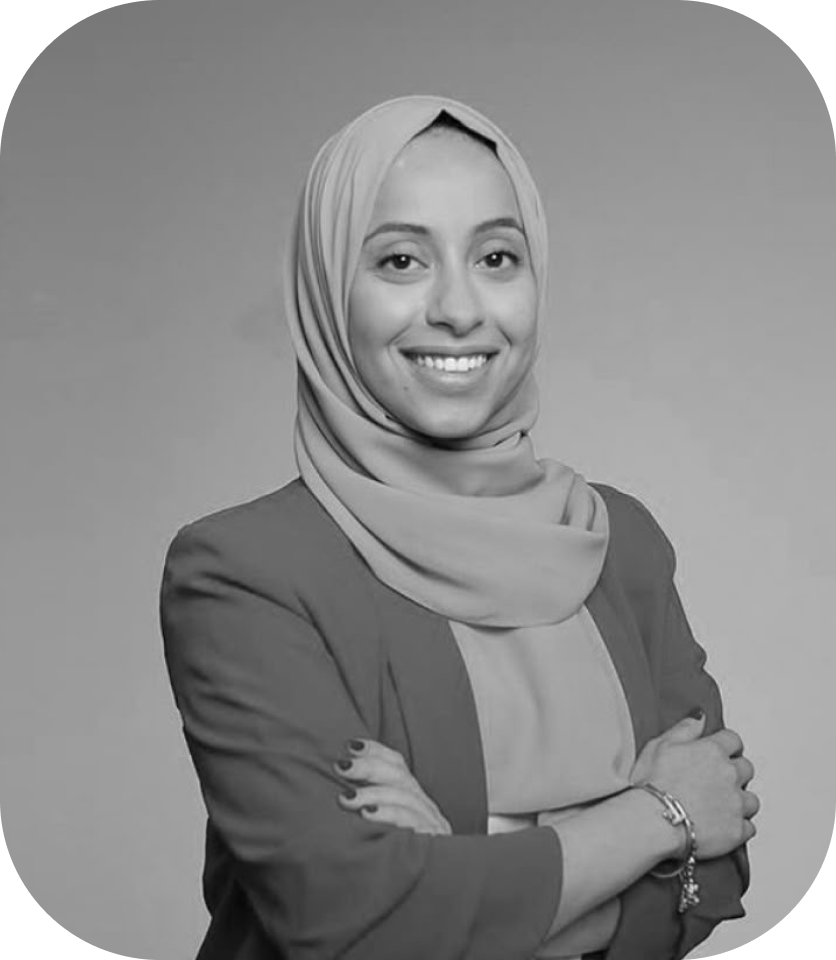
Khadije Hamad
Khadije Hamad
Nada El Emam
Nada El Emam
Winners
First Prize Winner
Soad Shahin
Cairo University
Project Brief
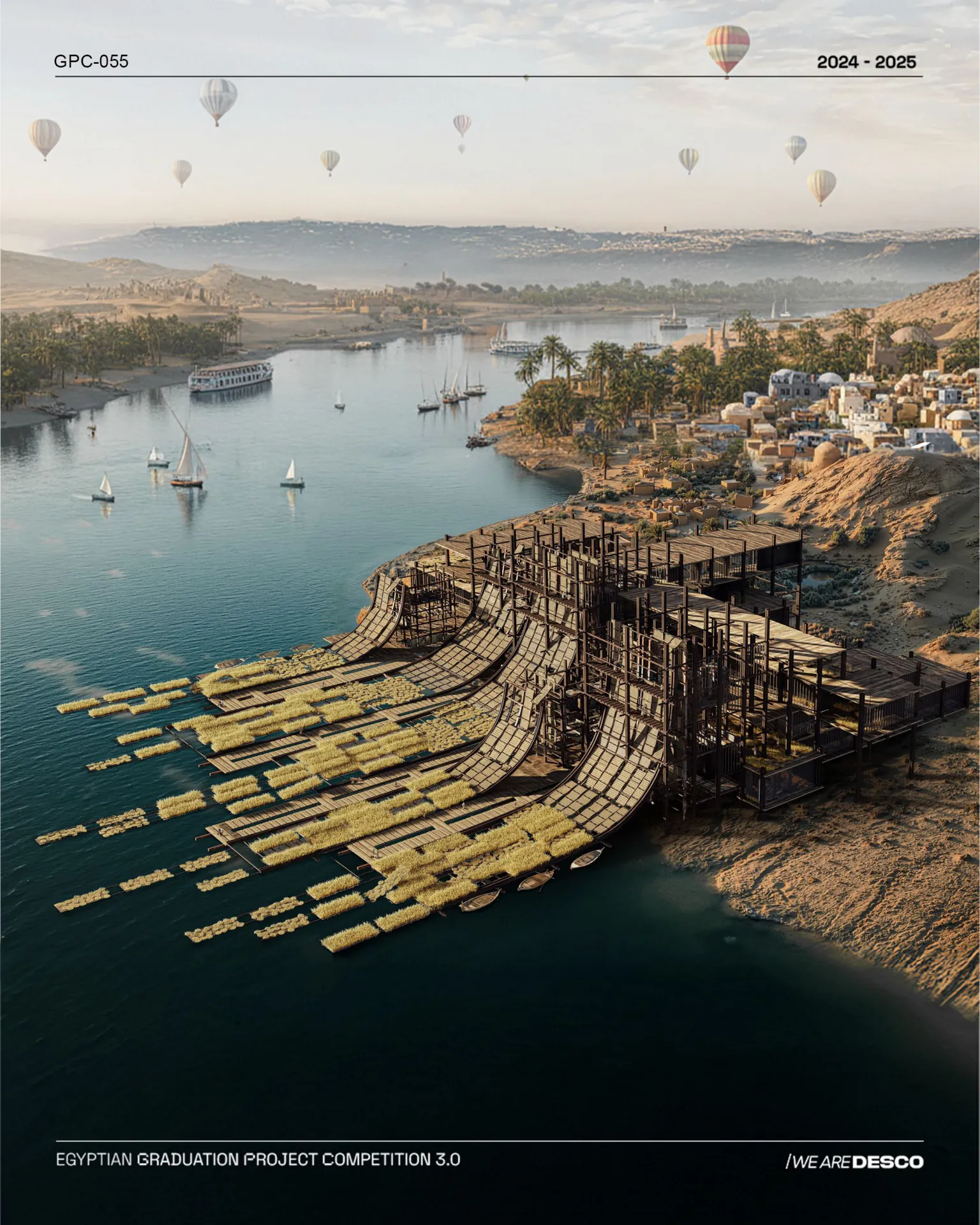
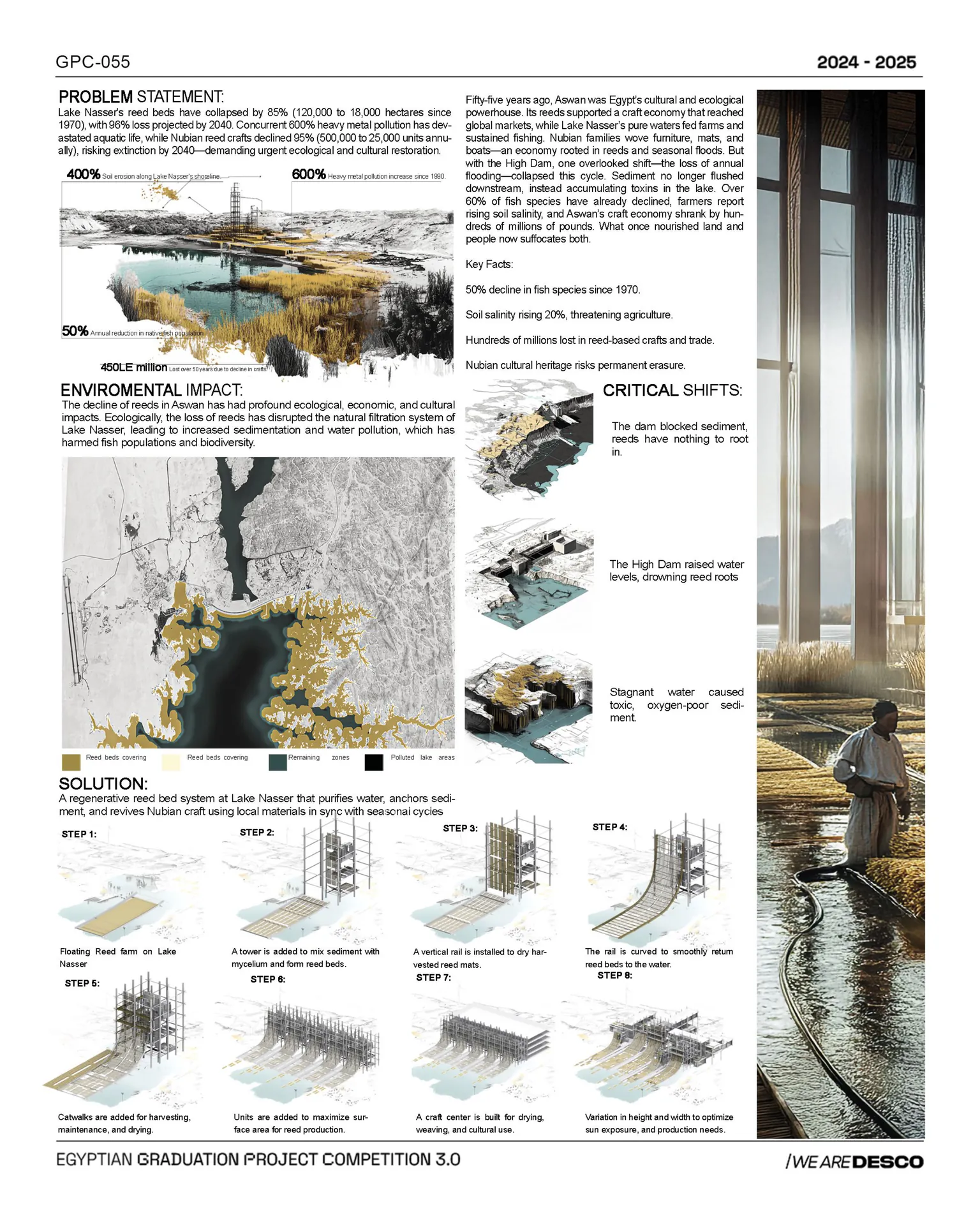
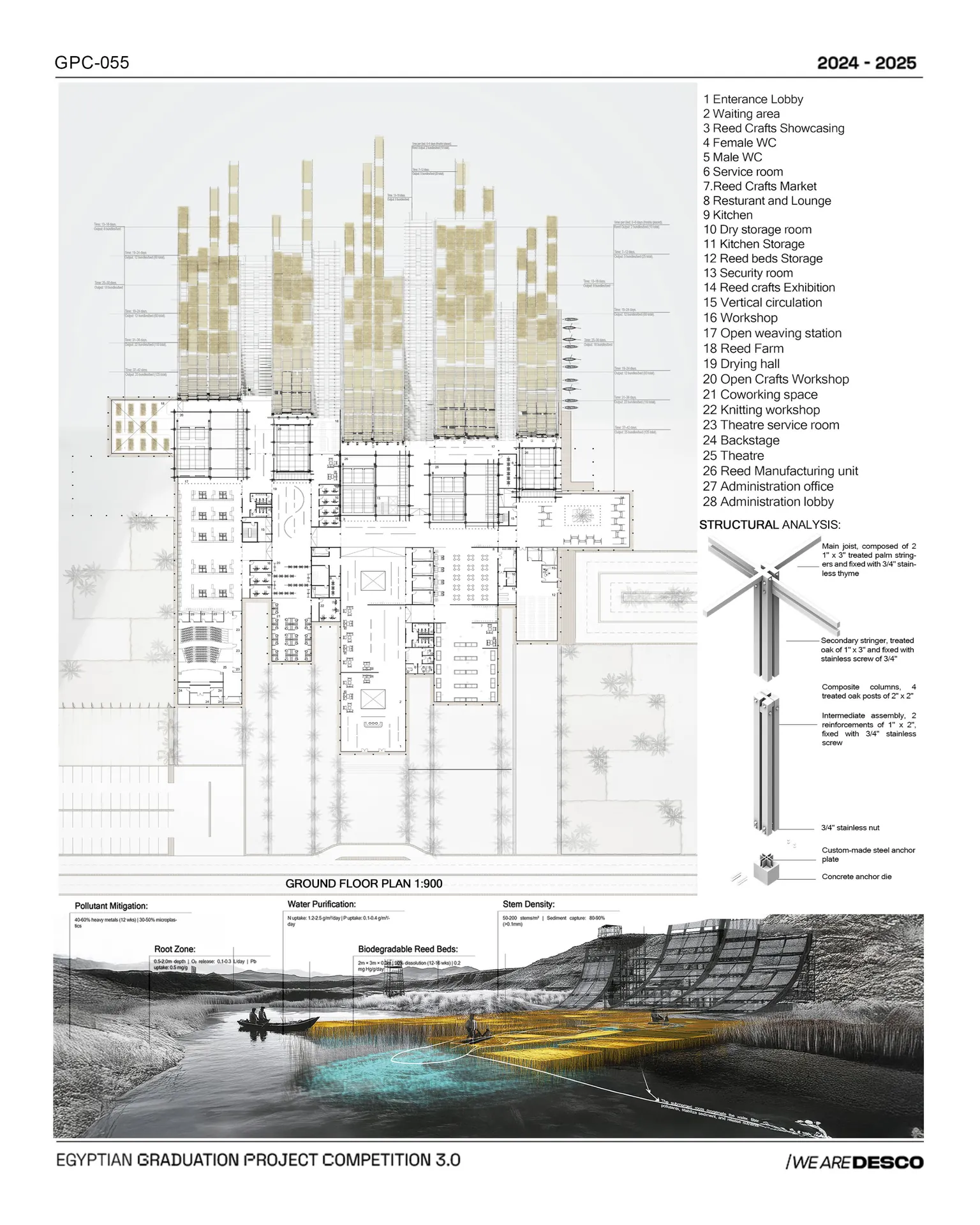
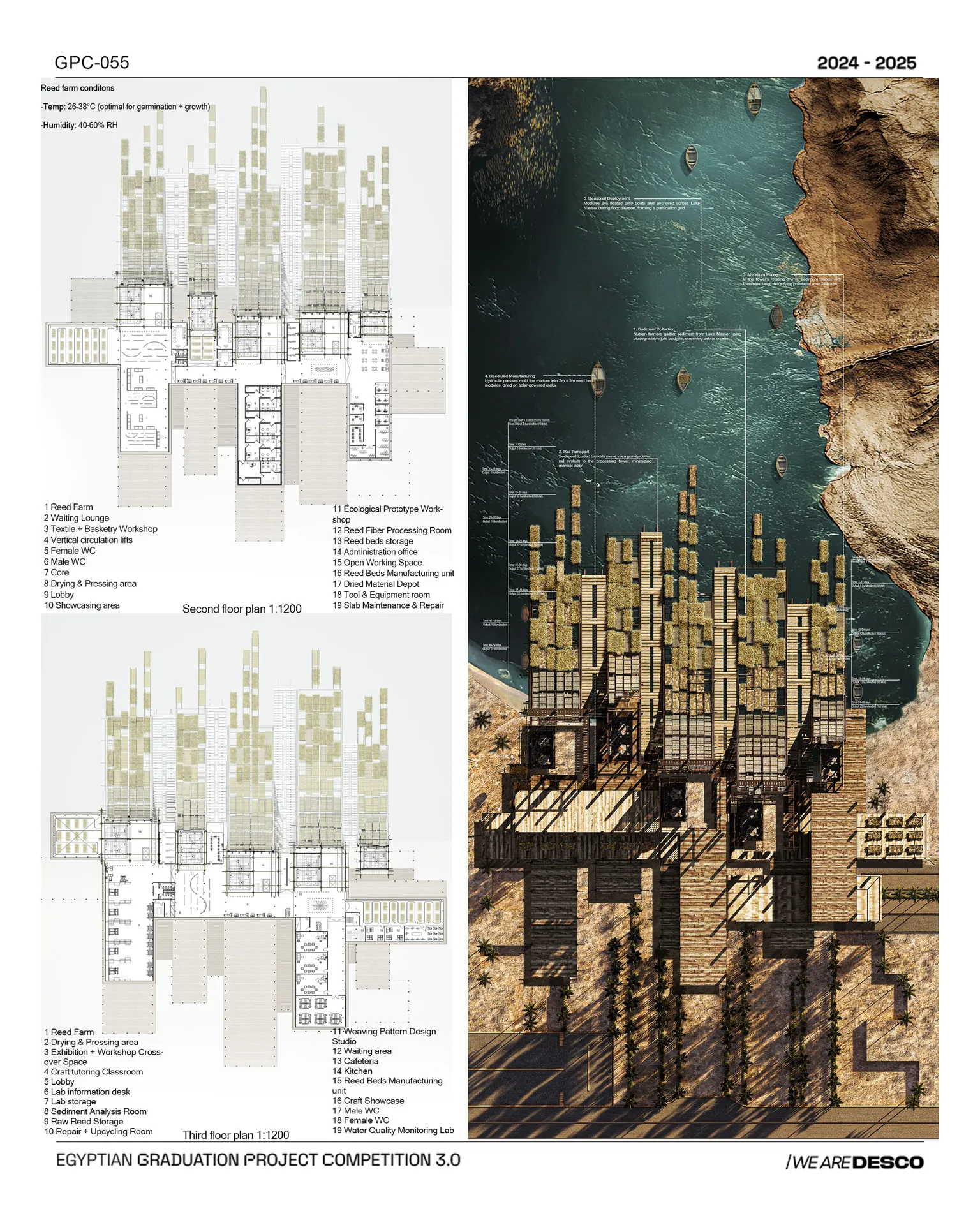
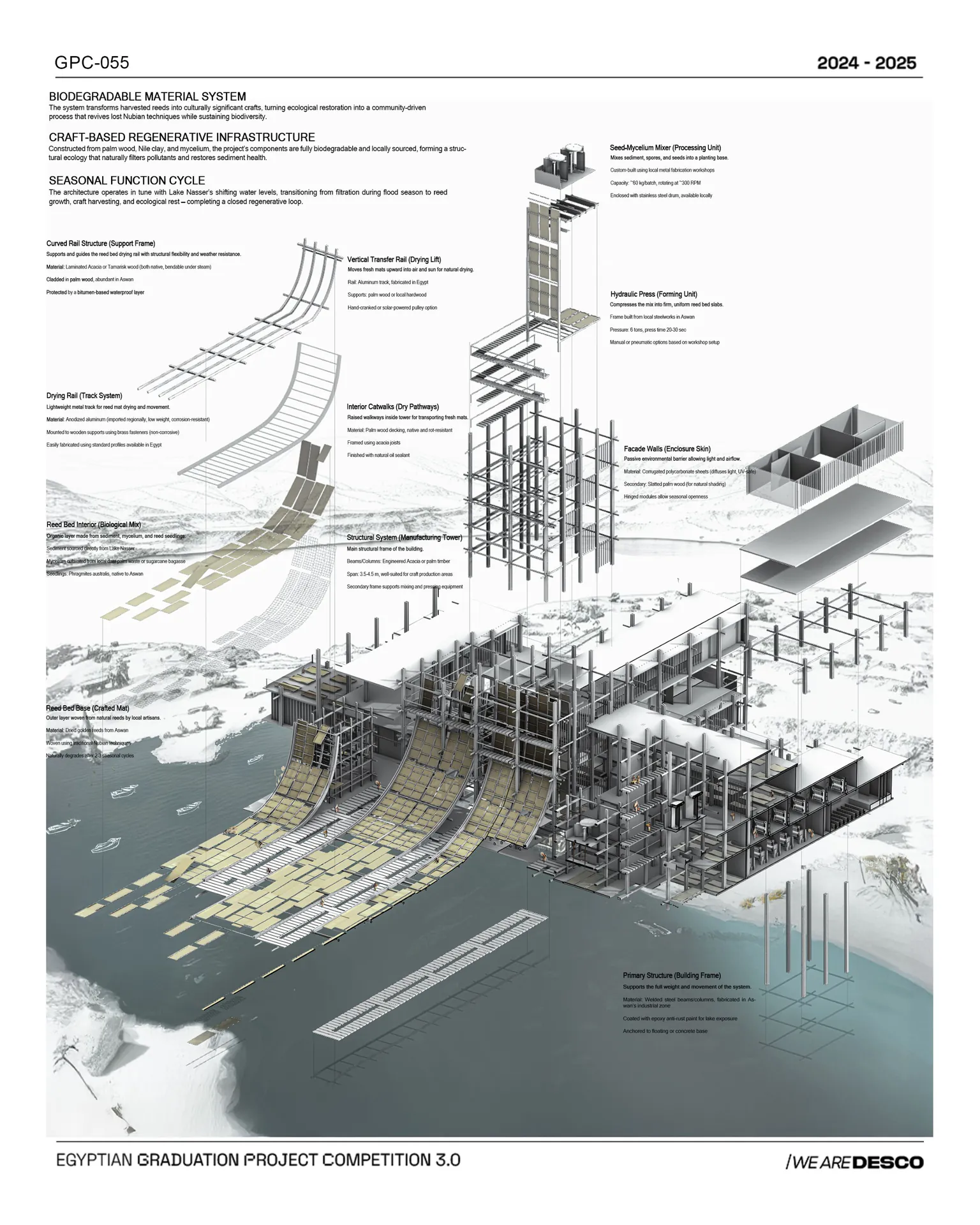
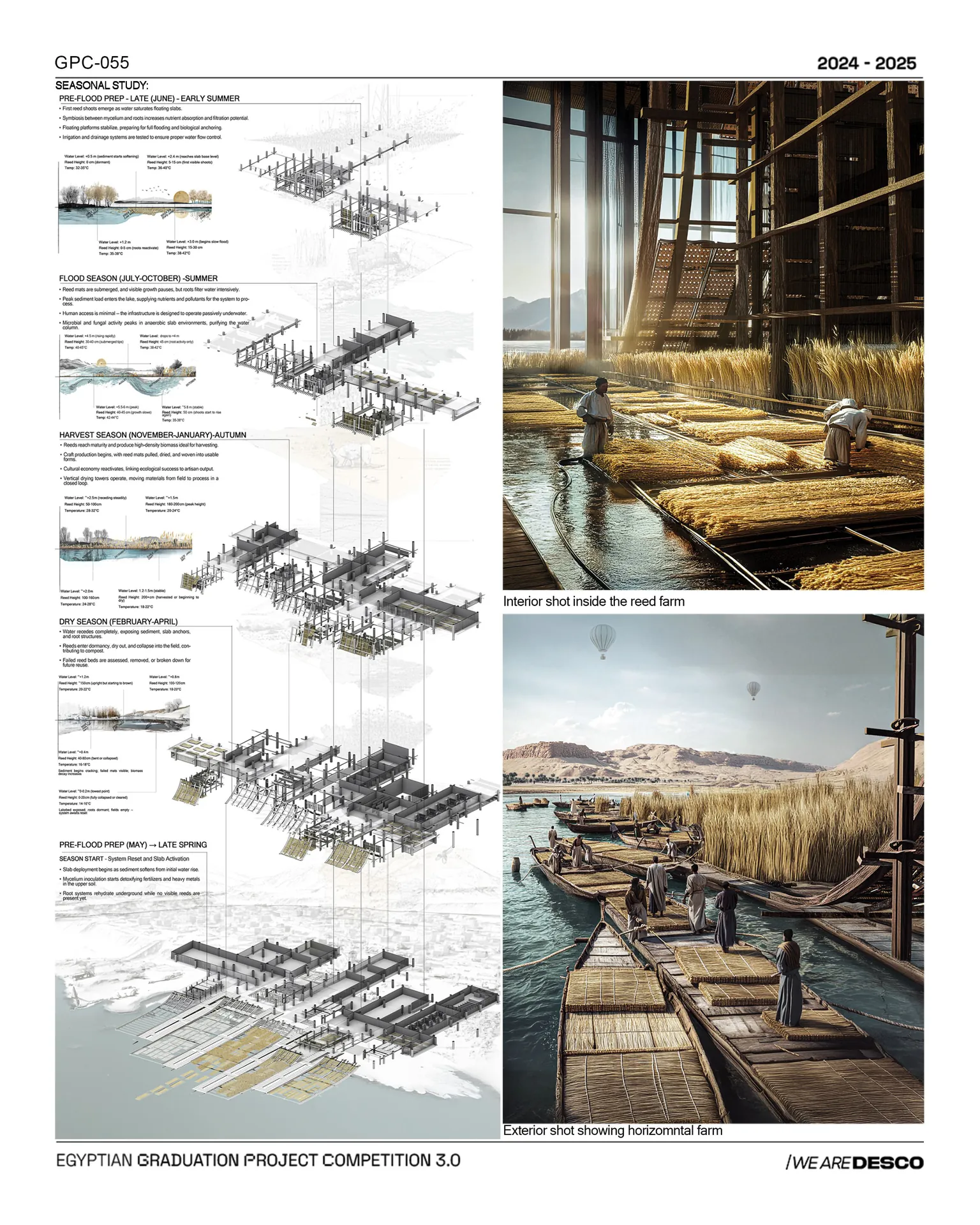
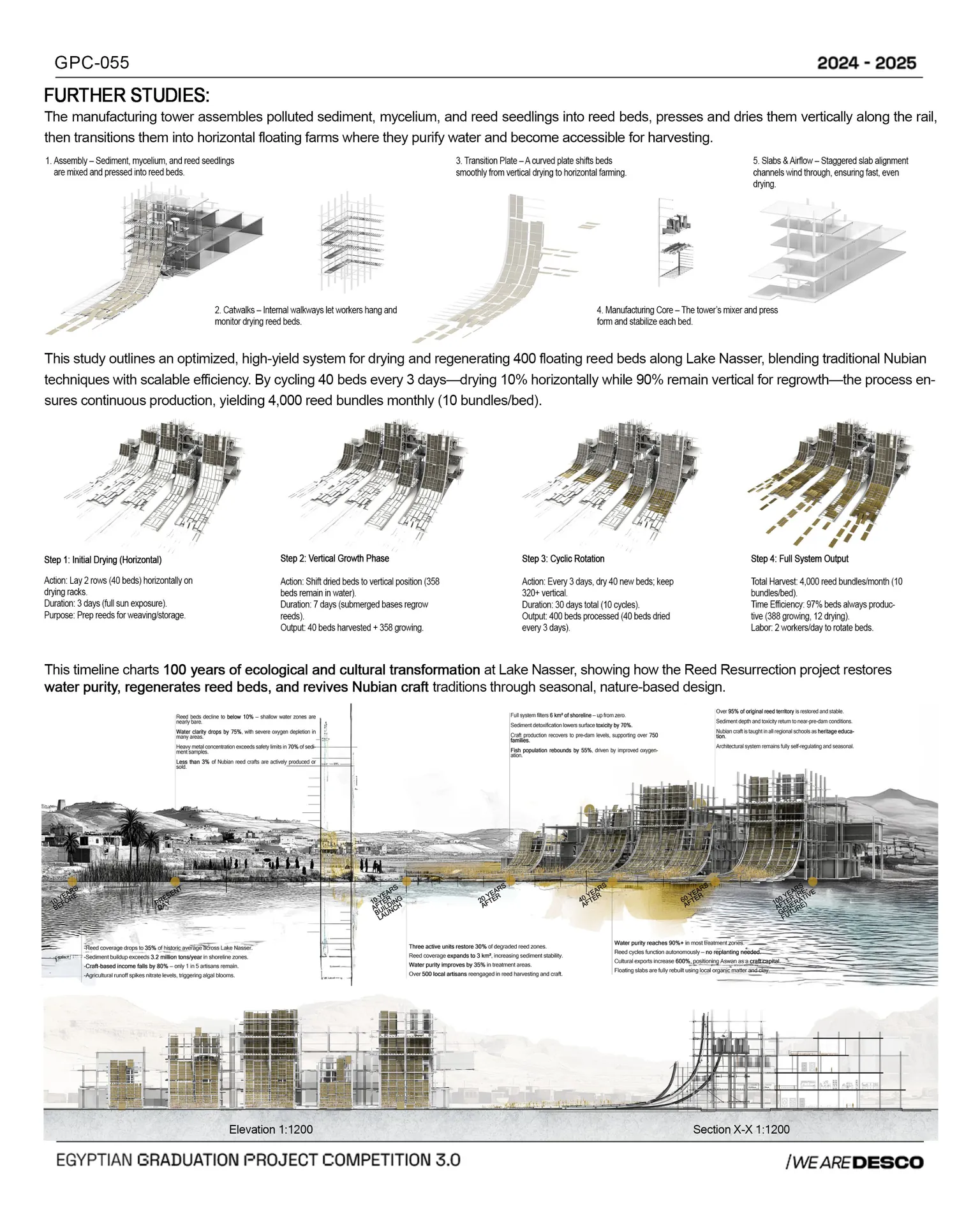
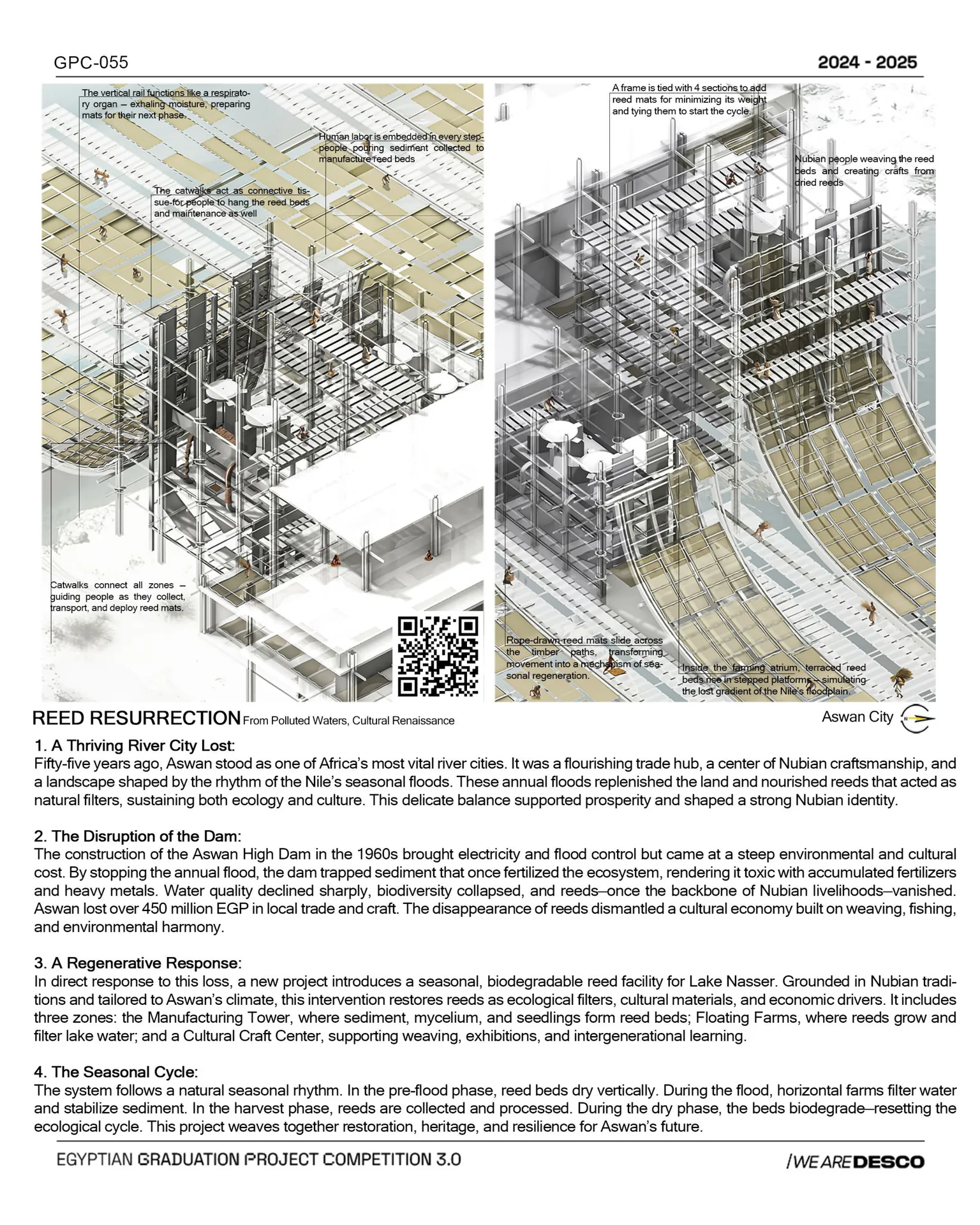
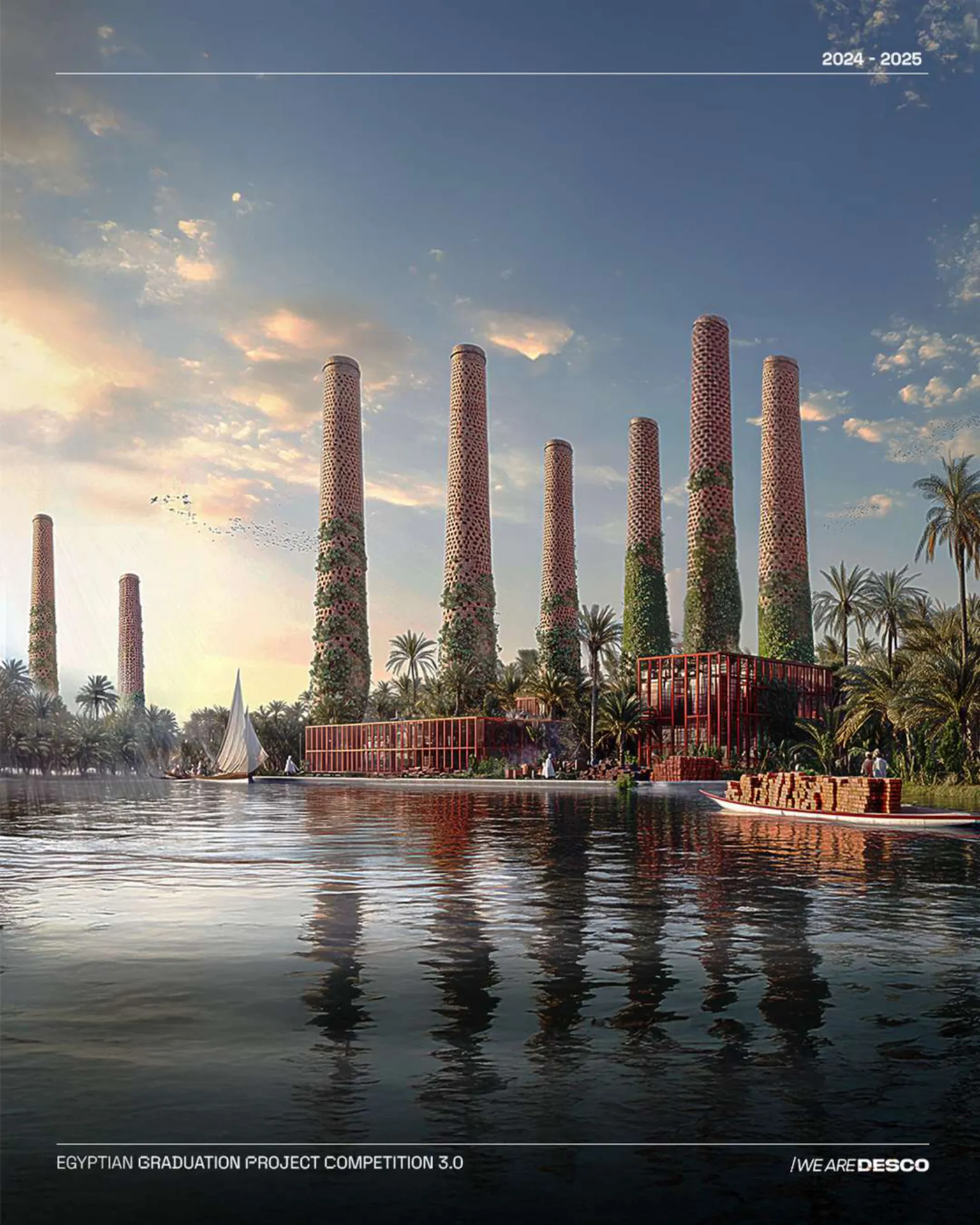
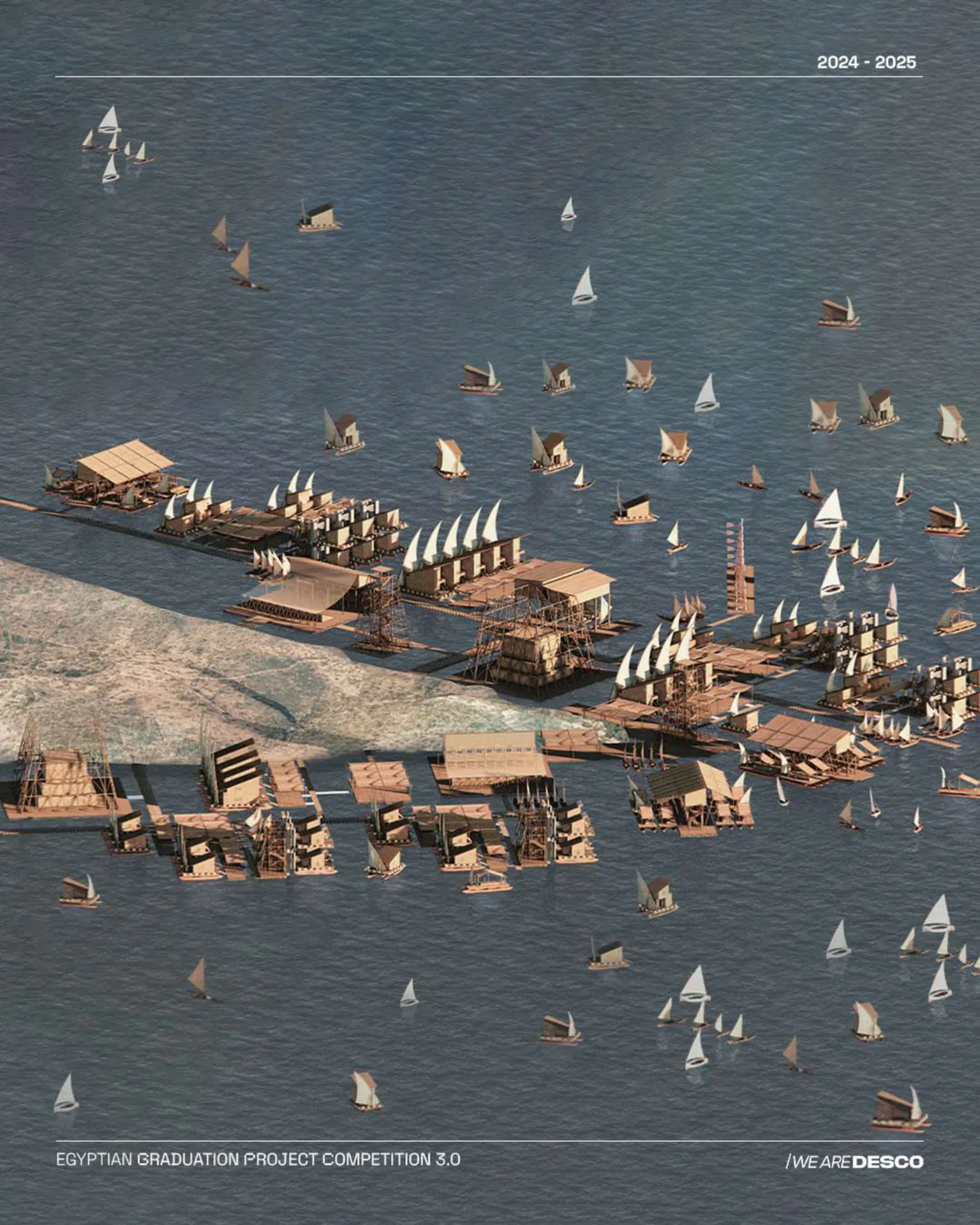
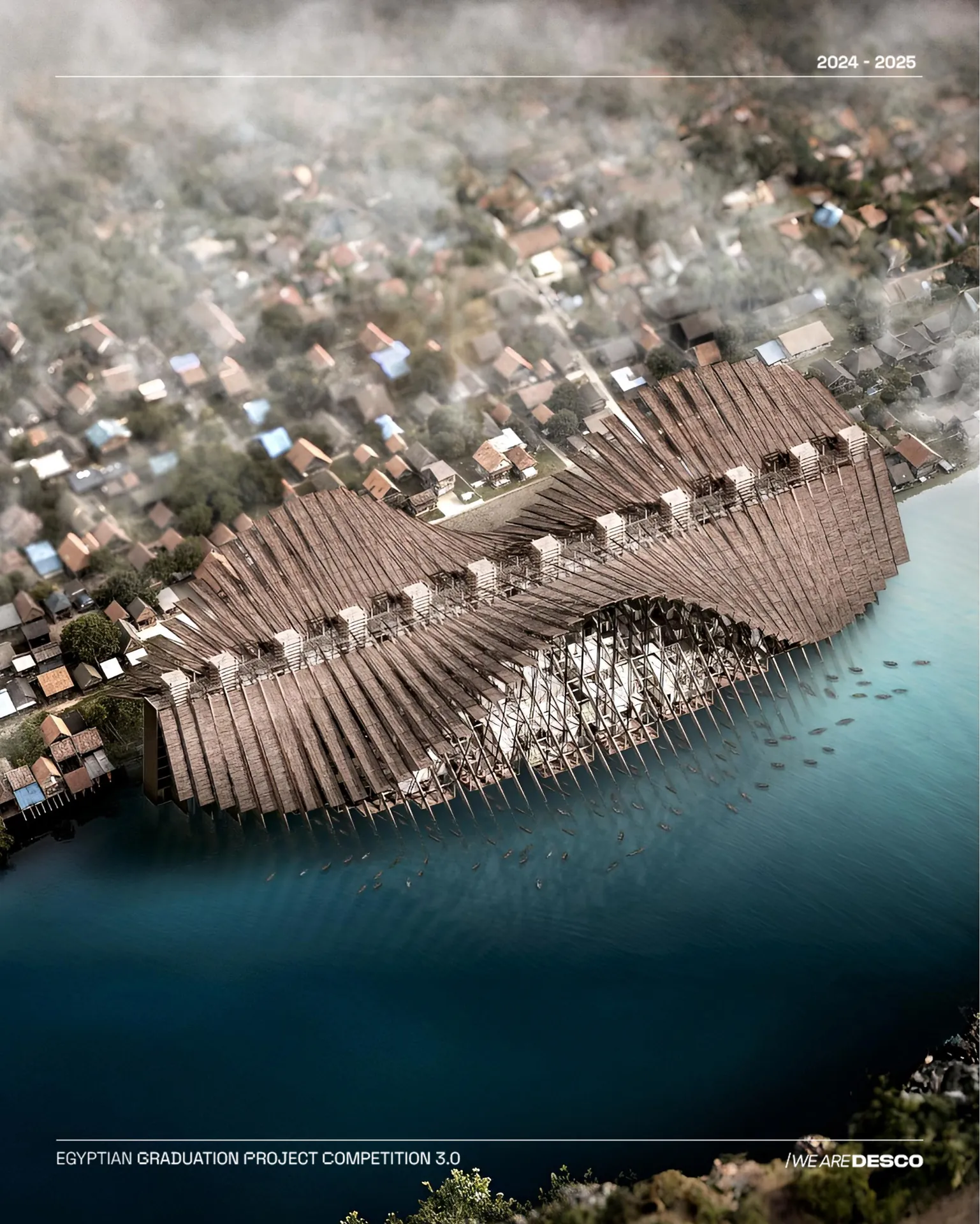
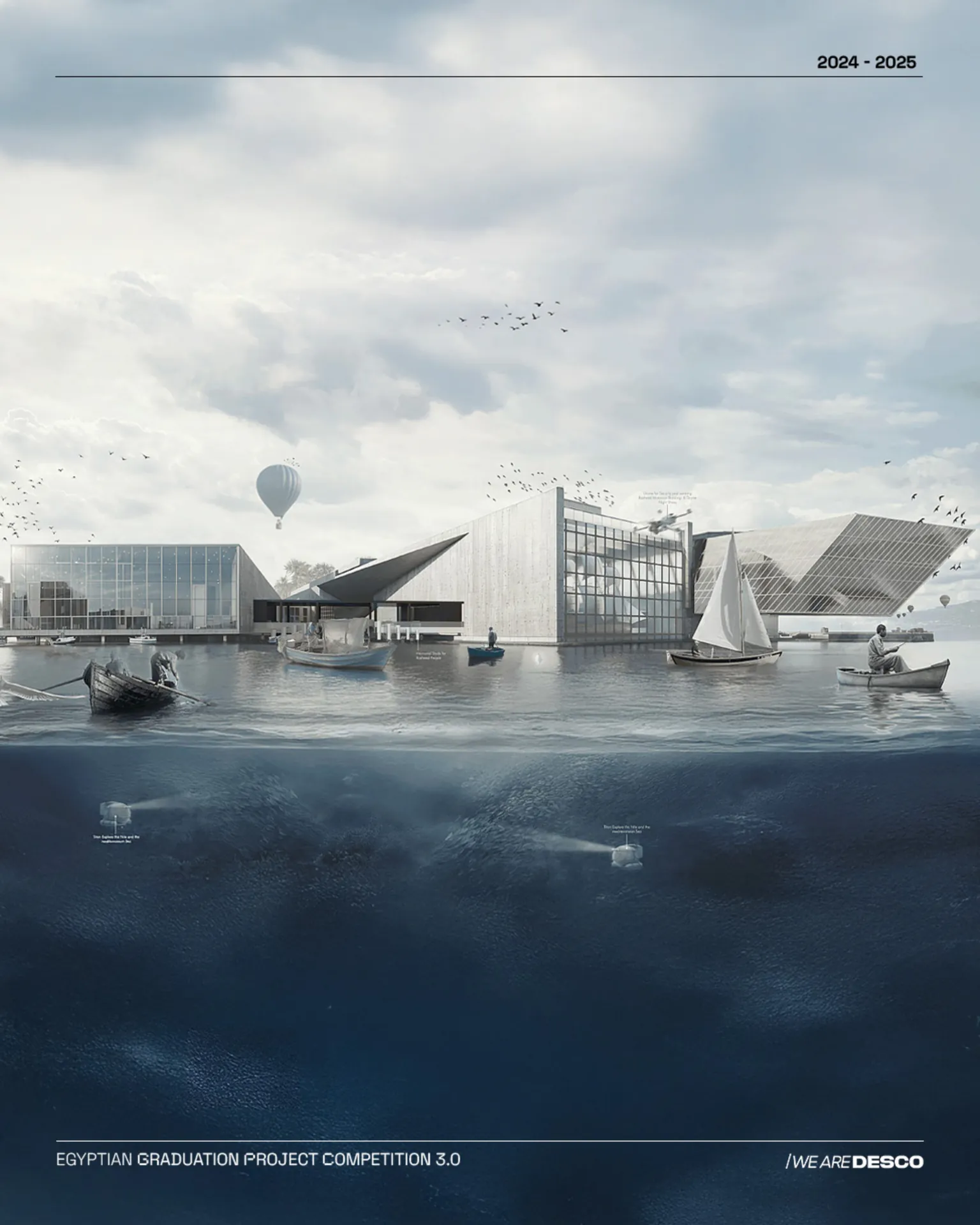
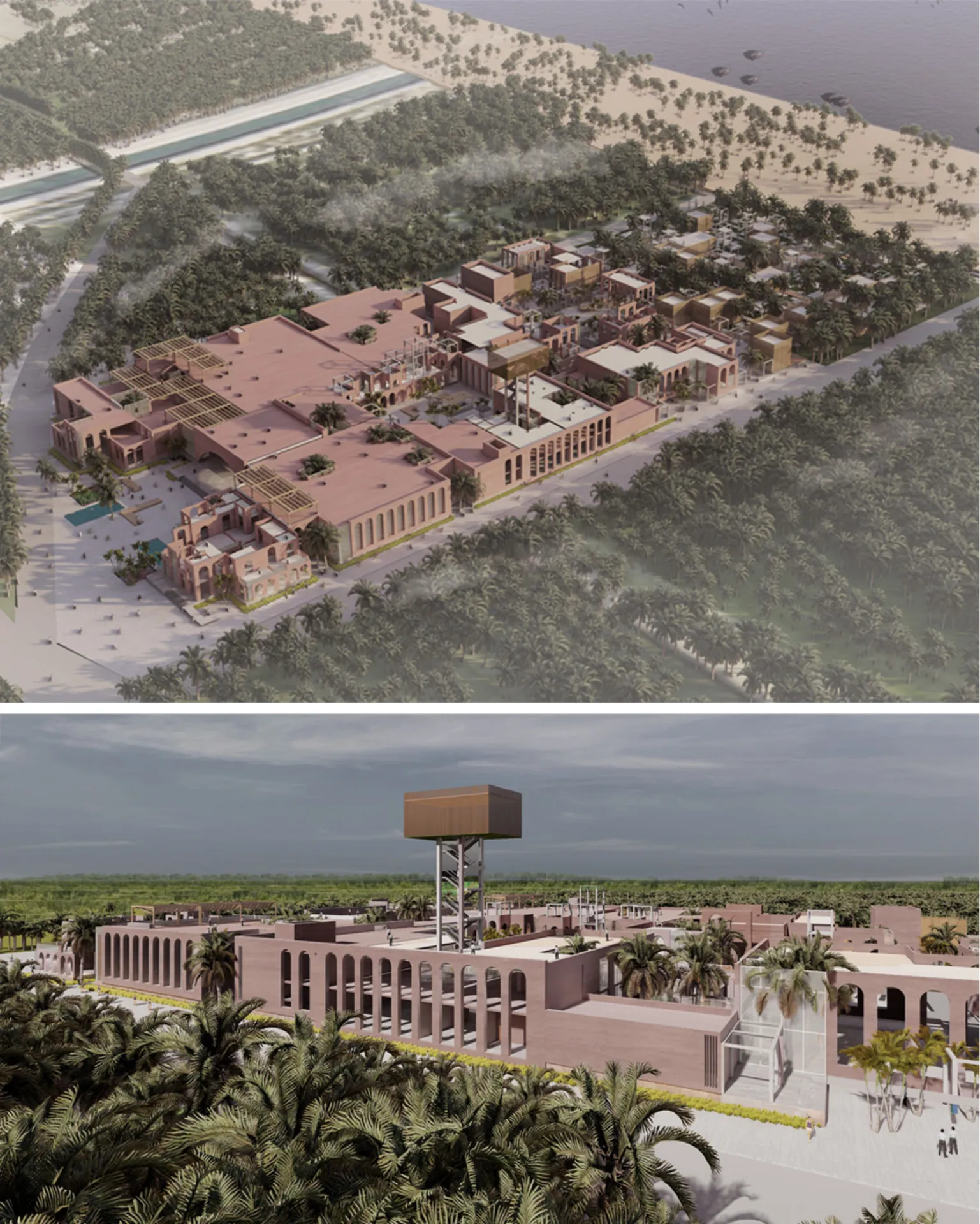
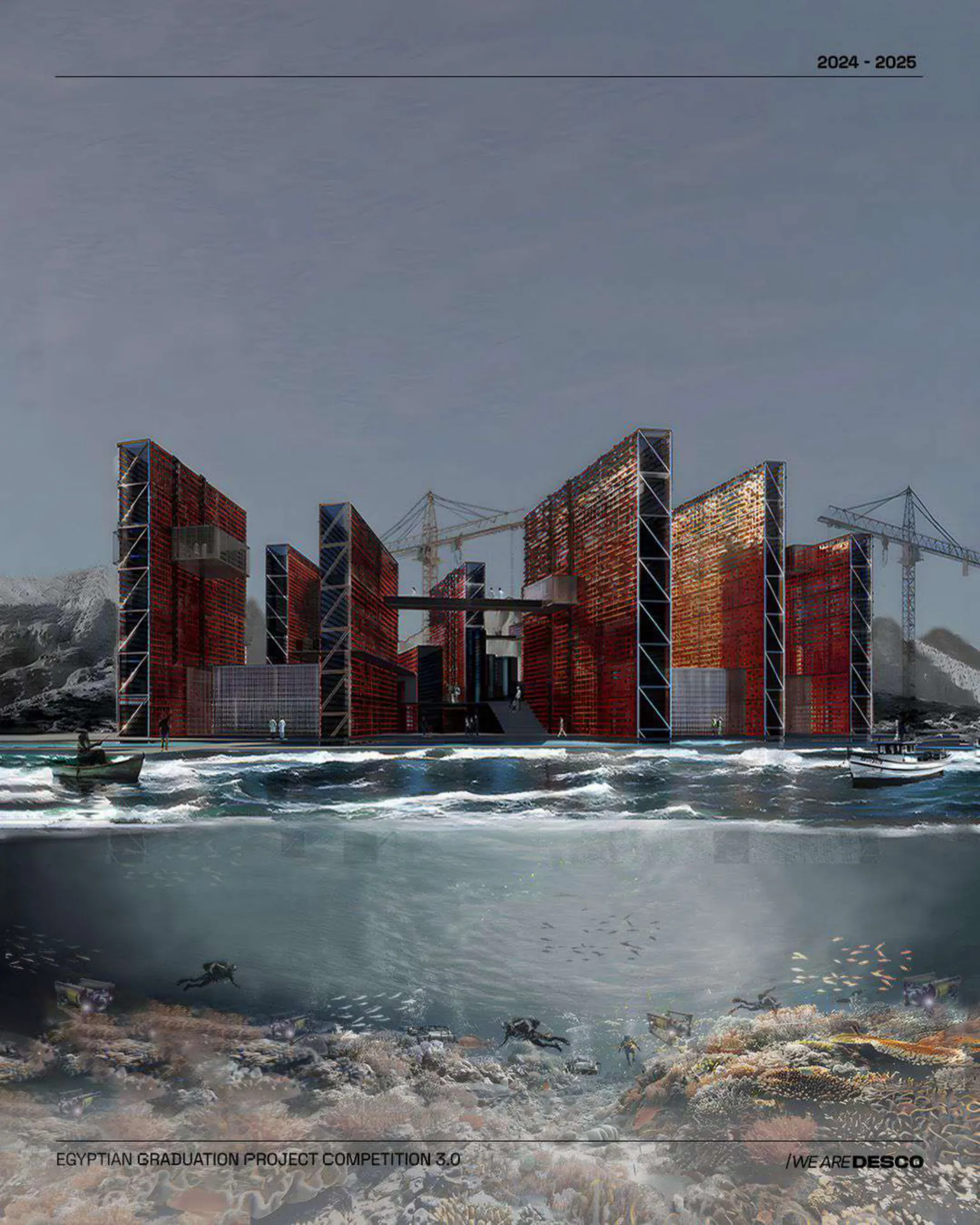
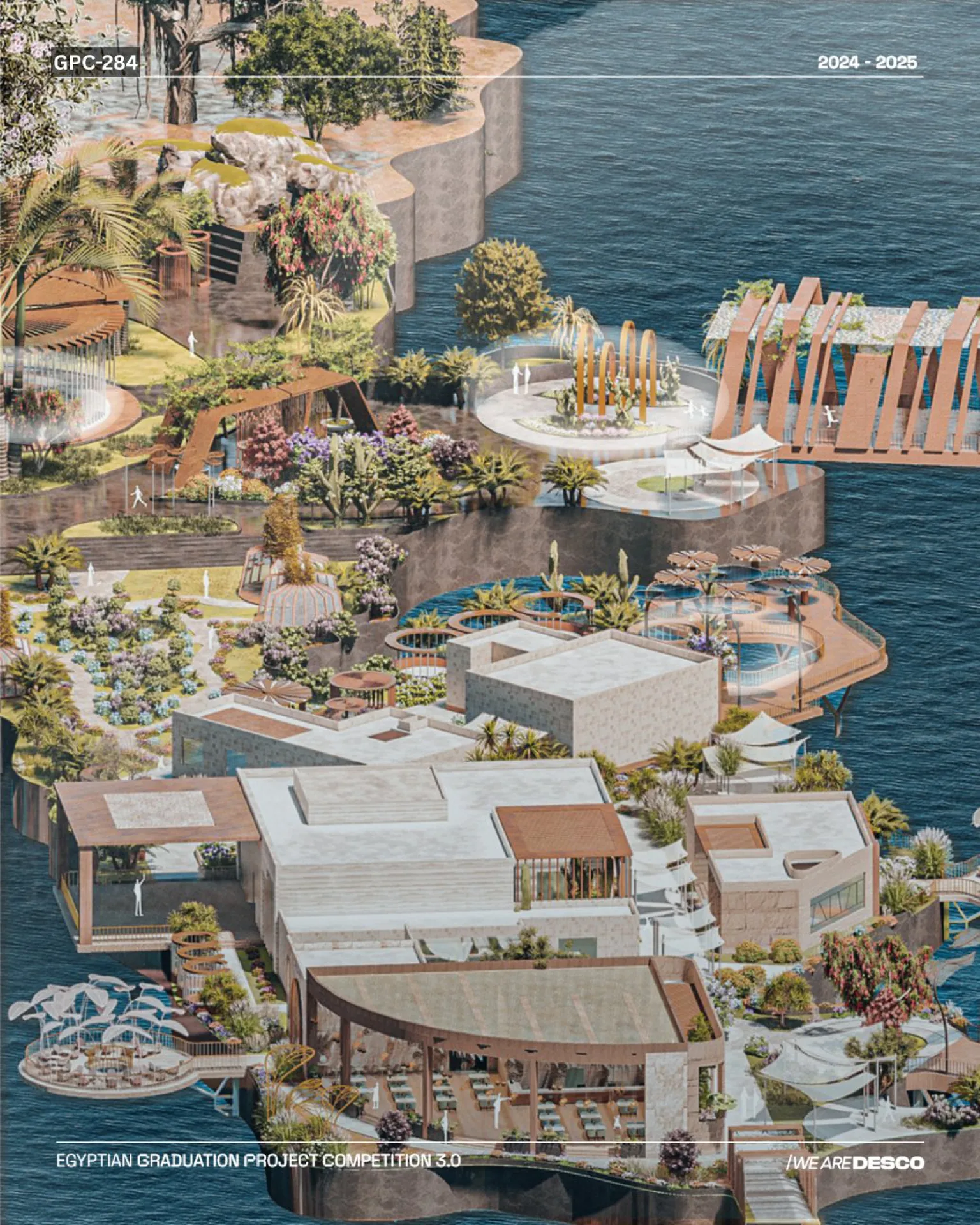
Reed Resurrection
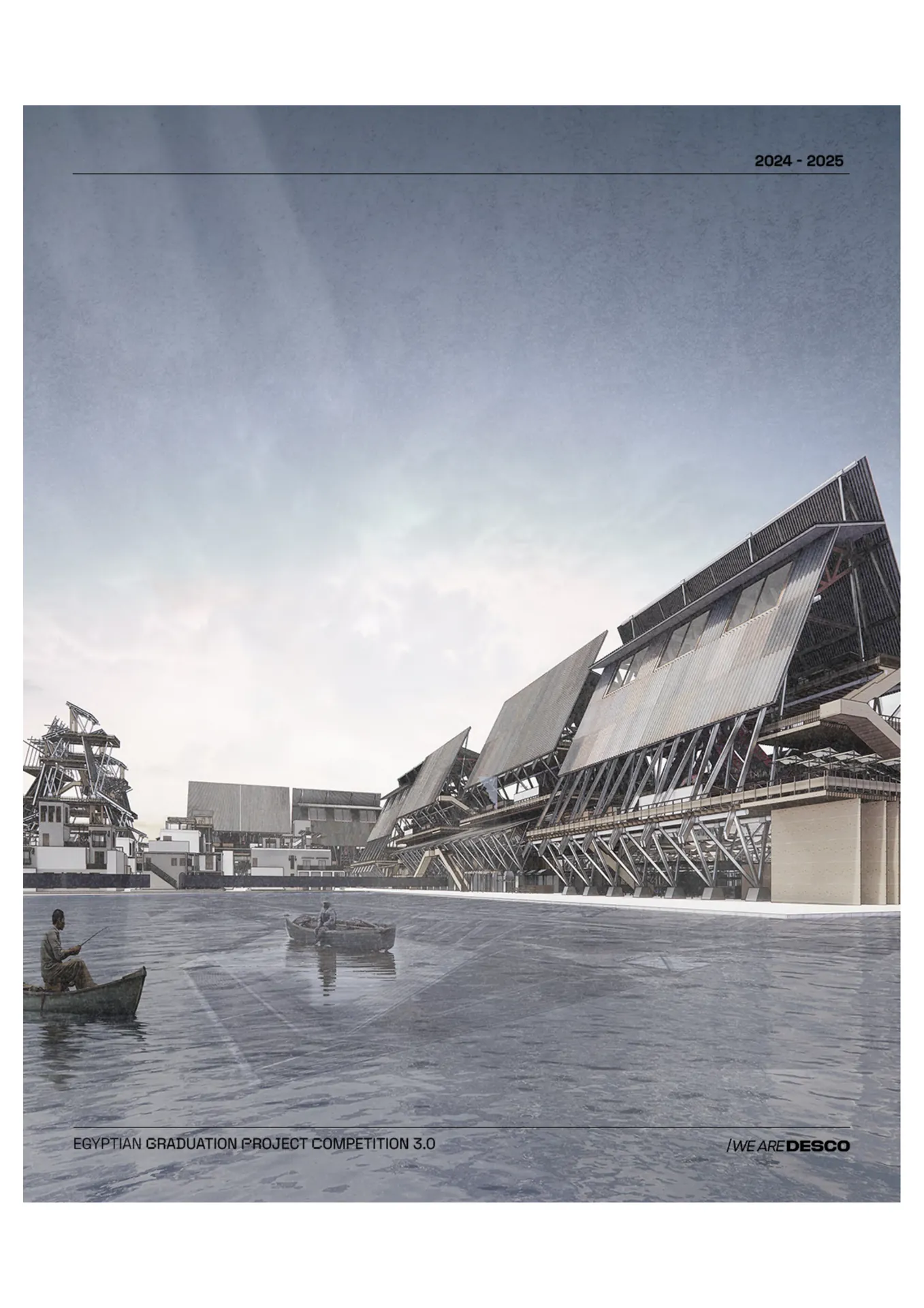
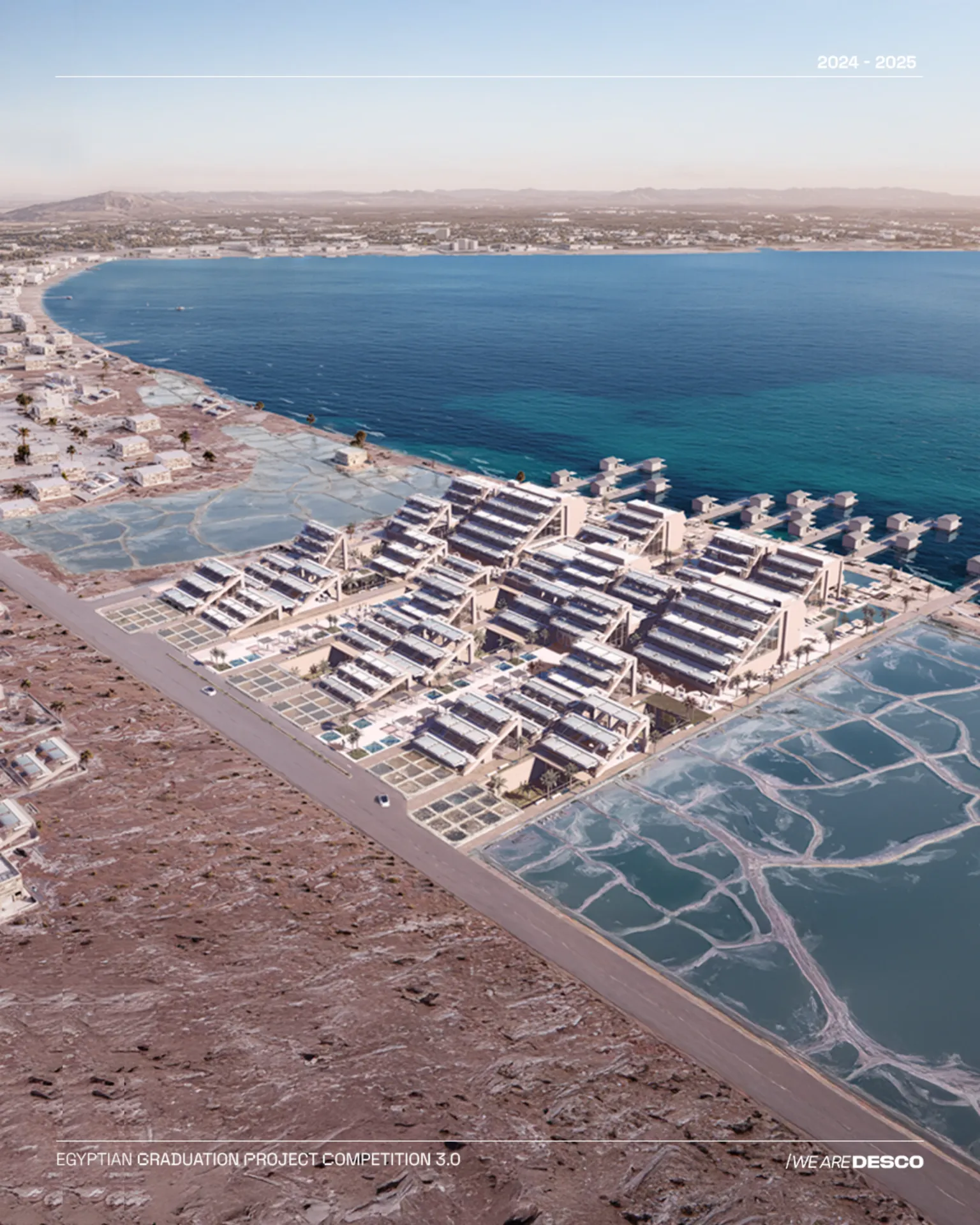
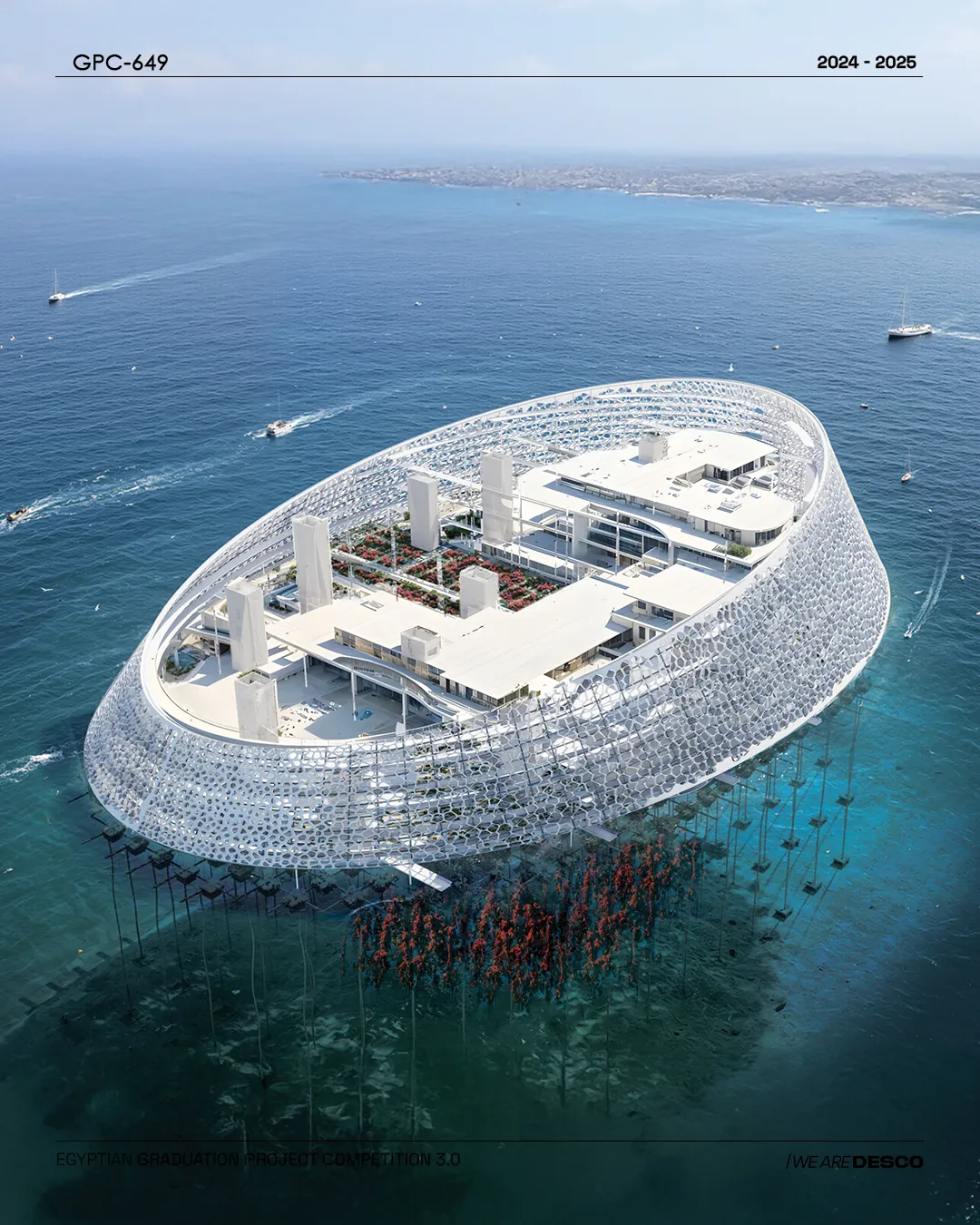
This project envisions a seasonal, biodegradable reed facility on Lake Nasser that restores Aswan’s lost ecological and cultural balance after the High Dam’s construction. Blending architecture, craft, and ecology, it transforms polluted sediment into clean water and reed-based materials through a dynamic system of floating farms, vertical drying rails, and a Nubian cultural craft center. Designed from local palm wood, acacia, and biodegradable composites, the structure adapts to changing water levels, filtering 20,000 liters per hectare daily while reviving traditional weaving and seasonal economies. Acting as both environmental infrastructure and cultural typology, it regenerates reed habitats, purifies the lake, and reactivates Nubian heritage—turning nature’s cycles into an engine of renewal.
Winners
Second Prize Winner
Malak Ebrahim
Cairo University
Project Brief
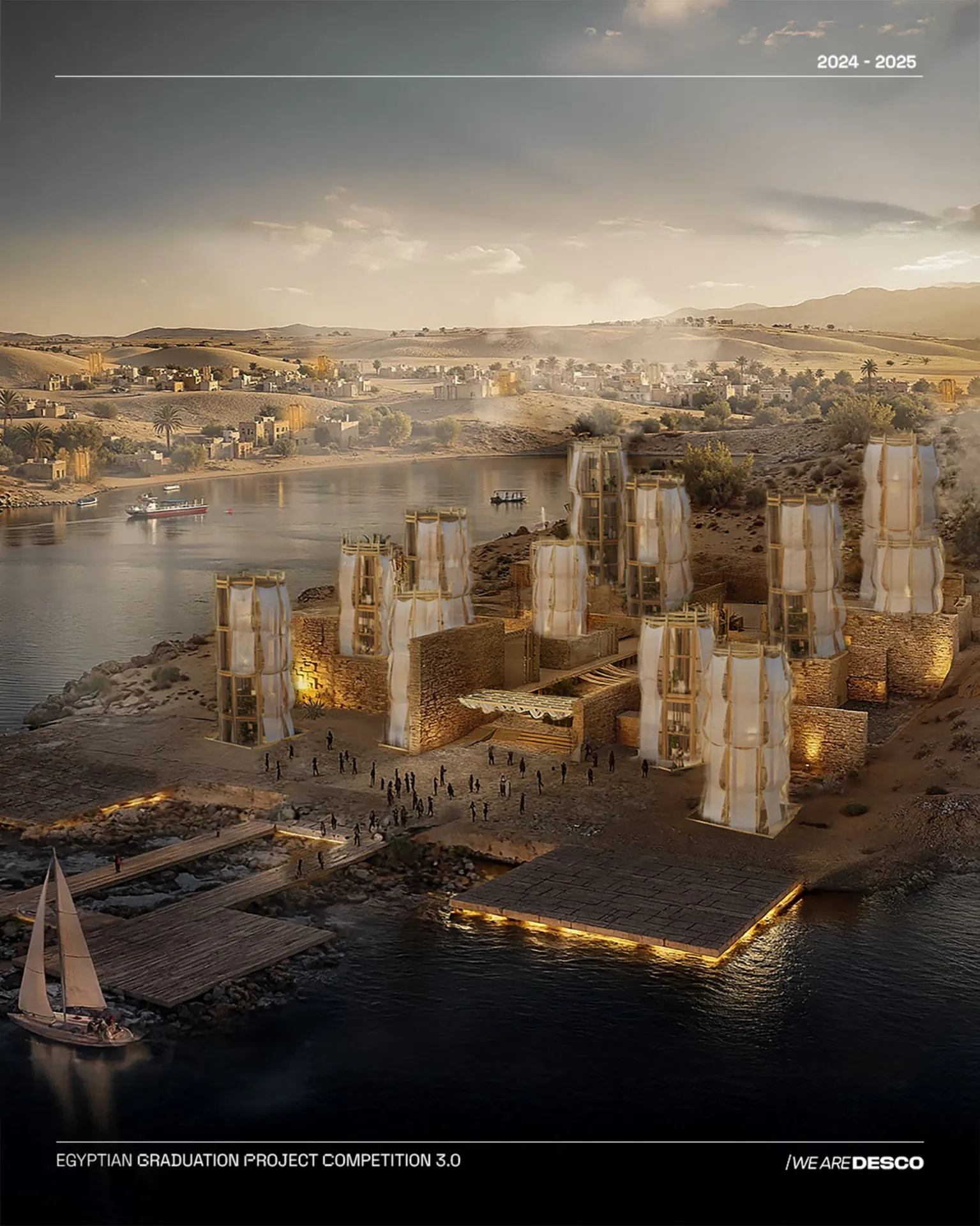
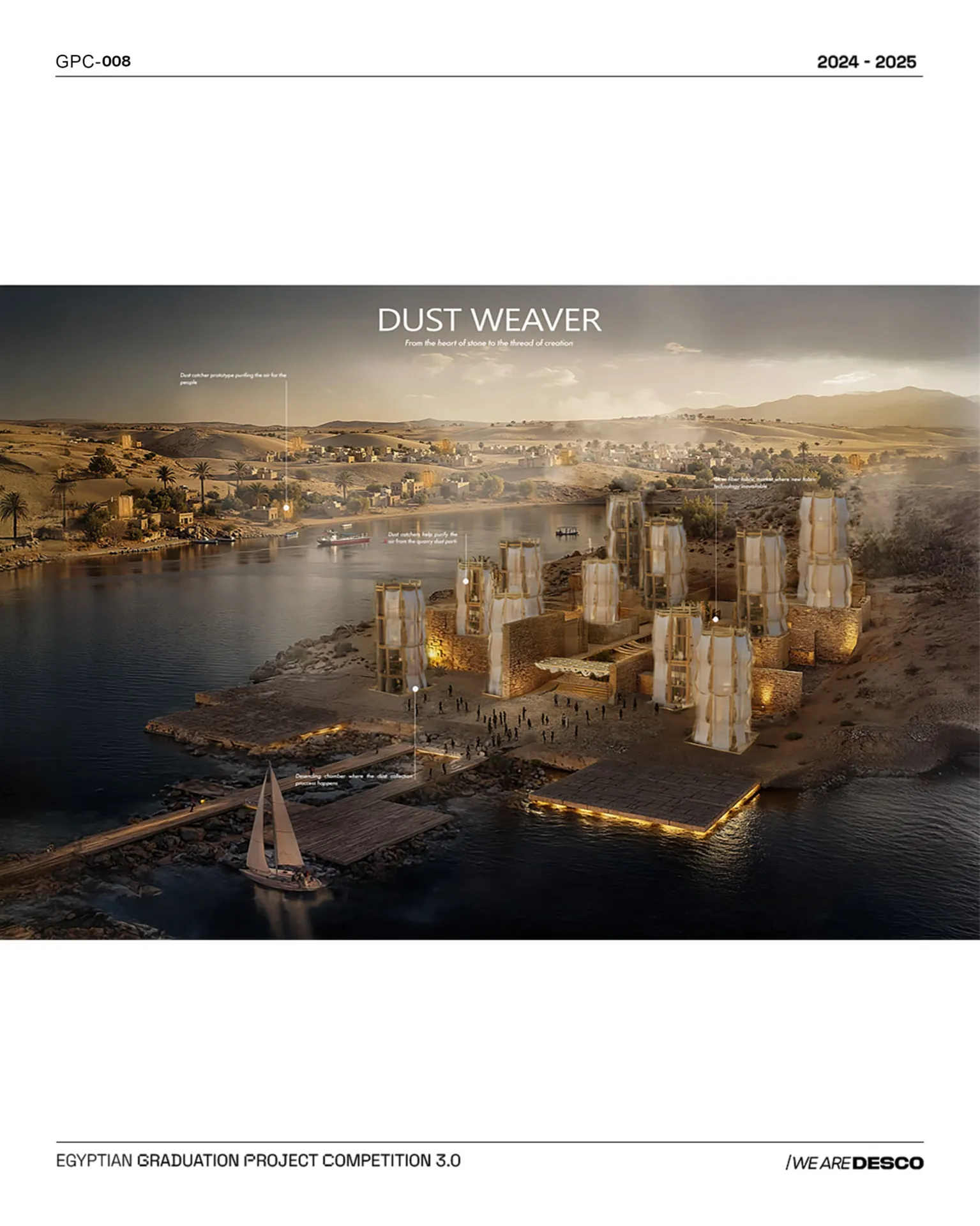
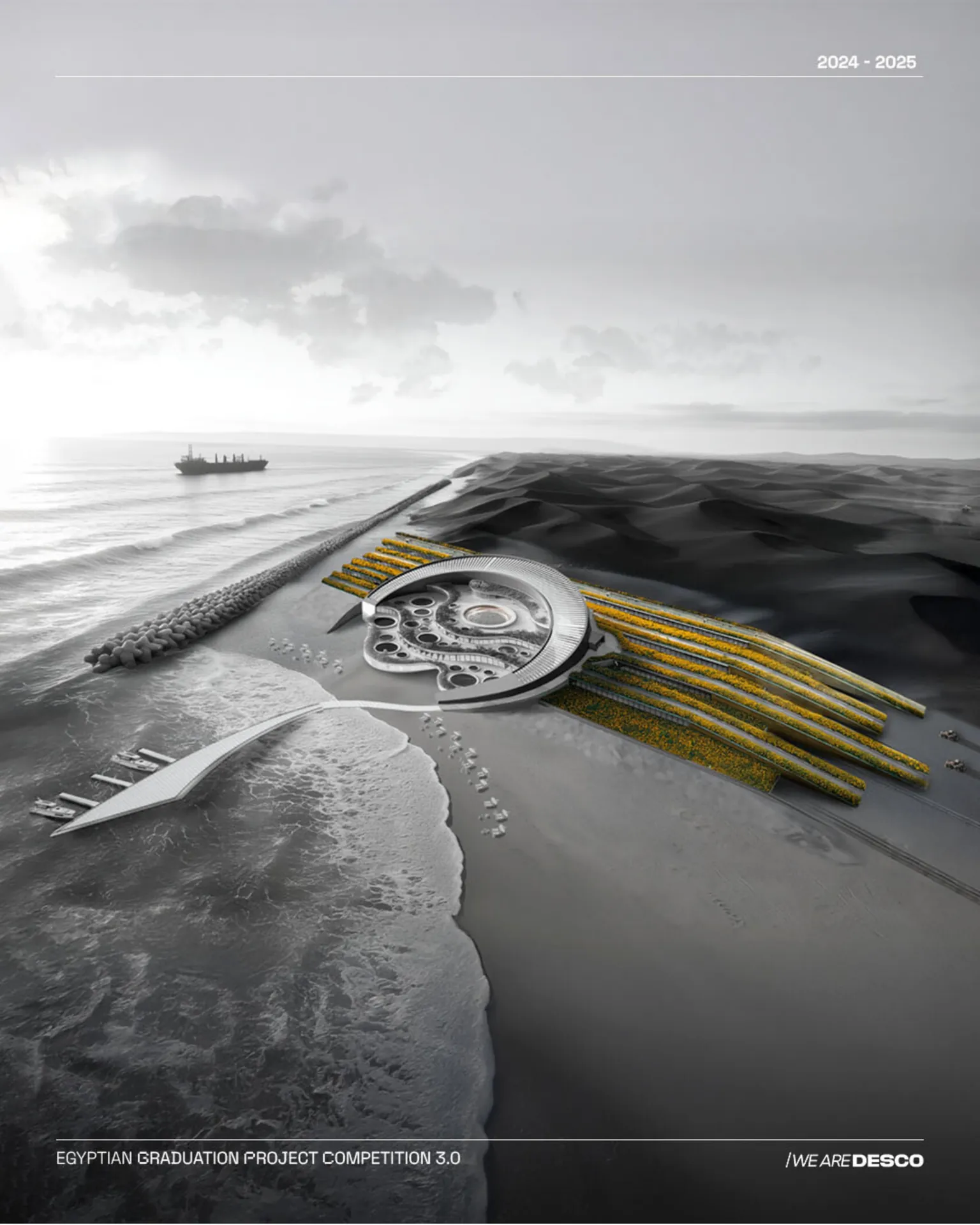
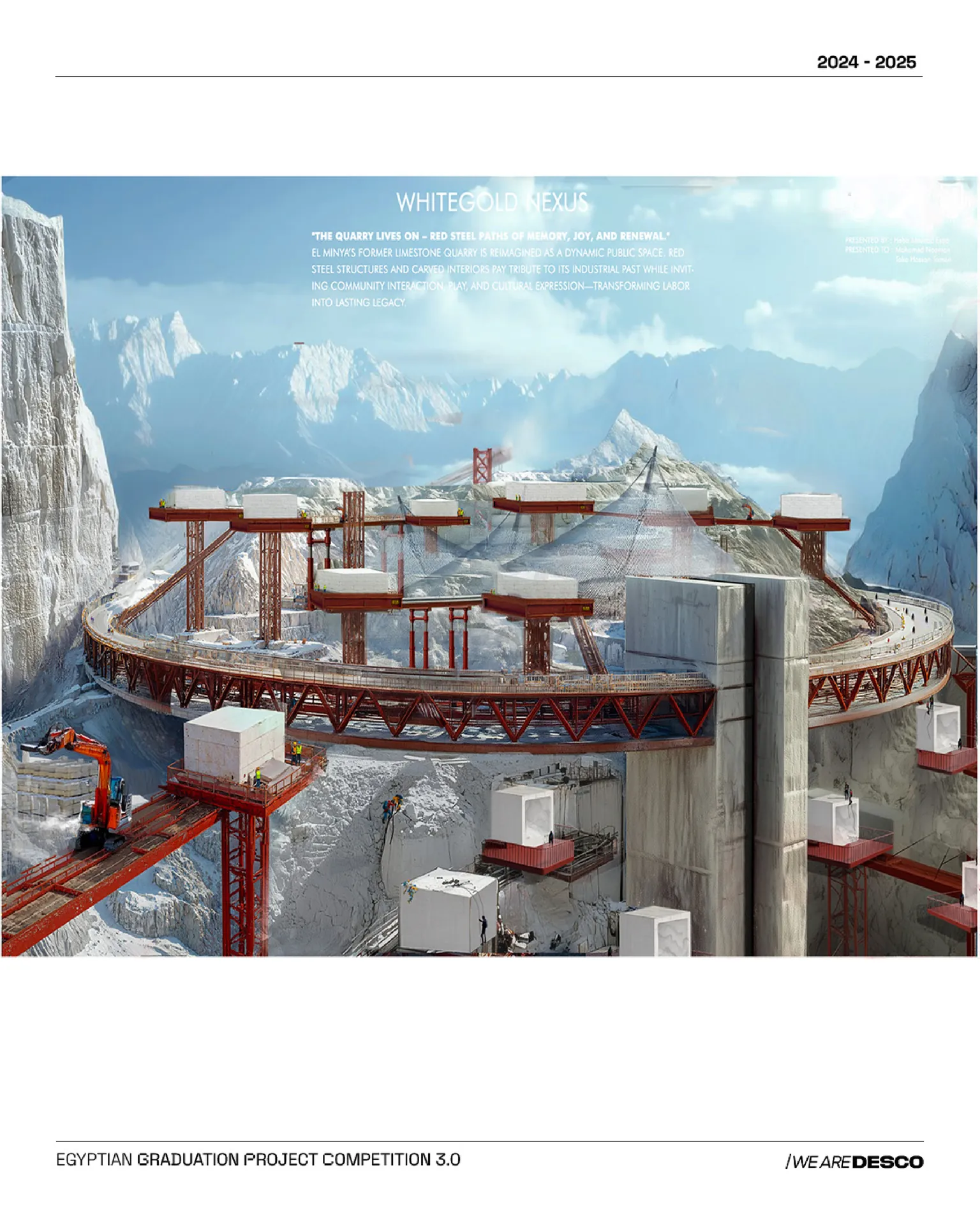
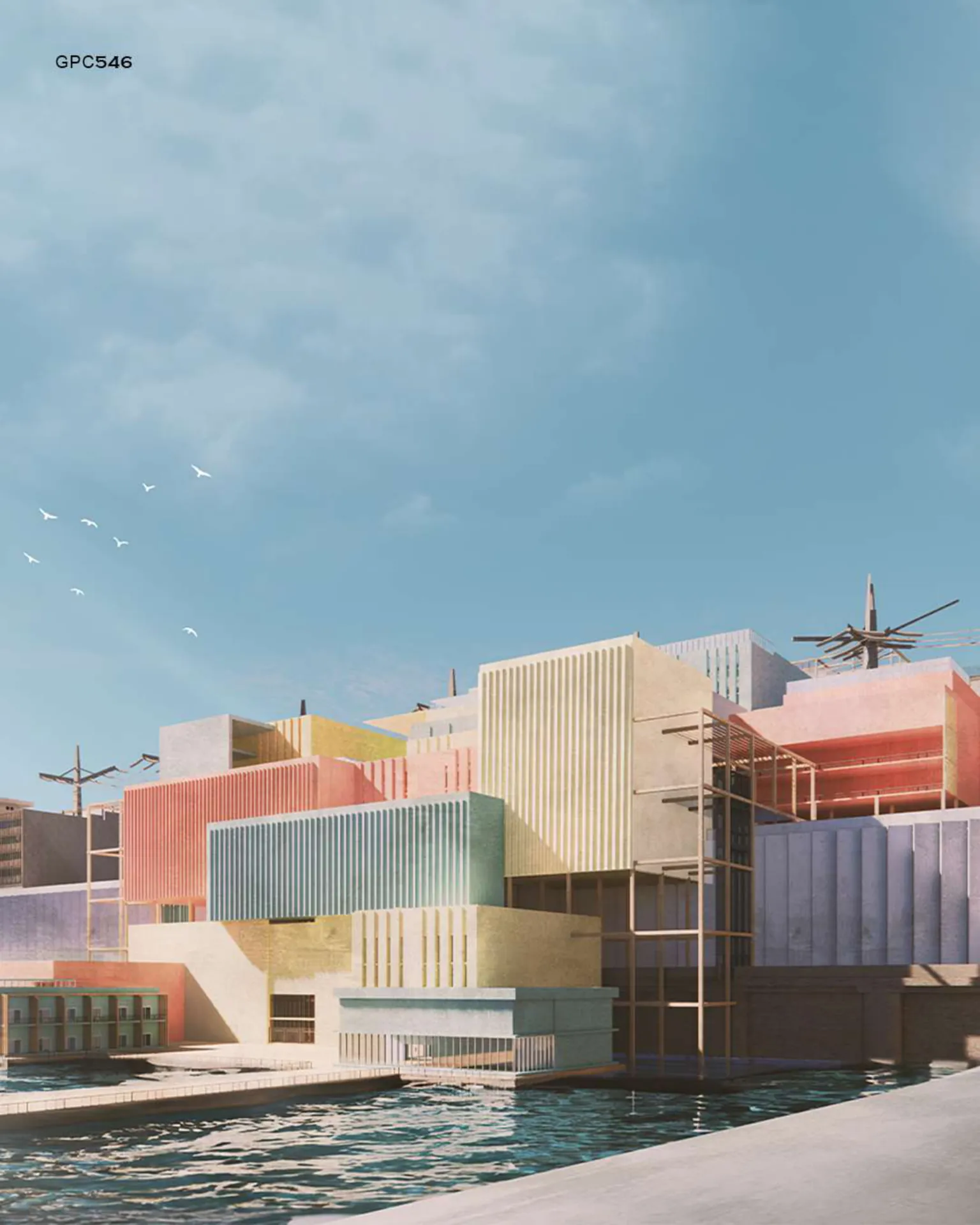
DUST WEAVER
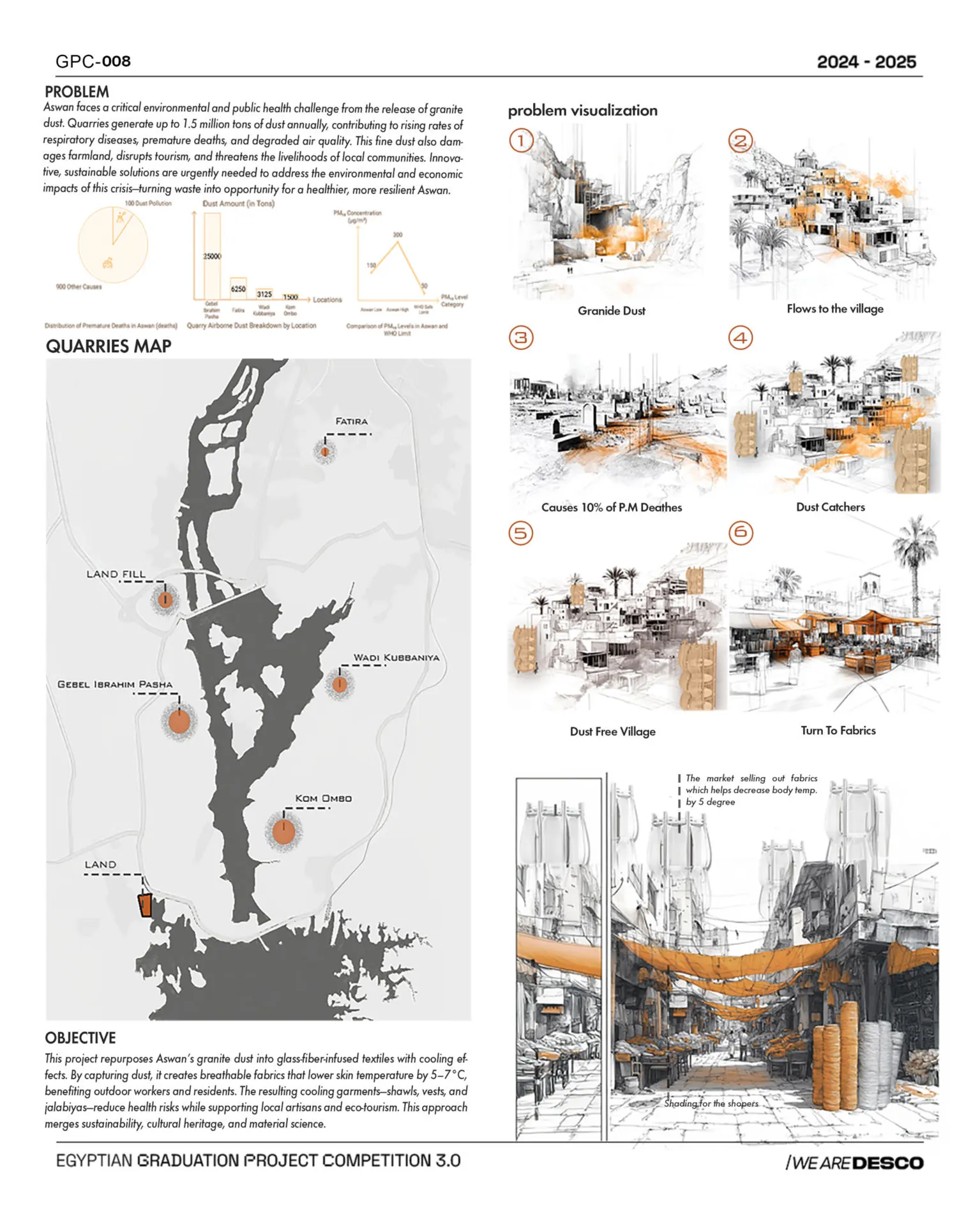
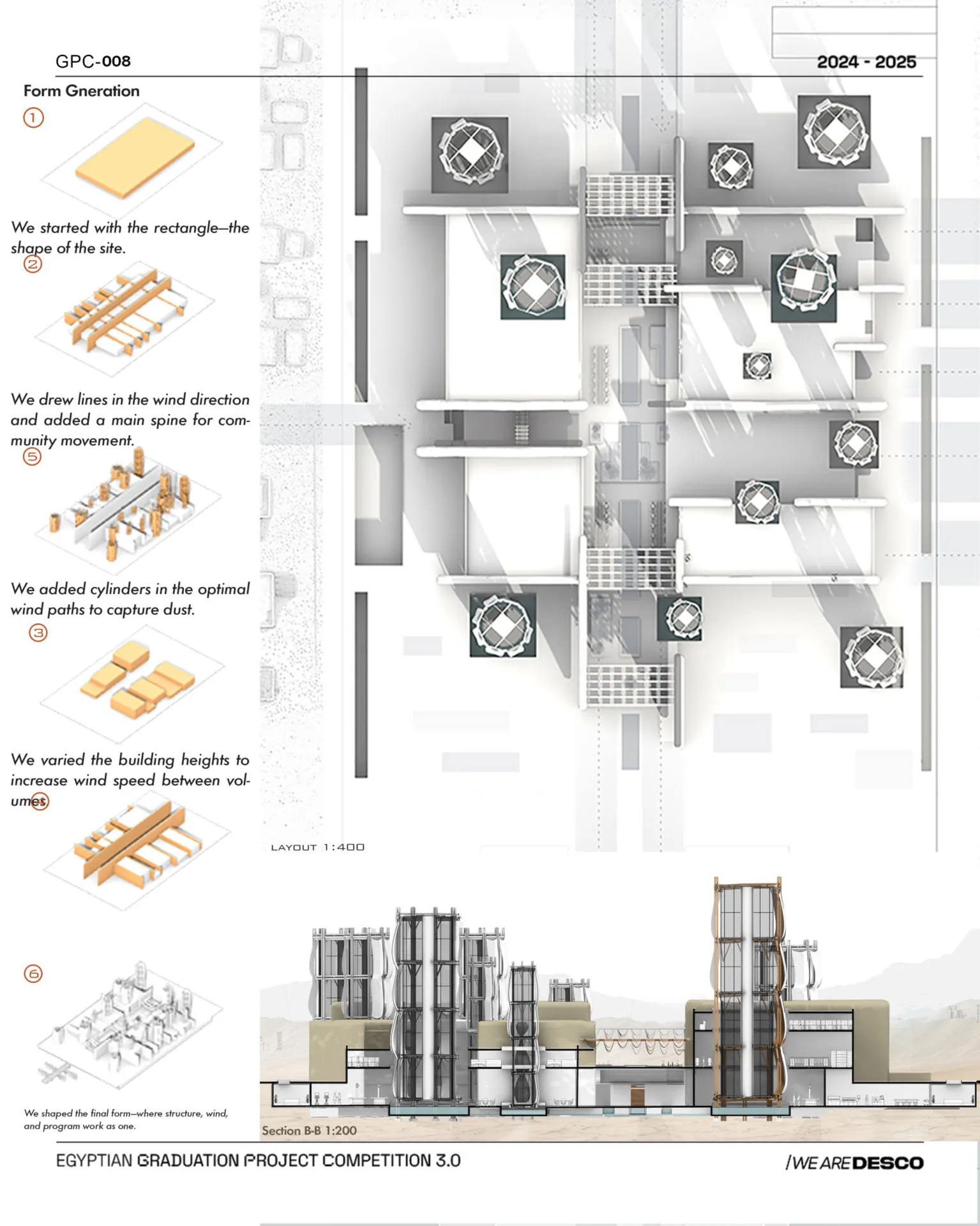
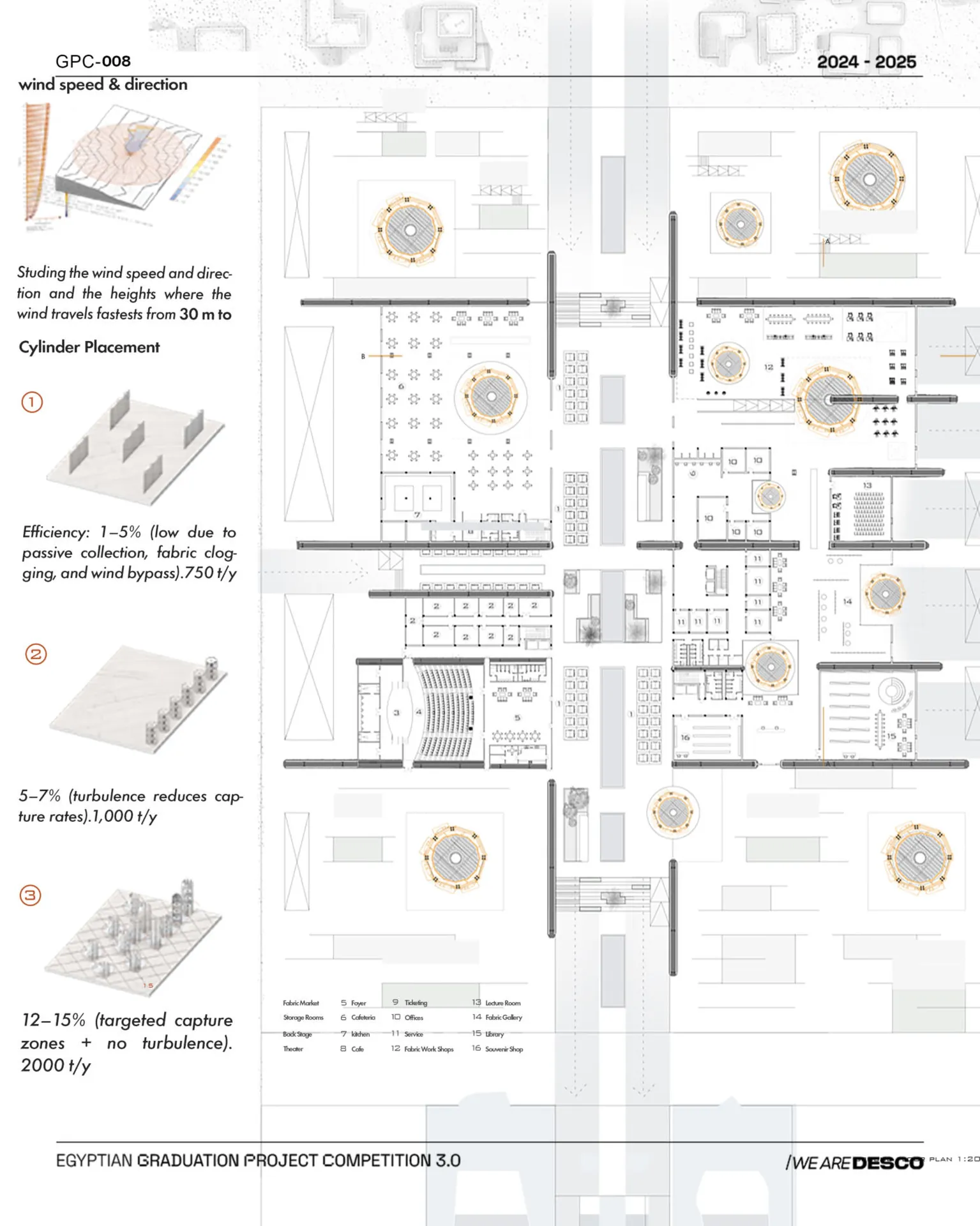
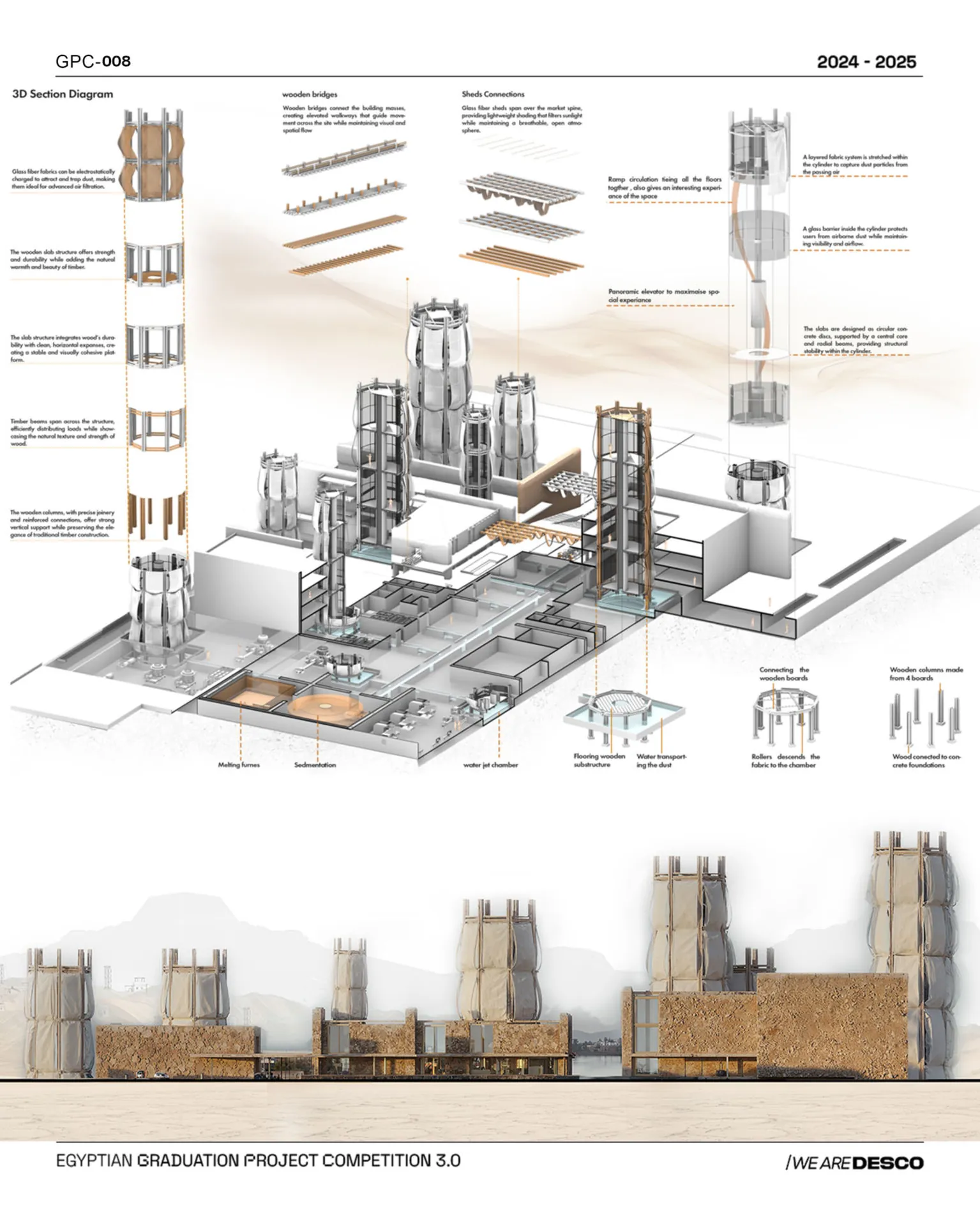
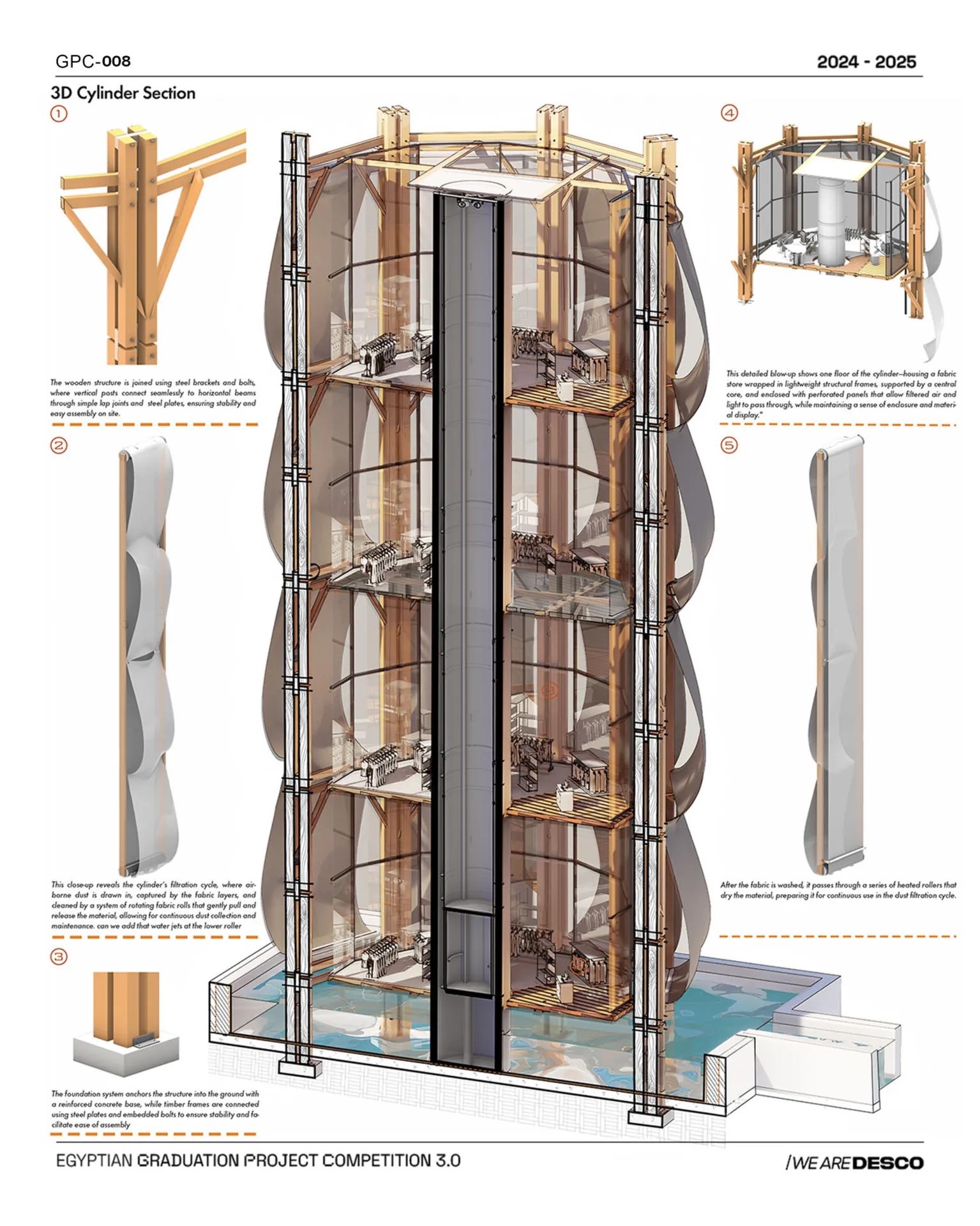
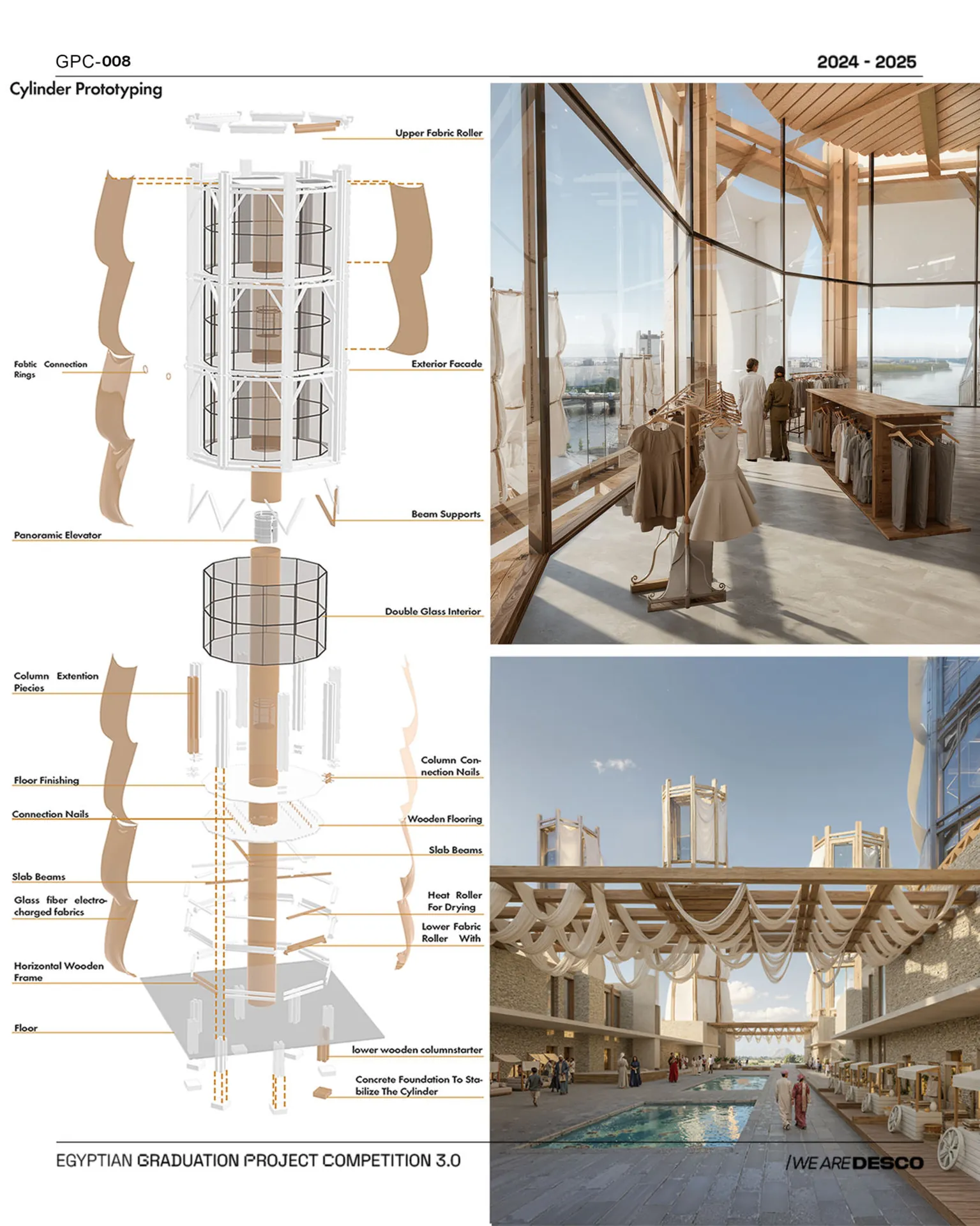
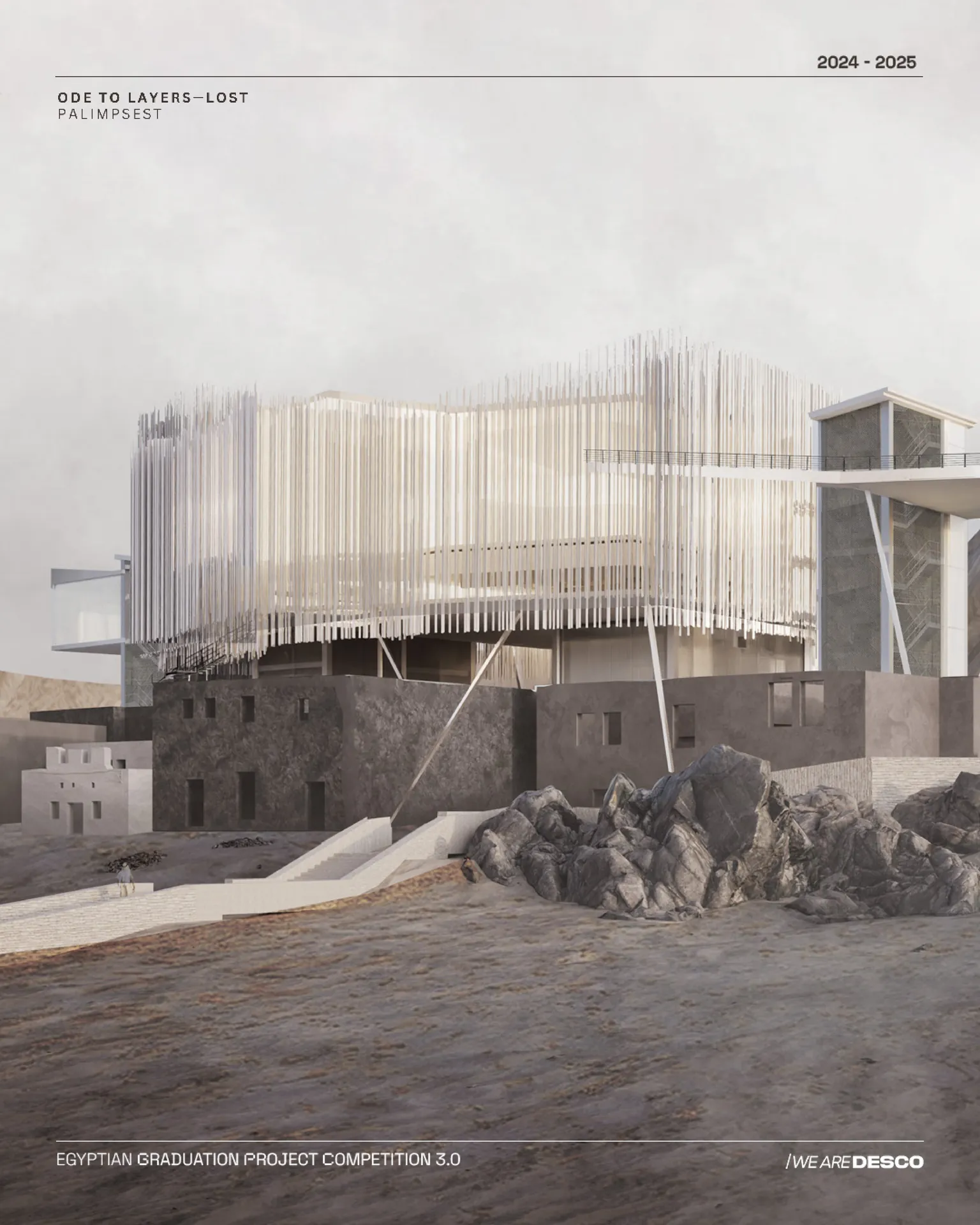
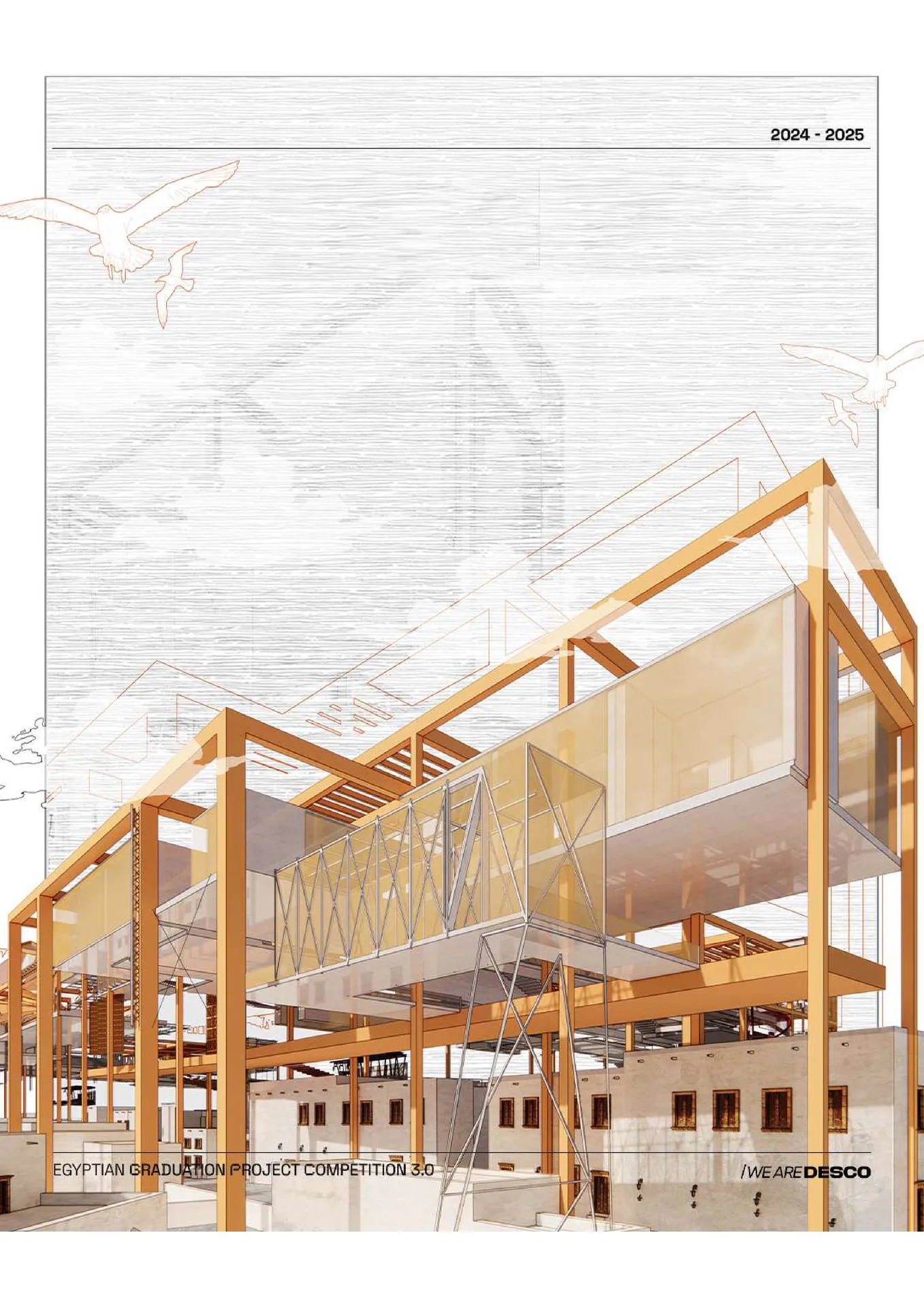
"Dust Weaver is a graduation project that reimagines how architecture can turn environmental harm into opportunity. In Aswan, Egypt, granite quarries release more than 1.5 million tons of airborne dust annually, polluting the air, damaging farmland, and causing severe health risks. This pollution is directly linked to 10% of premature deaths in the region, making granite dust both a public health crisis and an environmental challenge. The project addresses this by designing a system of 40-meter-high timber cylinders, wrapped with electrostatically charged fabrics that passively capture airborne dust at optimal wind heights between 30 and 50 meters. Once the fabric becomes saturated, it cycles down into a cleaning chamber, where it is washed by water jets, dried with hot rollers, and returned for reuse. The collected dust is processed into glass fibers, which are then woven into cooling textiles—shawls, jalabiyas, and garments—that work by absorbing moisture from the body, thereby reducing skin temperature by 5–7°C and directly responding to Aswan’s harsh desert climate. At the heart of the project lies a fabric market, which becomes both a cultural and economic hub. Here, the cooling textiles are displayed and sold, offering artisans new opportunities and aligning production with Aswan’s tourism season to maximize community benefit. By rooting the design in weaving traditions, Dust Weaver also revives local craft, ensuring that the solution is not only technological but also cultural. Architecturally, the project combines stone structures for permanence with timber cylinders as iconic dust collectors. The result is a hybrid typology—part environmental infrastructure, part production facility, and part cultural market. Ultimately, Dust Weaver is a prototype for resilience. It demonstrates how design can filter air, improve health, revive heritage, and empower local economies. By capturing what once harmed Aswan and transforming it into value, the project shows how architecture can weave environment, culture, and community into one."

Winners
Third Prize Winner
Rahf Ibrahim
AASTMT Smart Village Branch
Project Brief
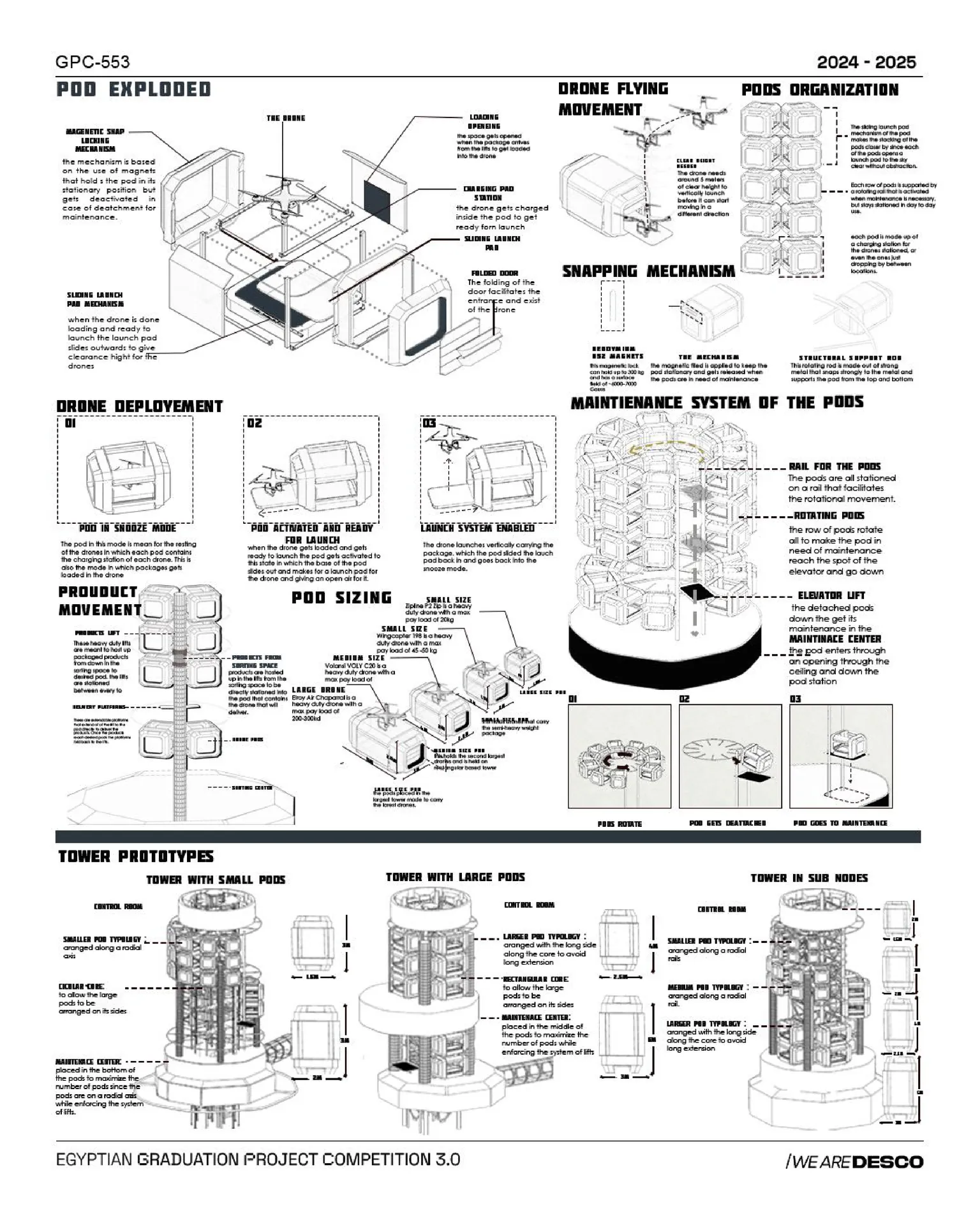
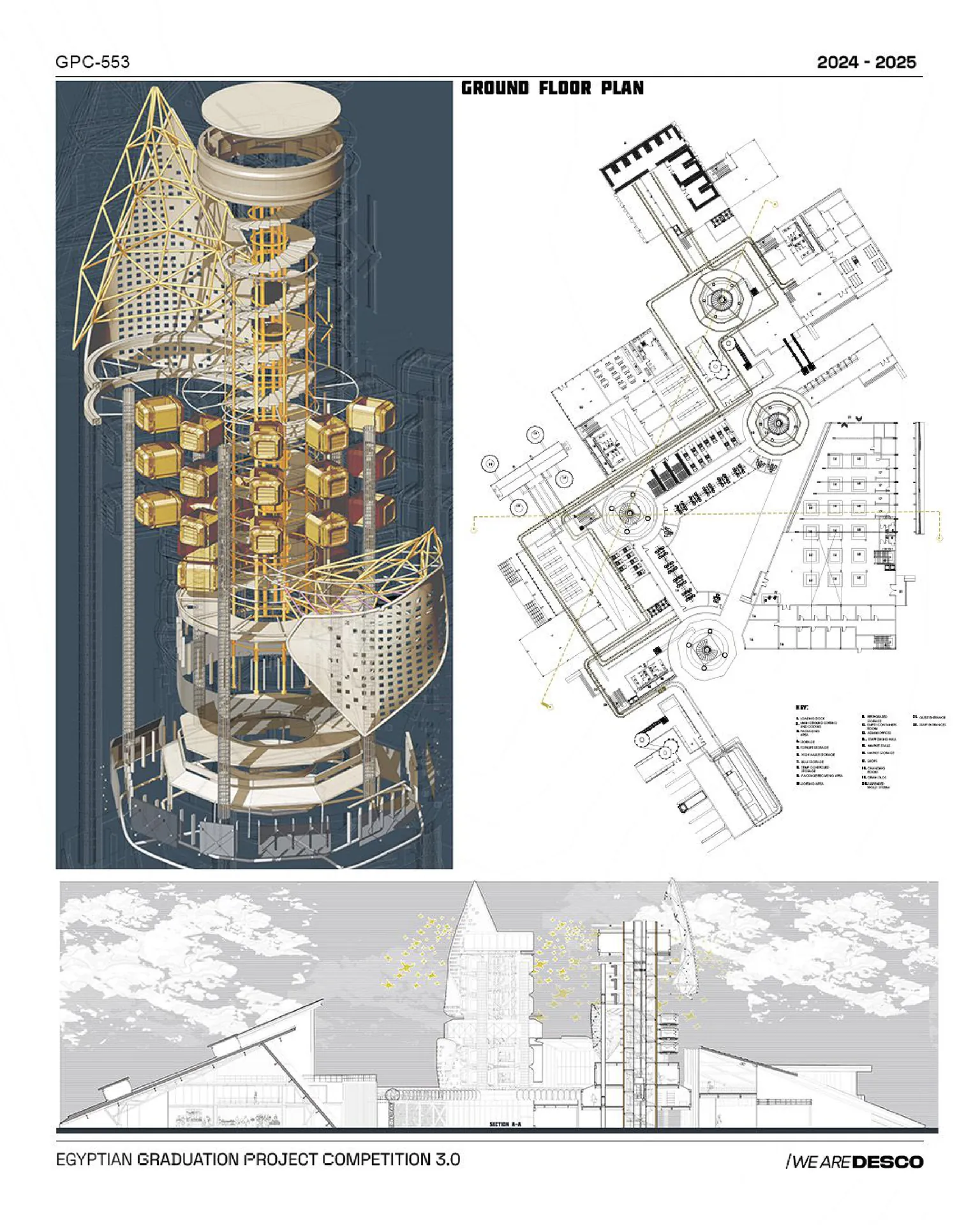
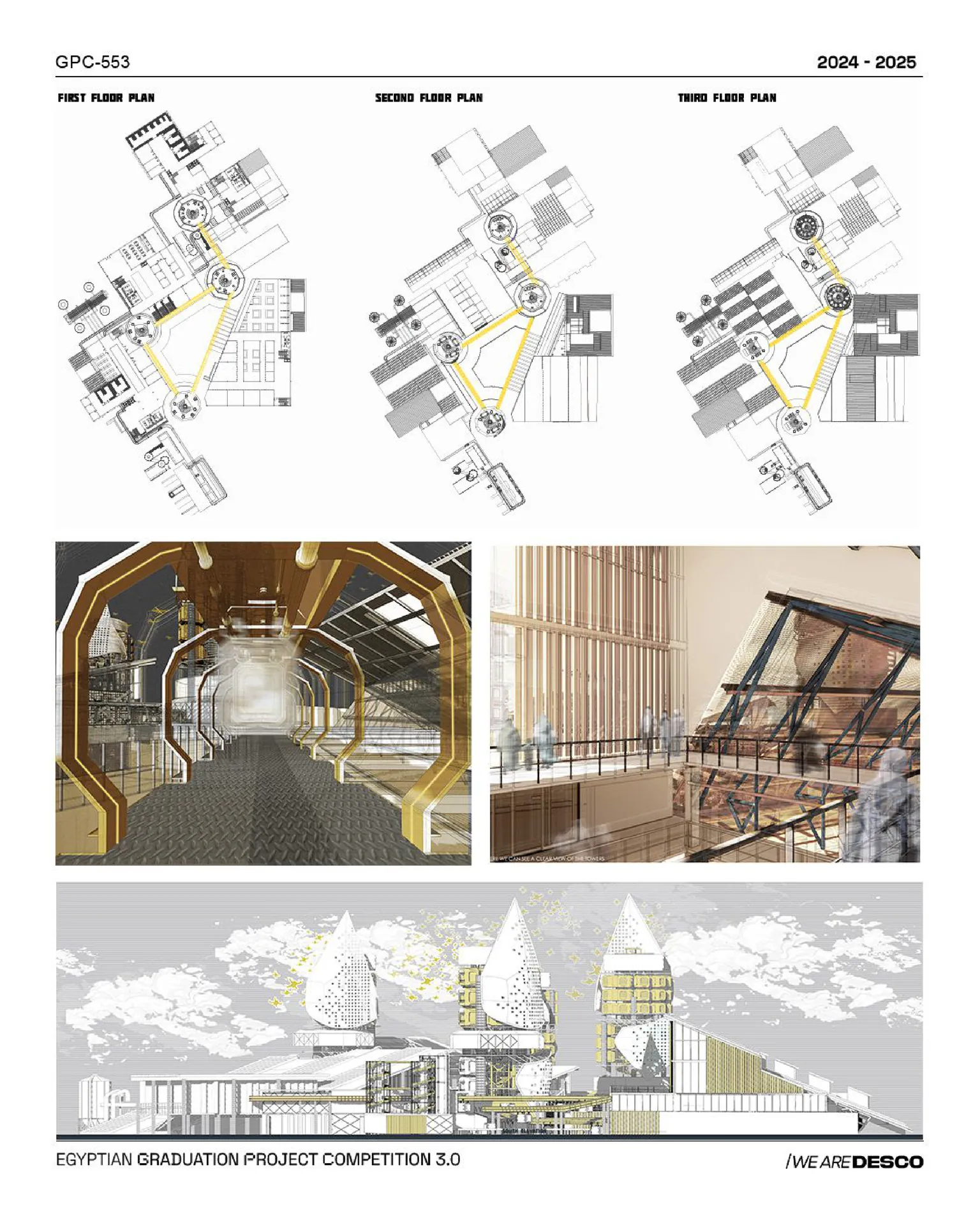
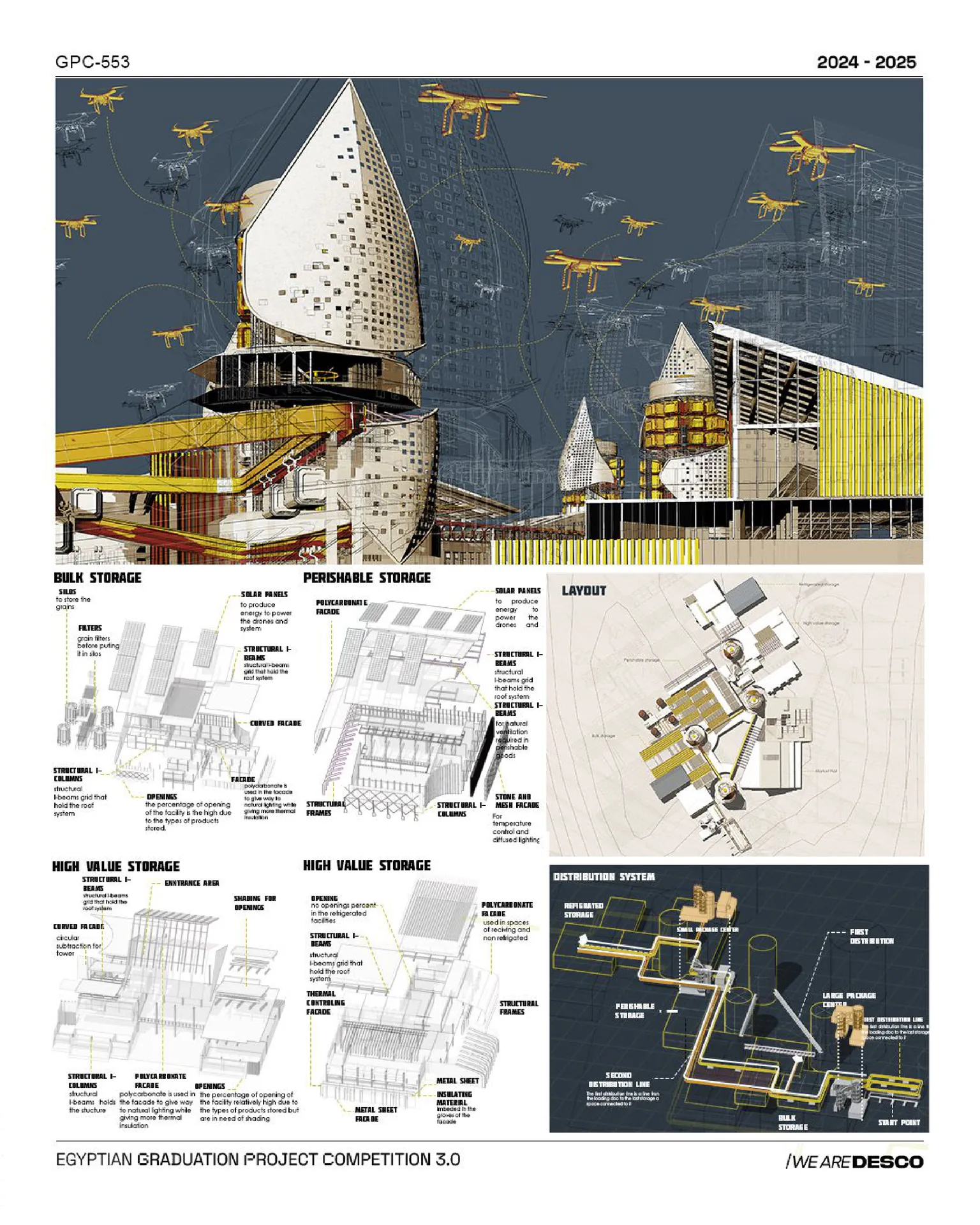
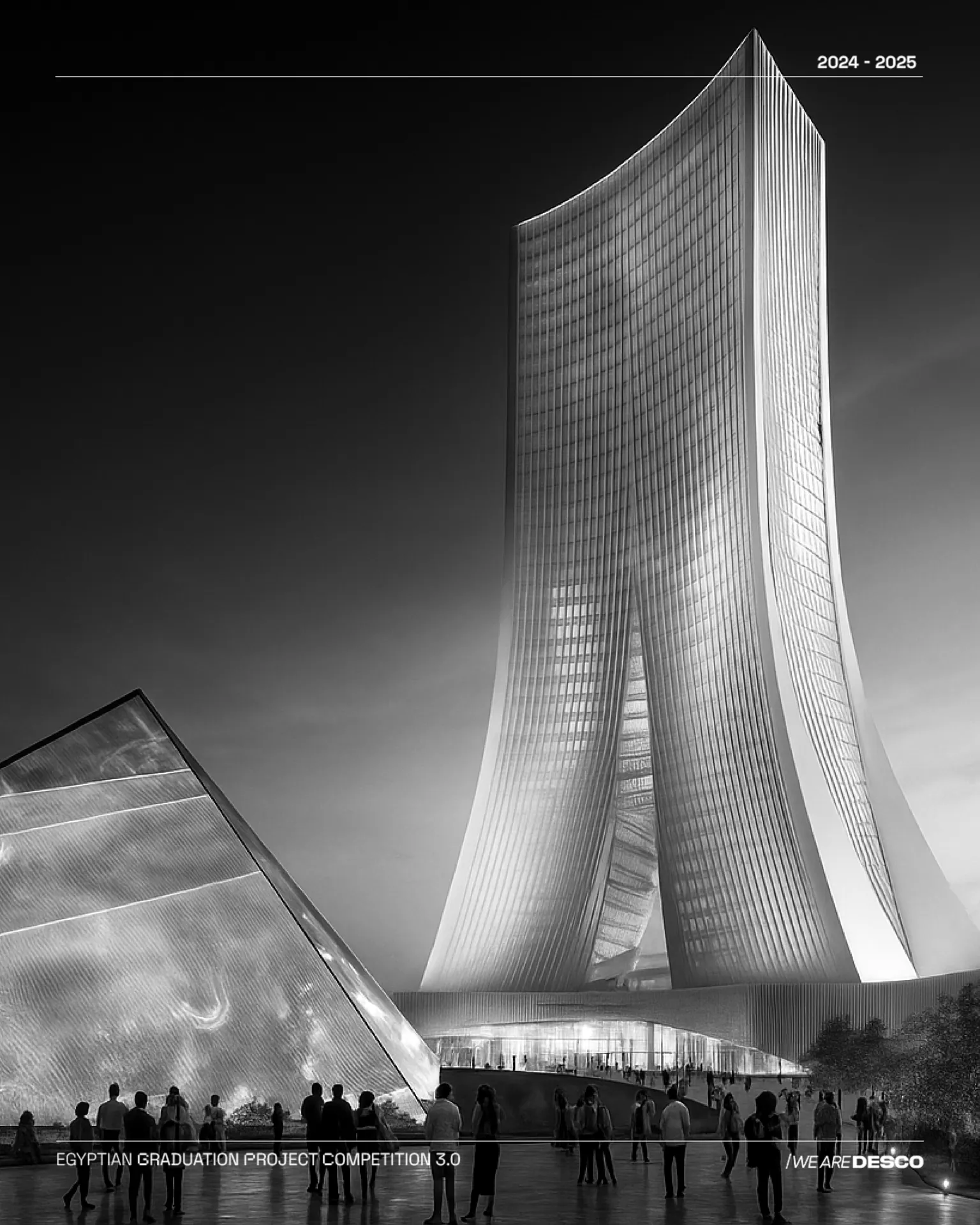
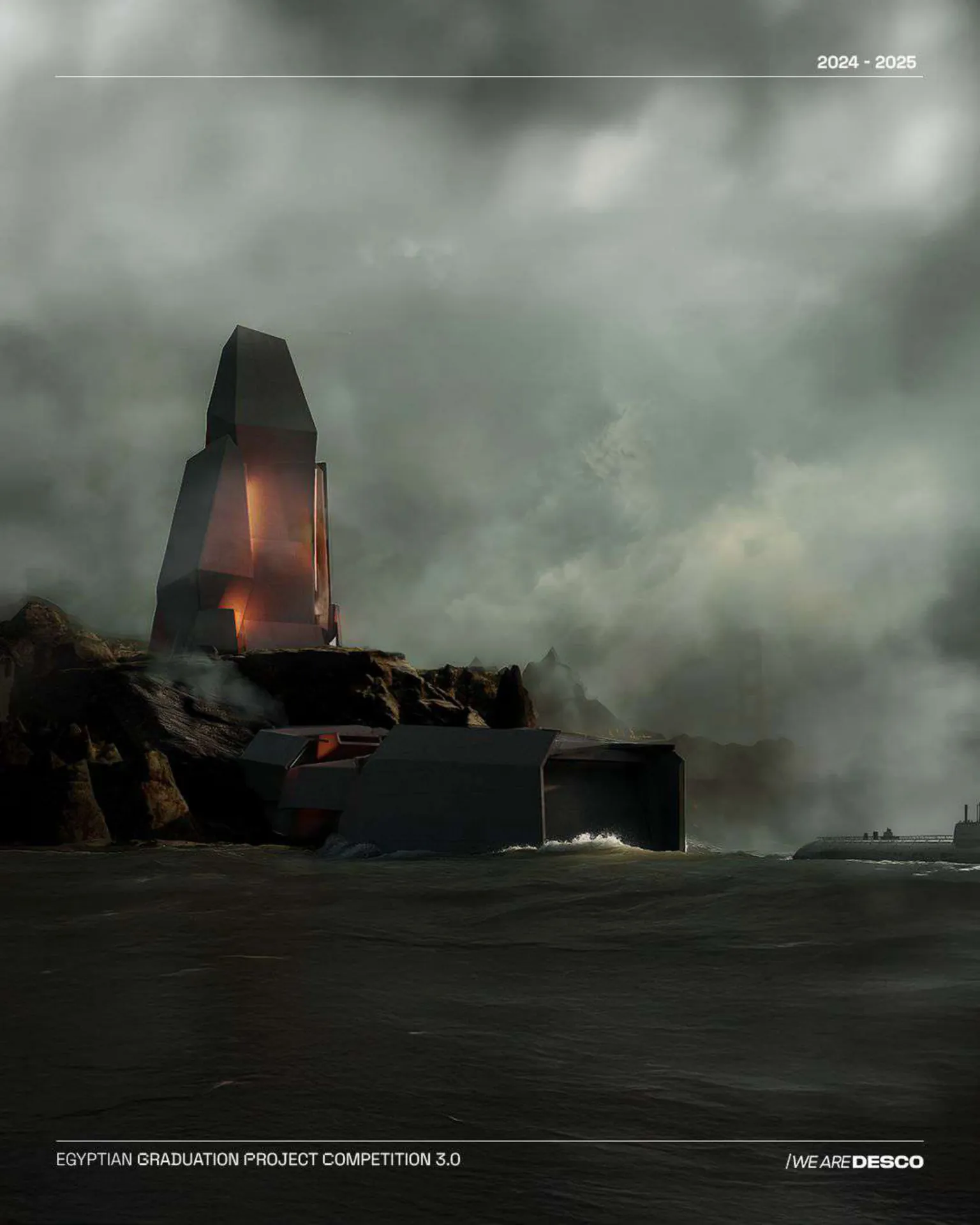
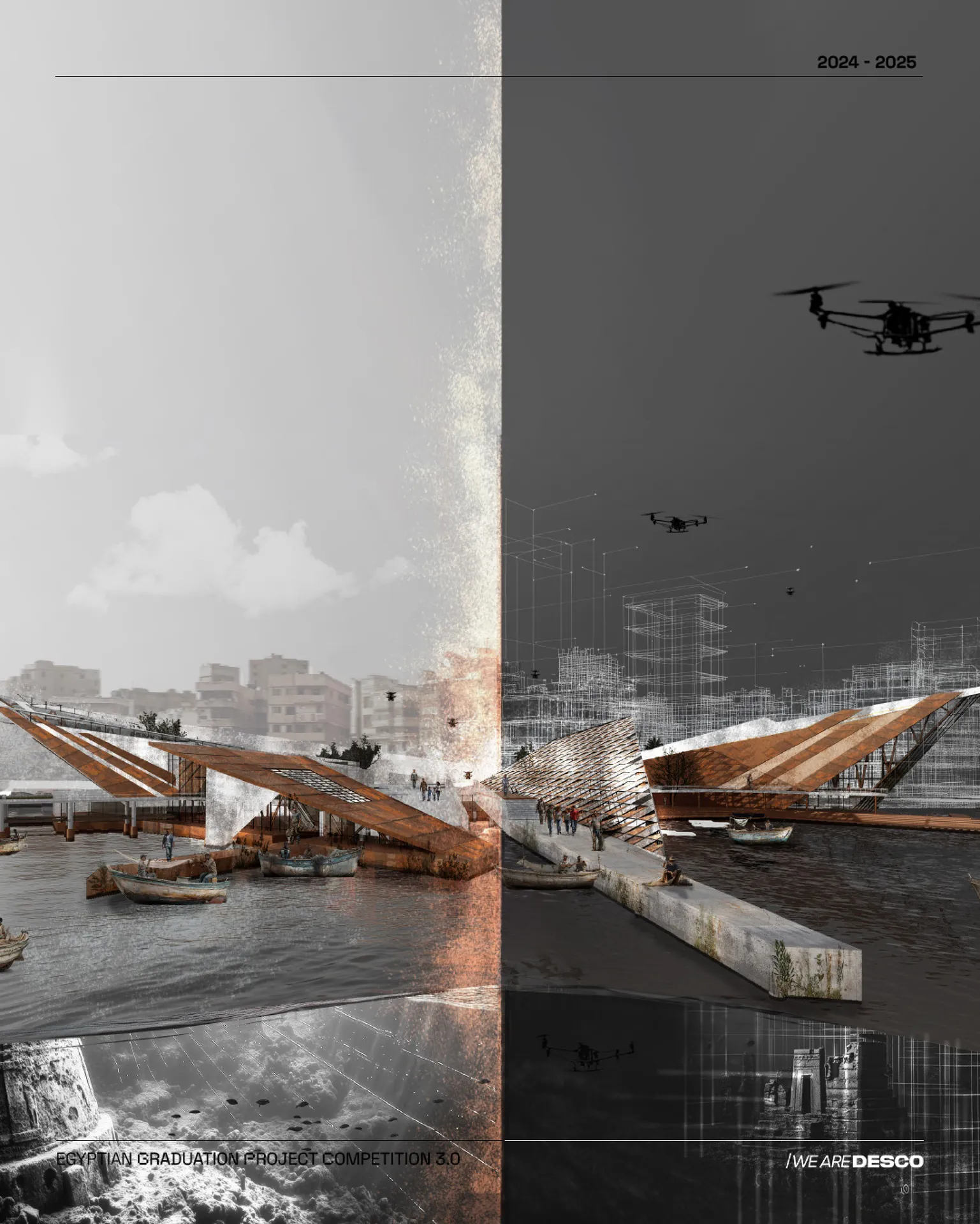
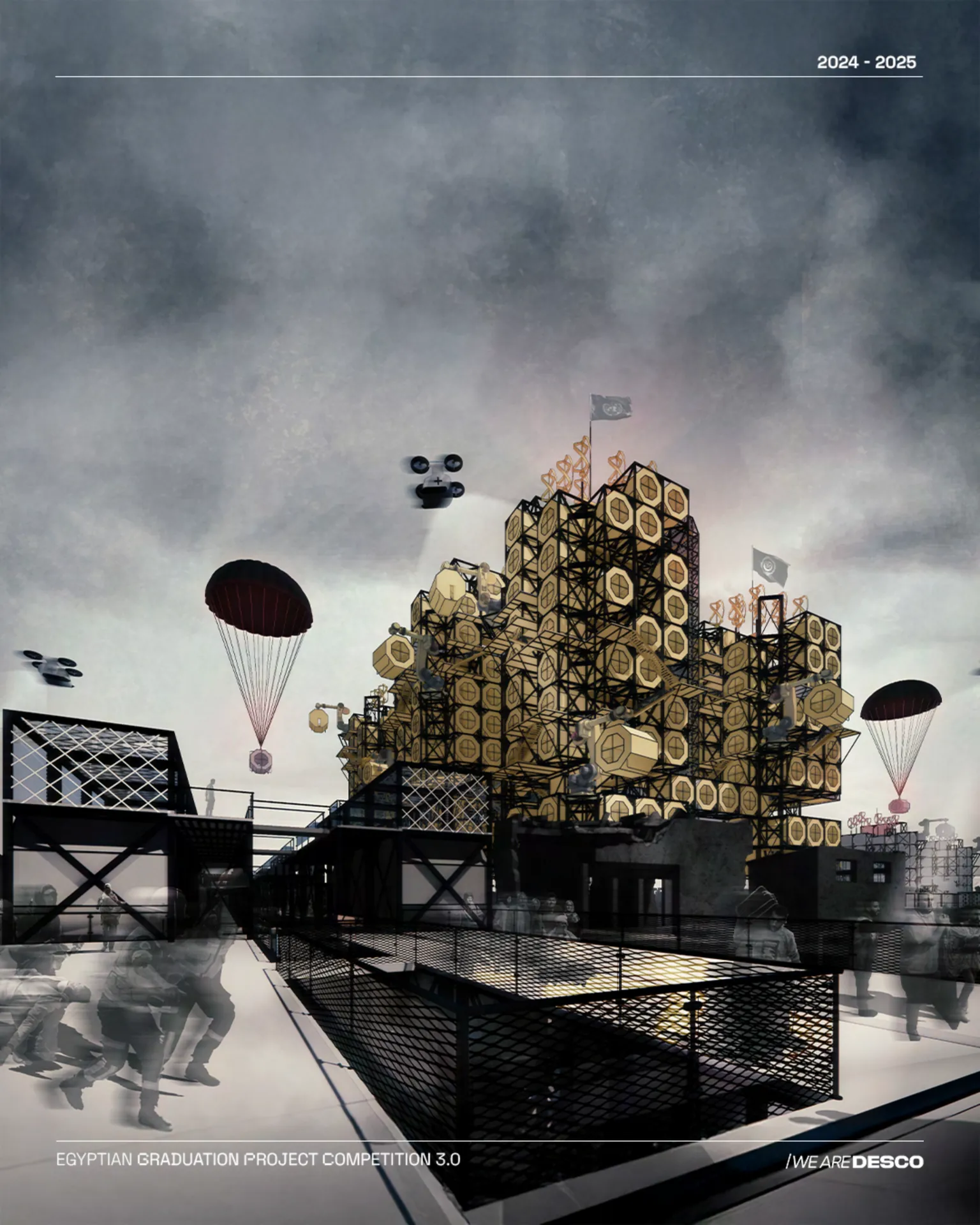
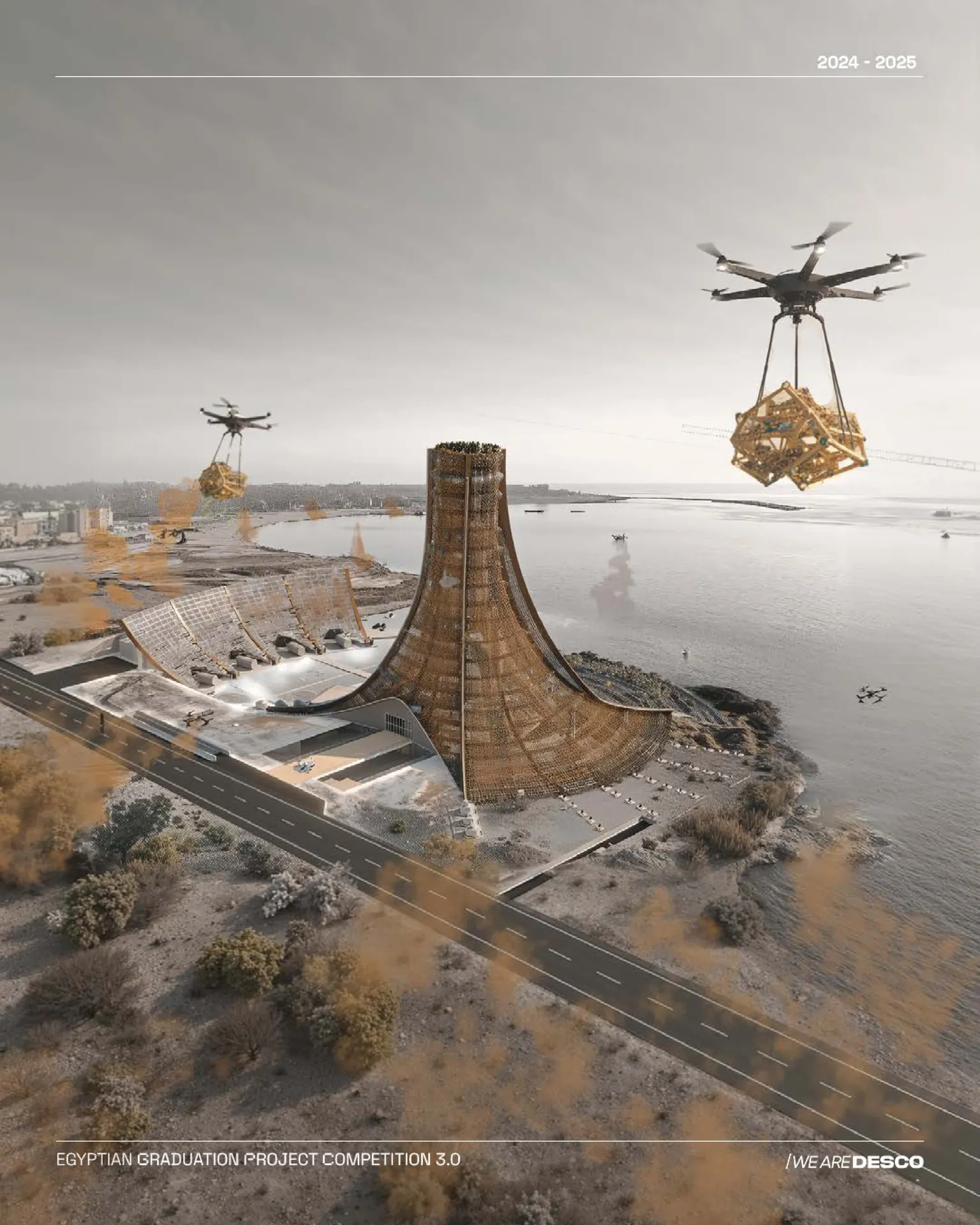
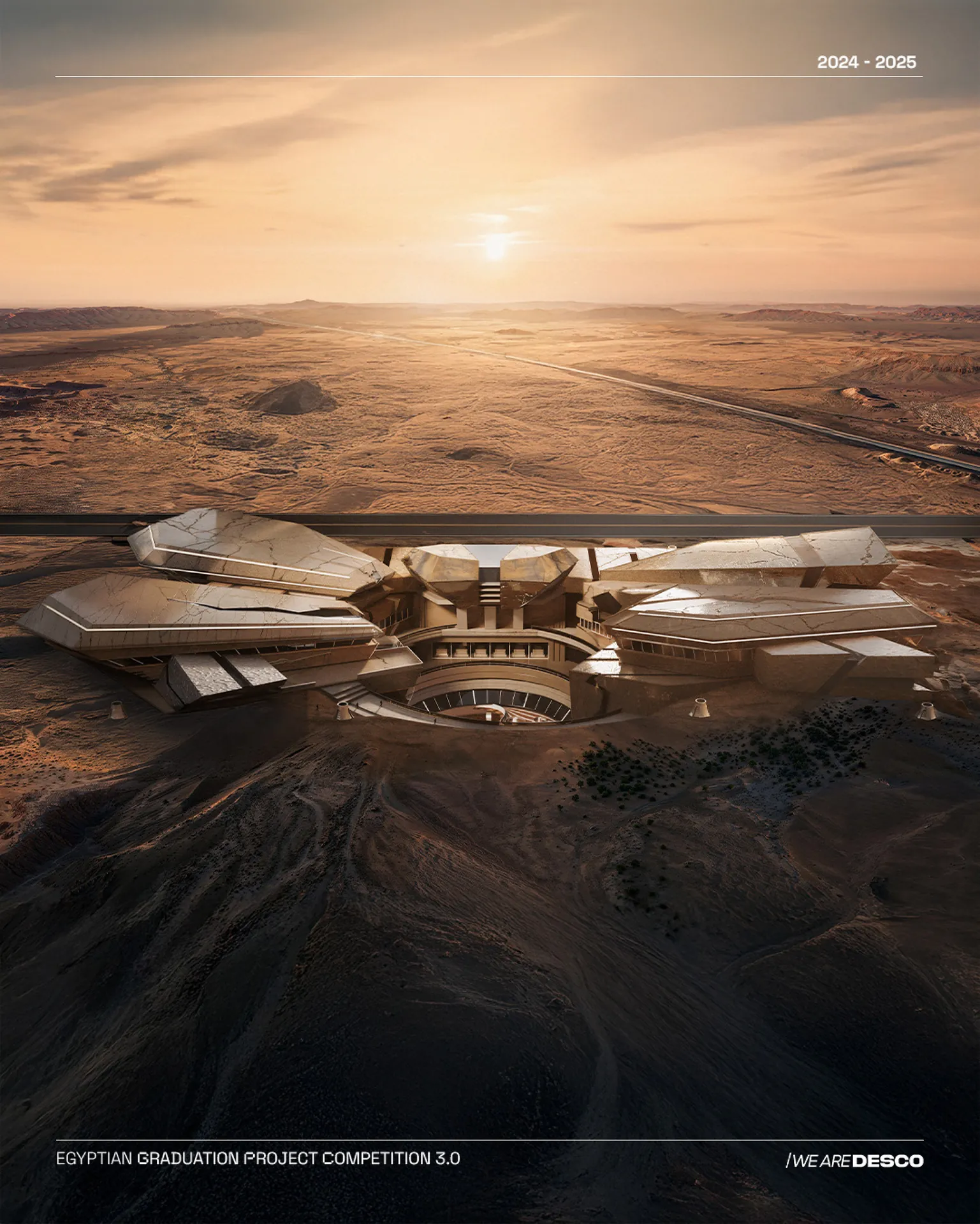
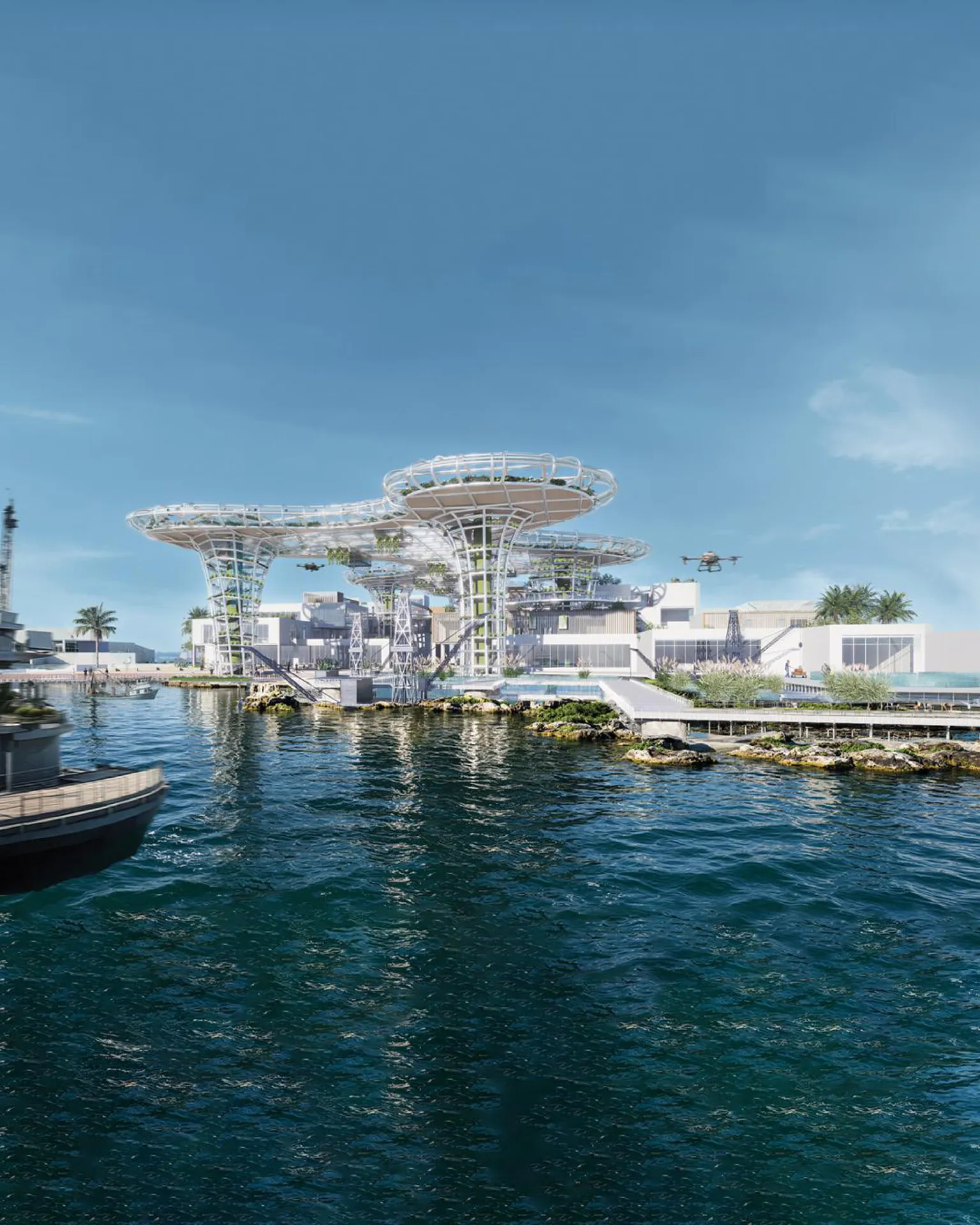
Drone Nest
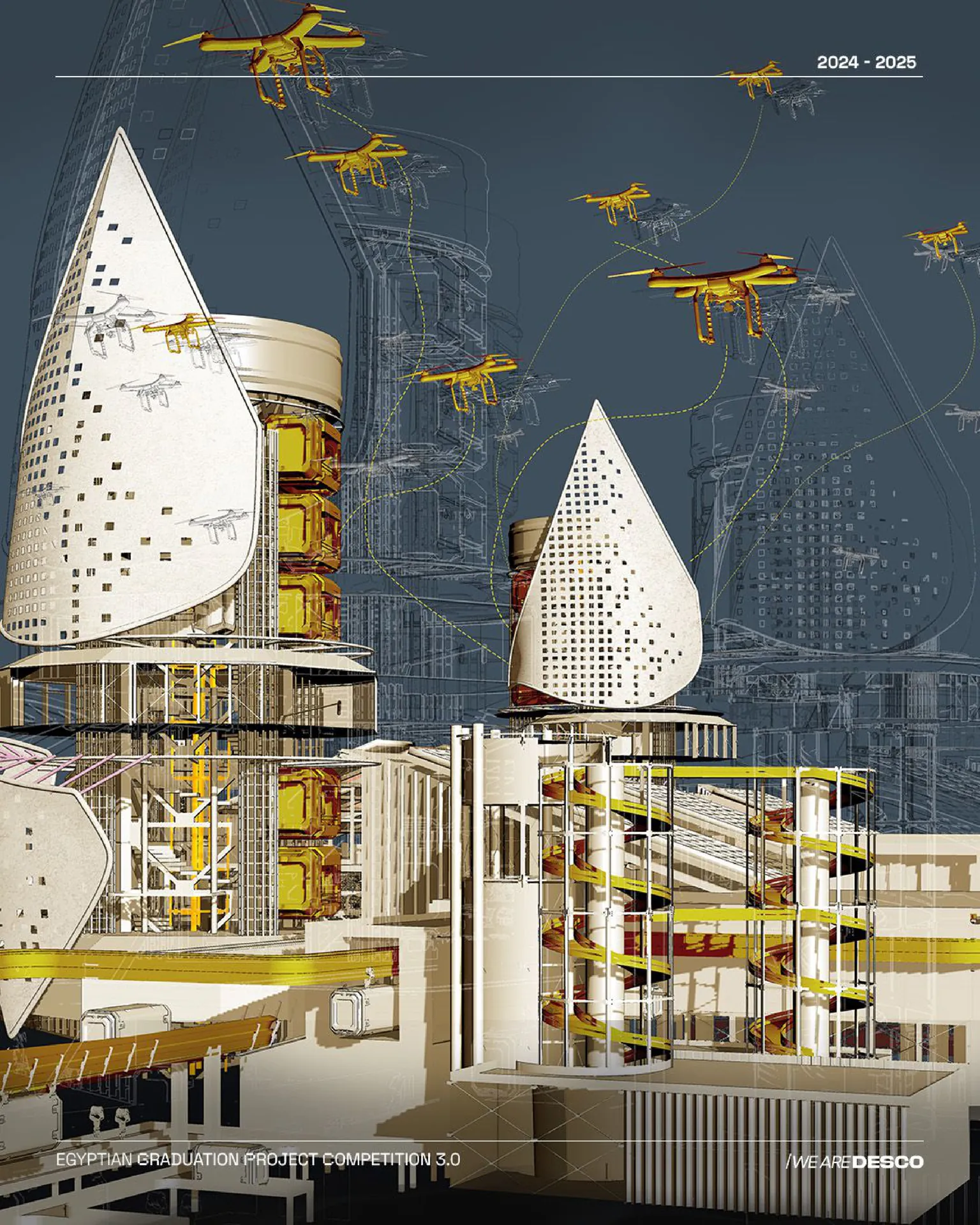
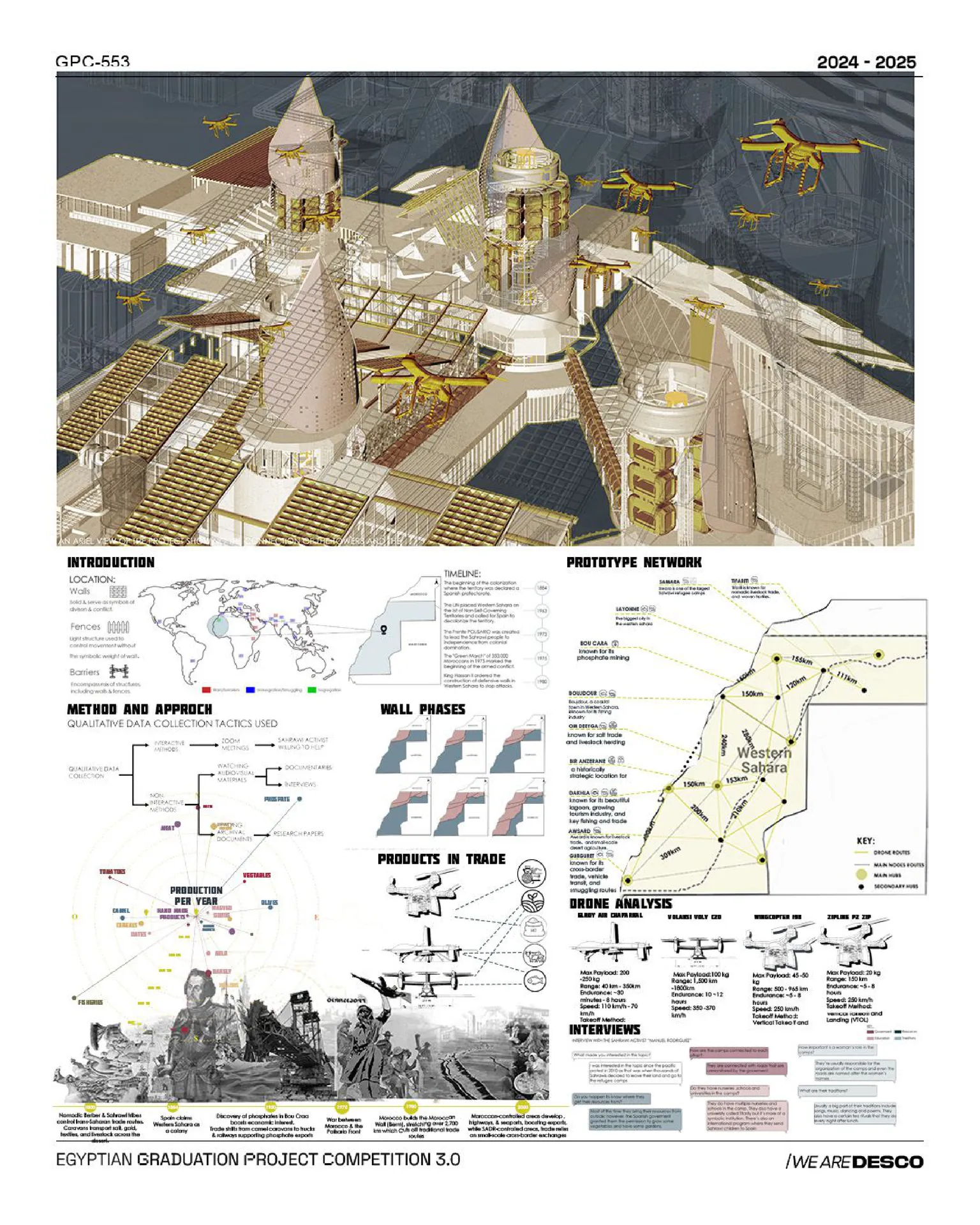
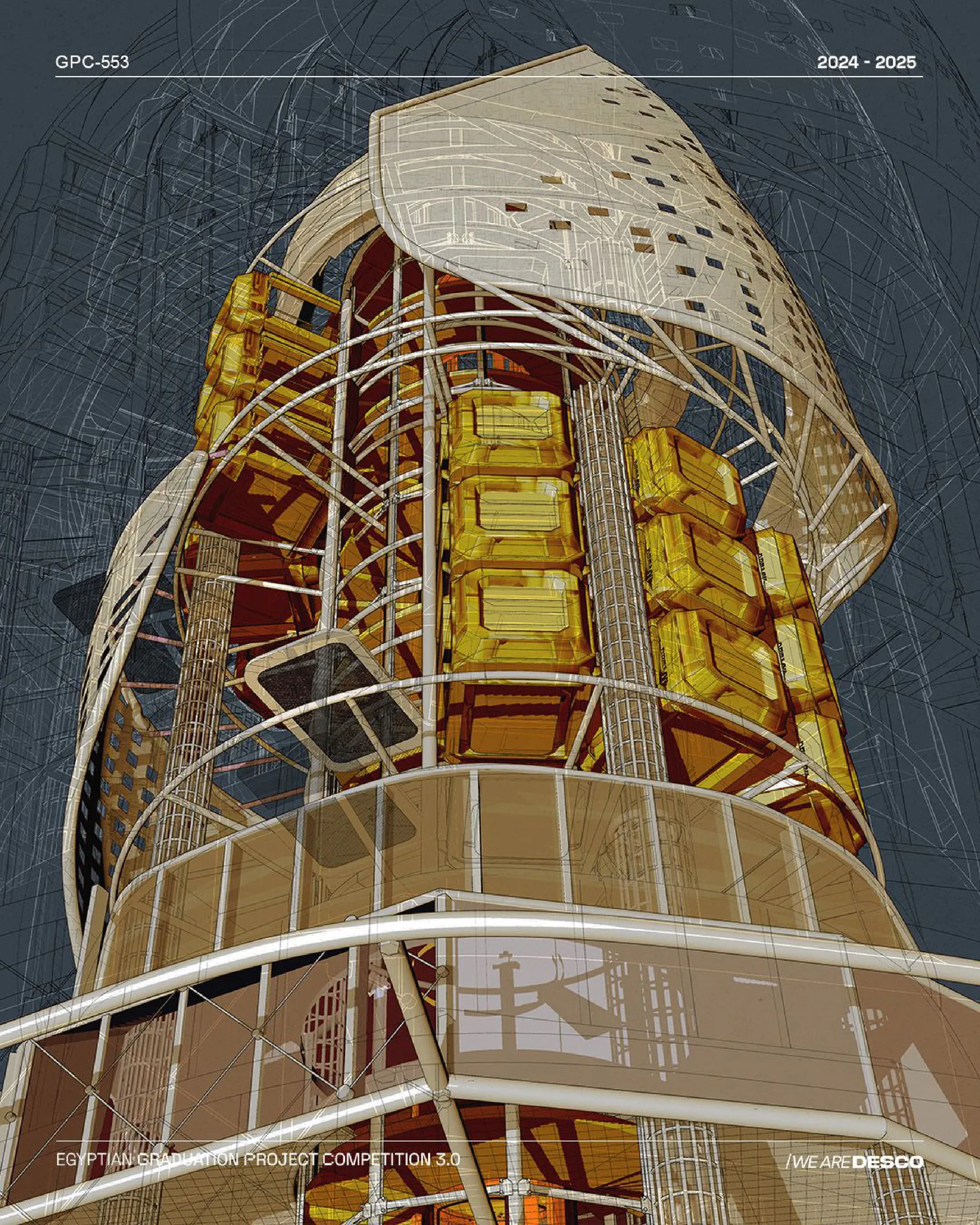
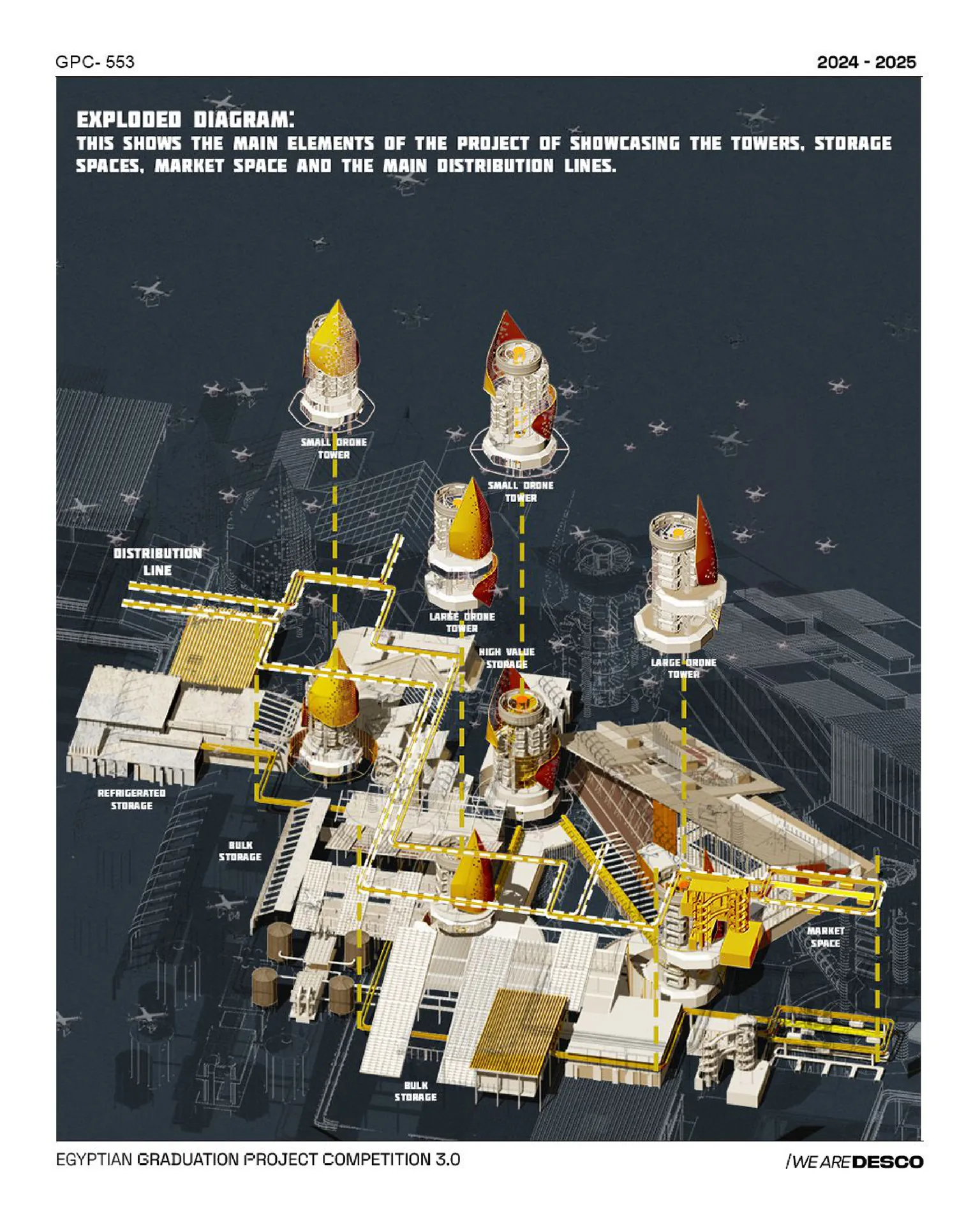
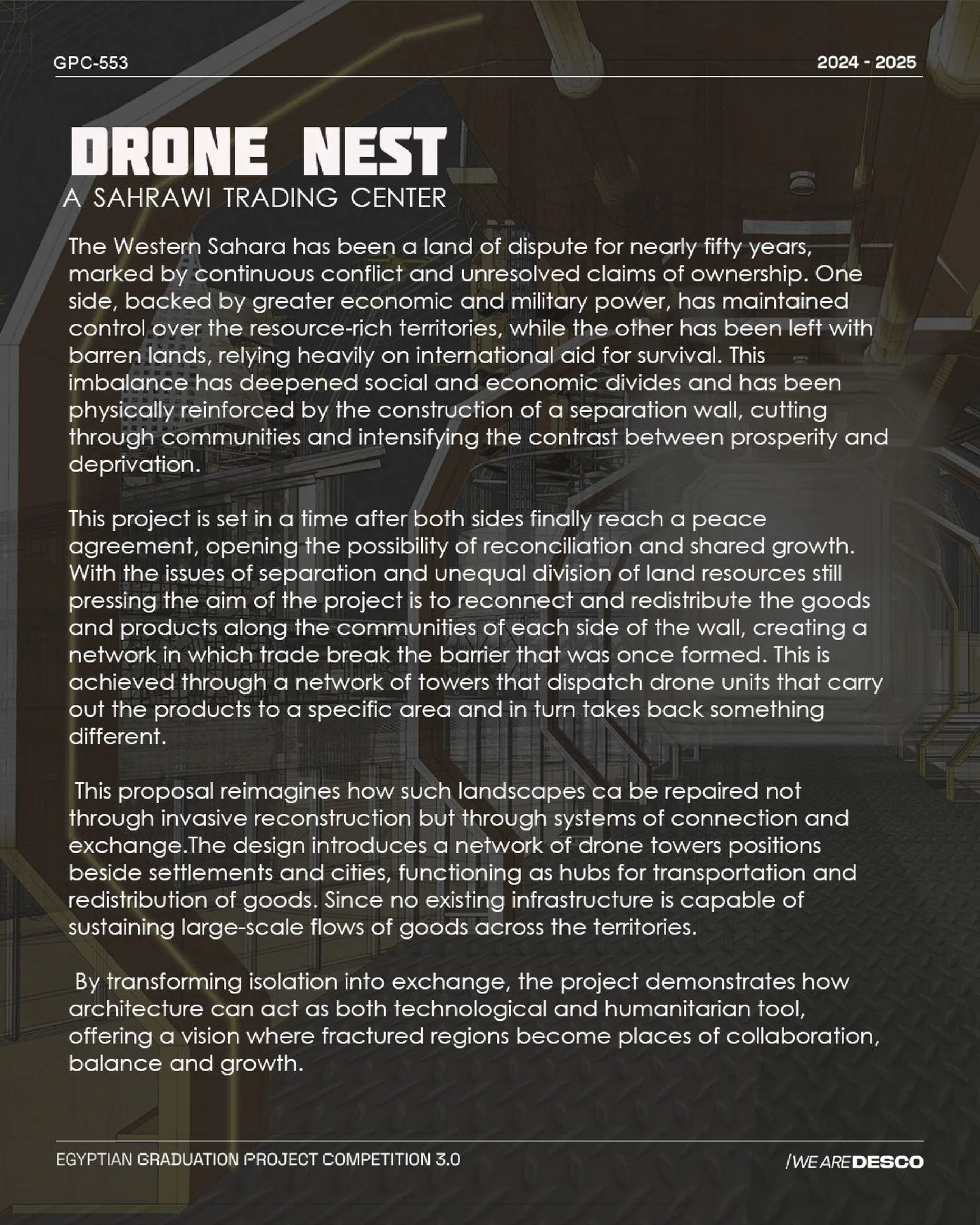
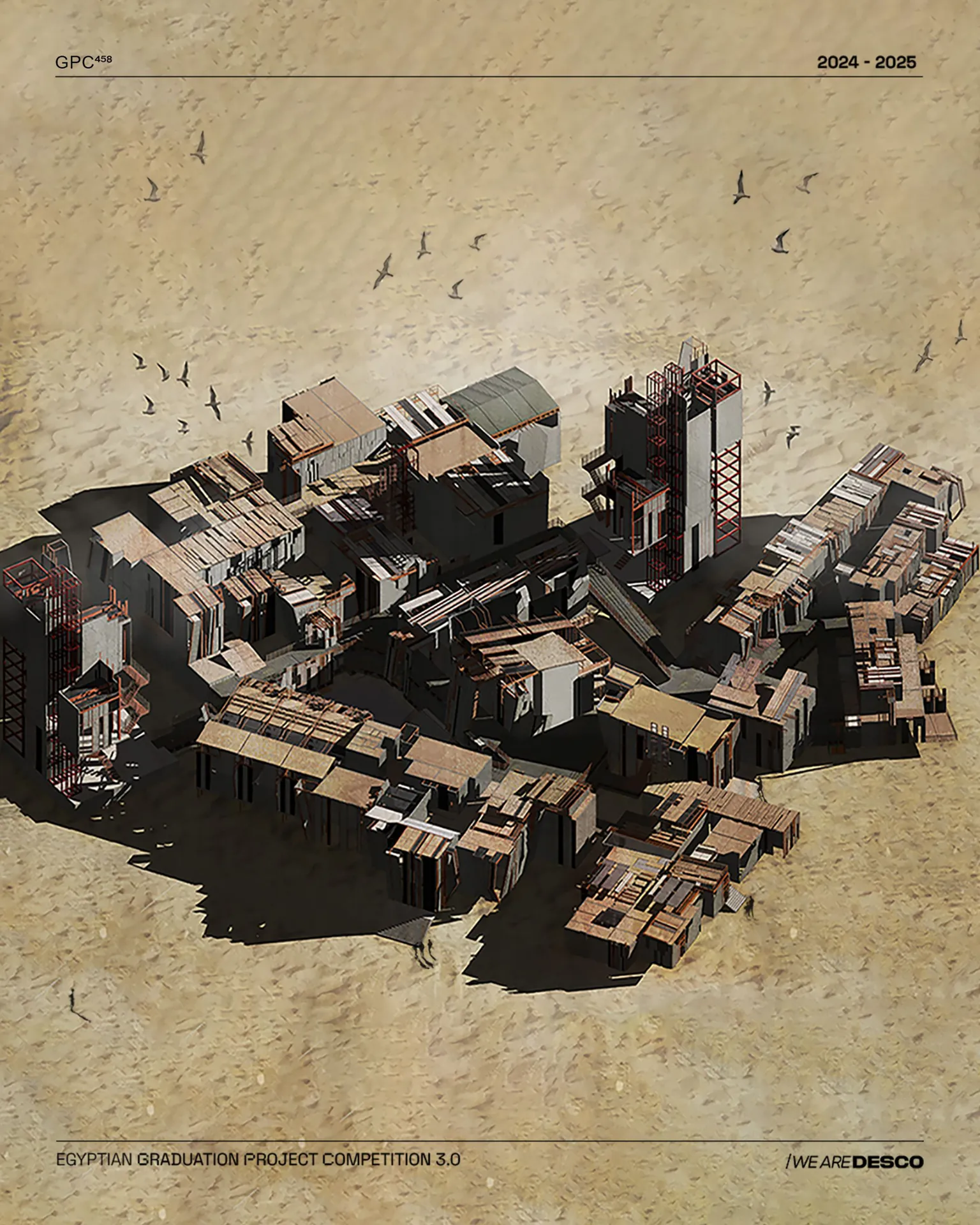
The Western Sahara has been a land of dispute for nearly fifty years, marked by continuous conflict and unresolved claims of ownership. One side, backed by greater economic and military power, has maintained control over the resource-rich territories, while the other has been left with barren lands, relying heavily on international aid for survival. This imbalance has deepened social and economic divides and has been physically reinforced by the construction of a separation wall, cutting through communities and intensifying the contrast between prosperity and deprivation. This project is set in a time after both sides finally reach a peace agreement, opening the possibility of reconciliation and shared growth. With the issues of separation and unequal division of land resources still pressing the aim of the project is to reconnect and redistribute the goods and products along the communities of each side of the wall, creating a network in which trade break the barrier that was once formed. This is achieved through a network of towers that dispatch drone units that carry out the products to a specific area and in turn takes back something different. This proposal reimagines how such landscapes ca be repaired not through invasive reconstruction but through systems of connection and exchange. The design introduces a network of drone towers positions beside settlements and cities, functioning as hubs for transportation and redistribution of goods. Since no existing infrastructure is capable of sustaining large-scale flows of goods across the territories. By transforming isolation into exchange, the project demonstrates how architecture can act as both technological and humanitarian tool, offering a vision where fractured regions become places of collaboration, balance and growth.
Winners
Forth Prize Winner
Mariam Hazem
Ain Shams University
Project Brief
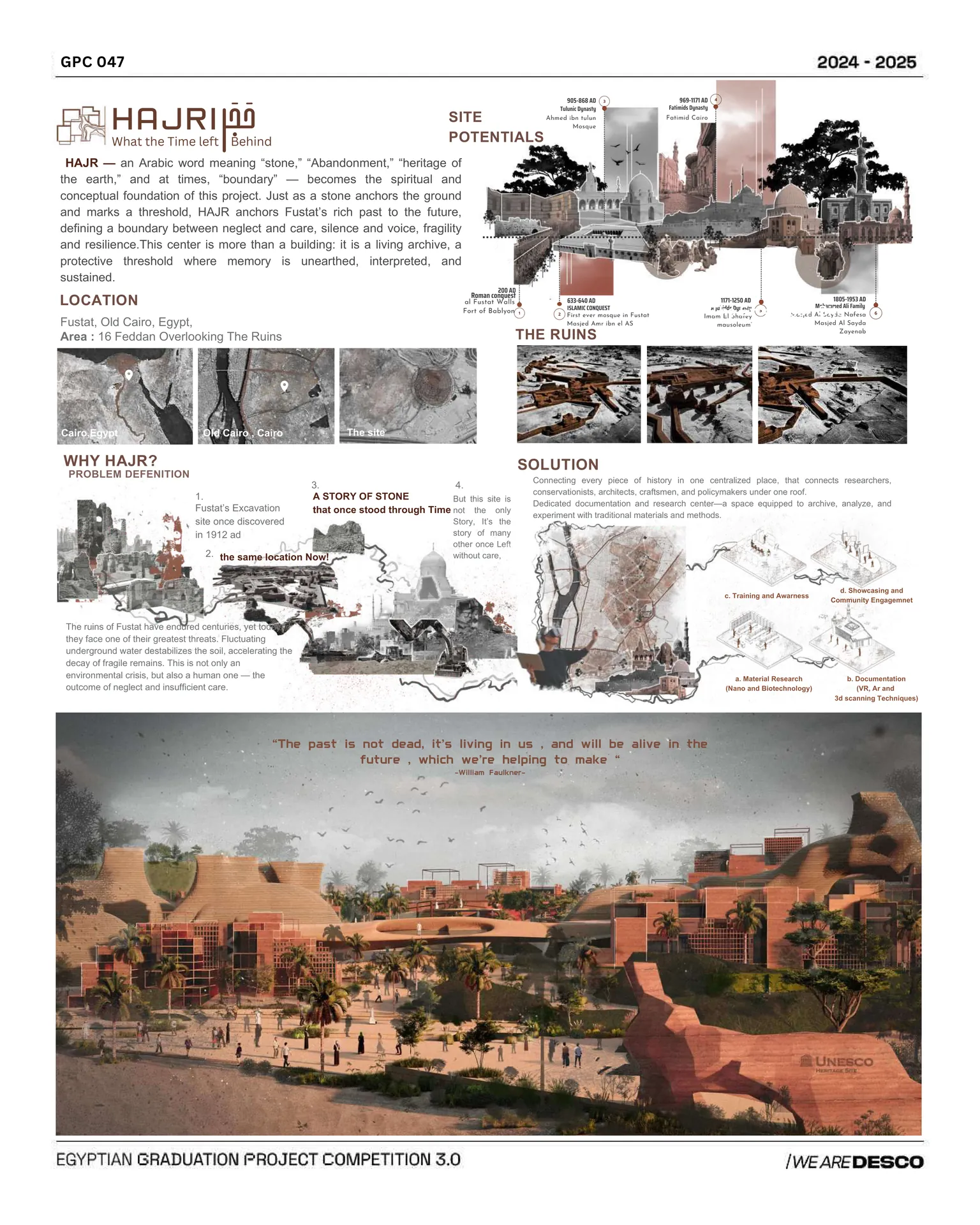
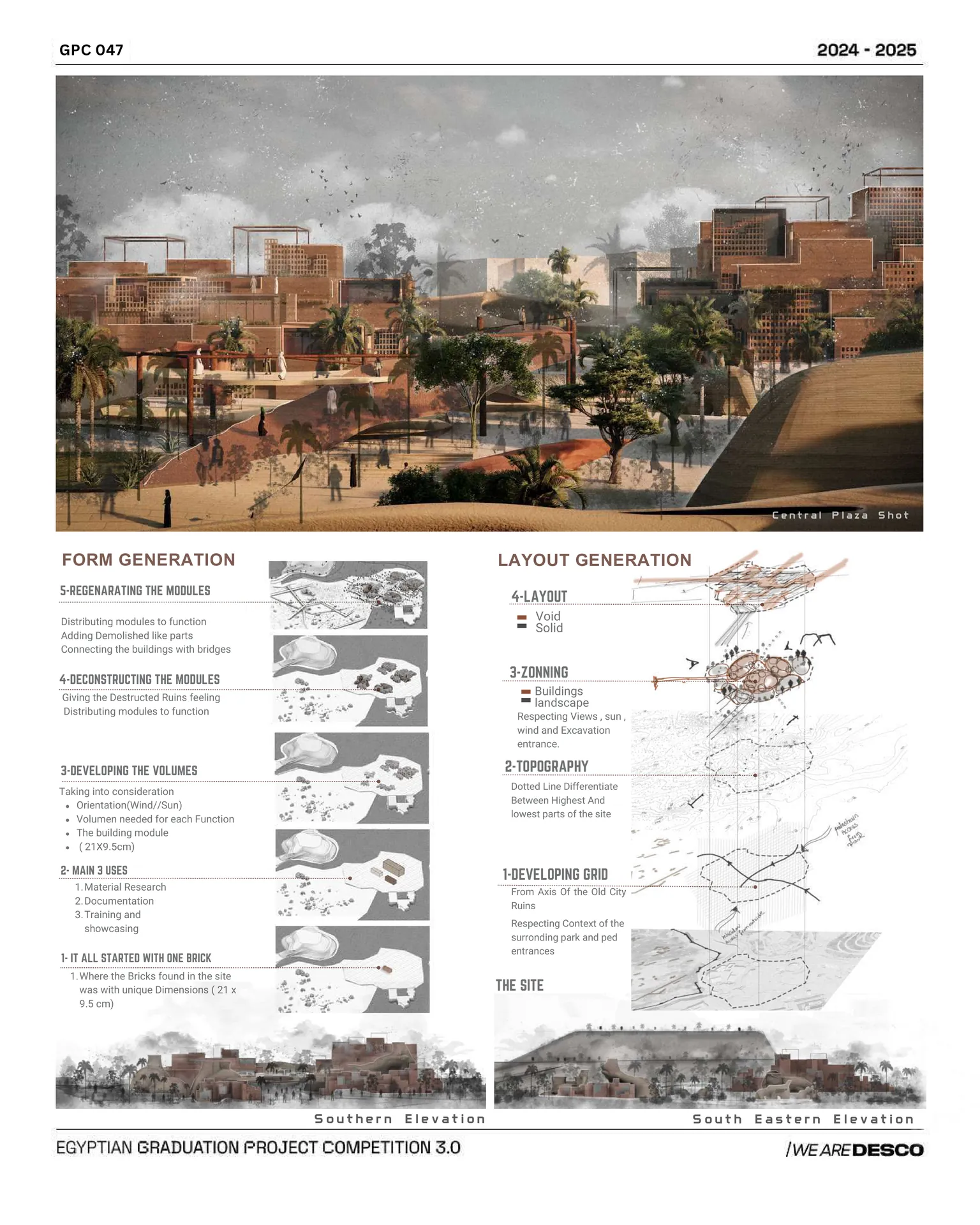
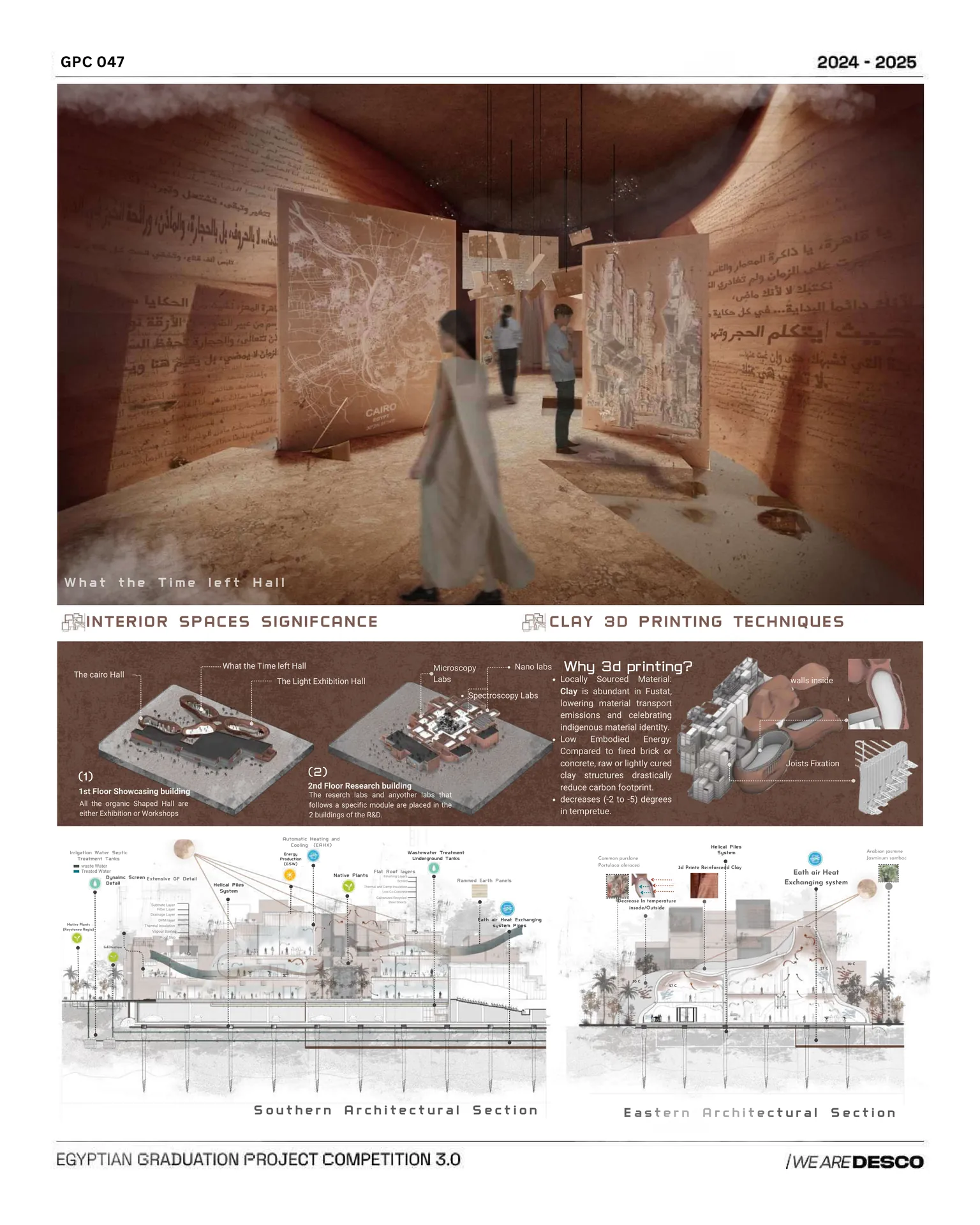
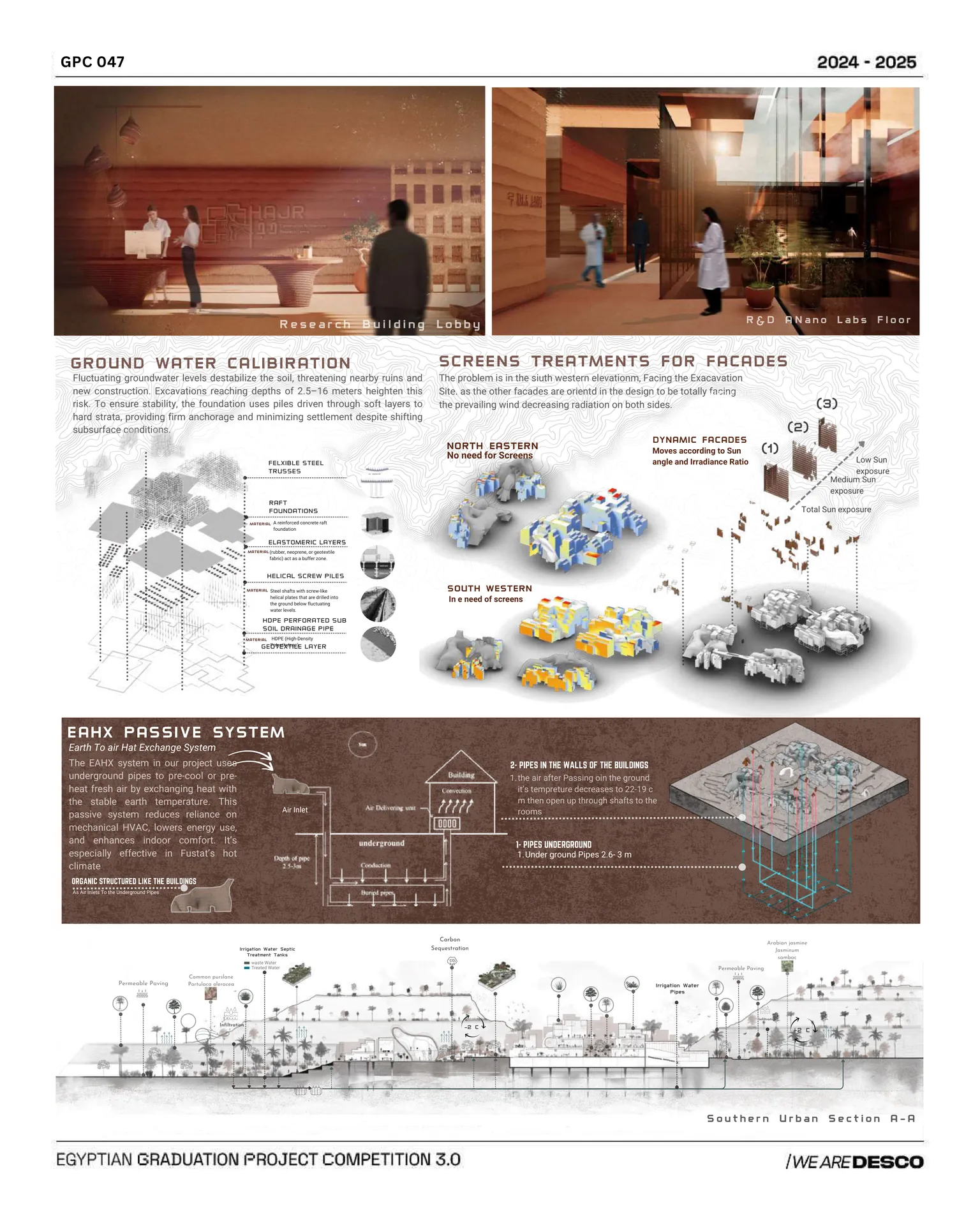
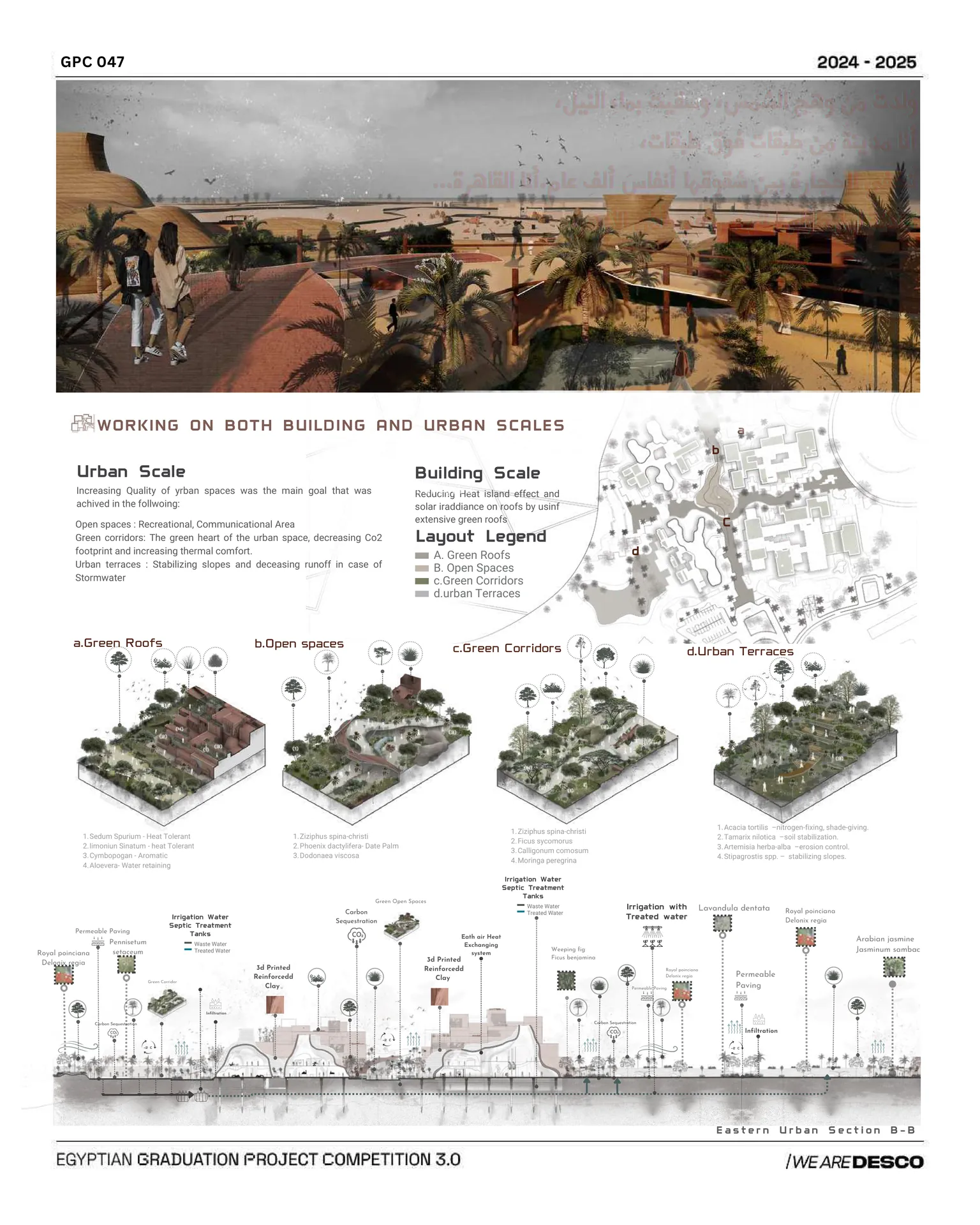
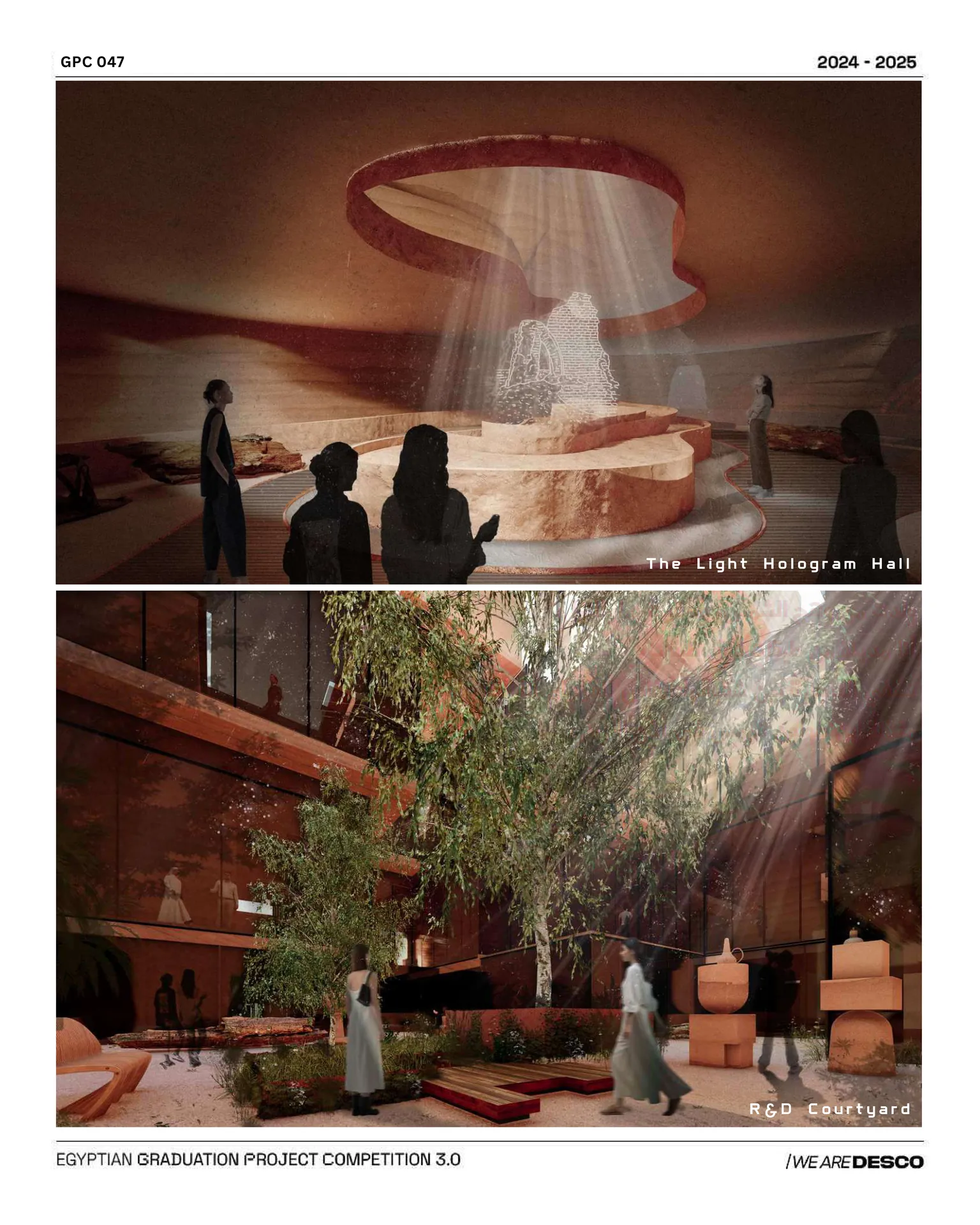
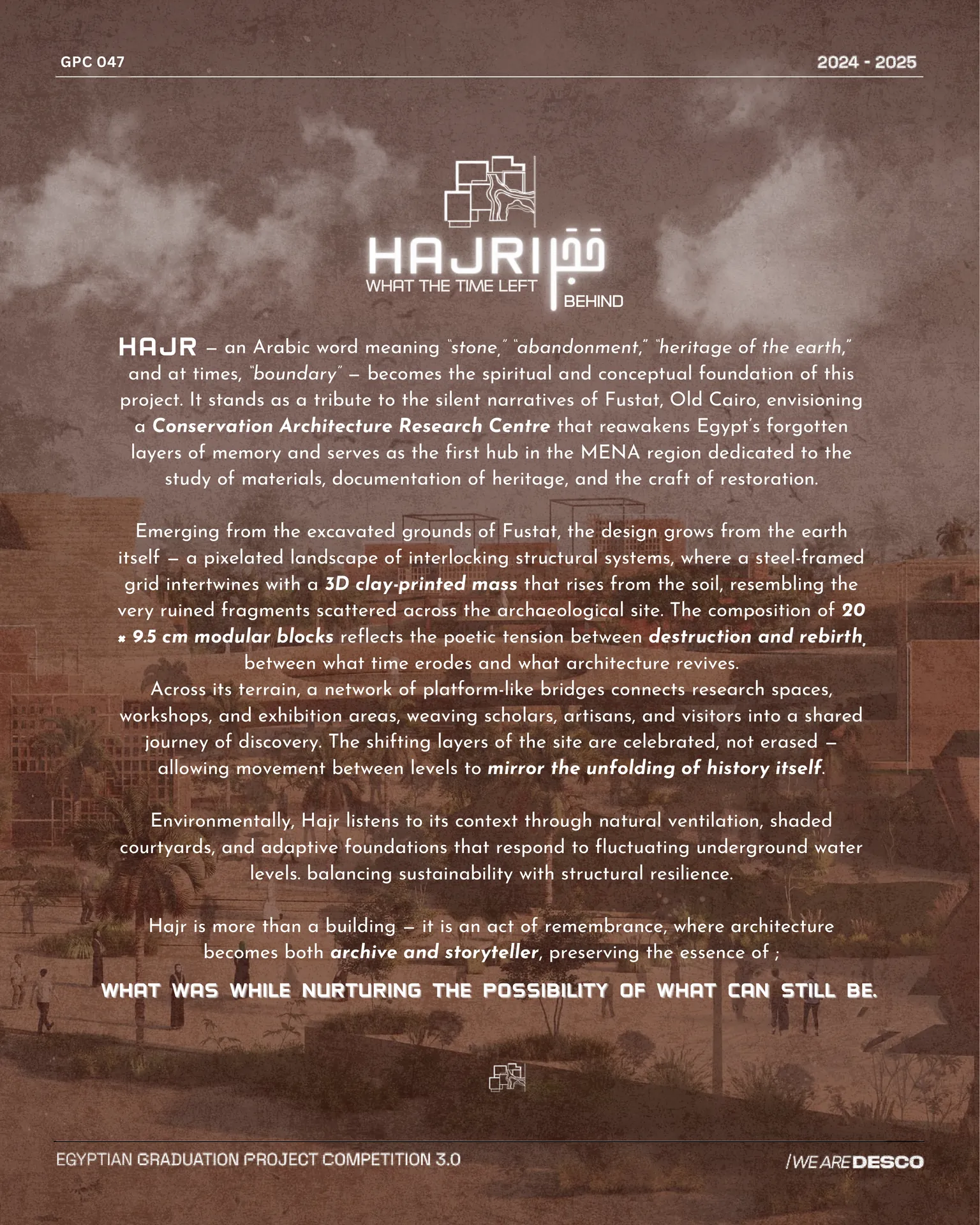
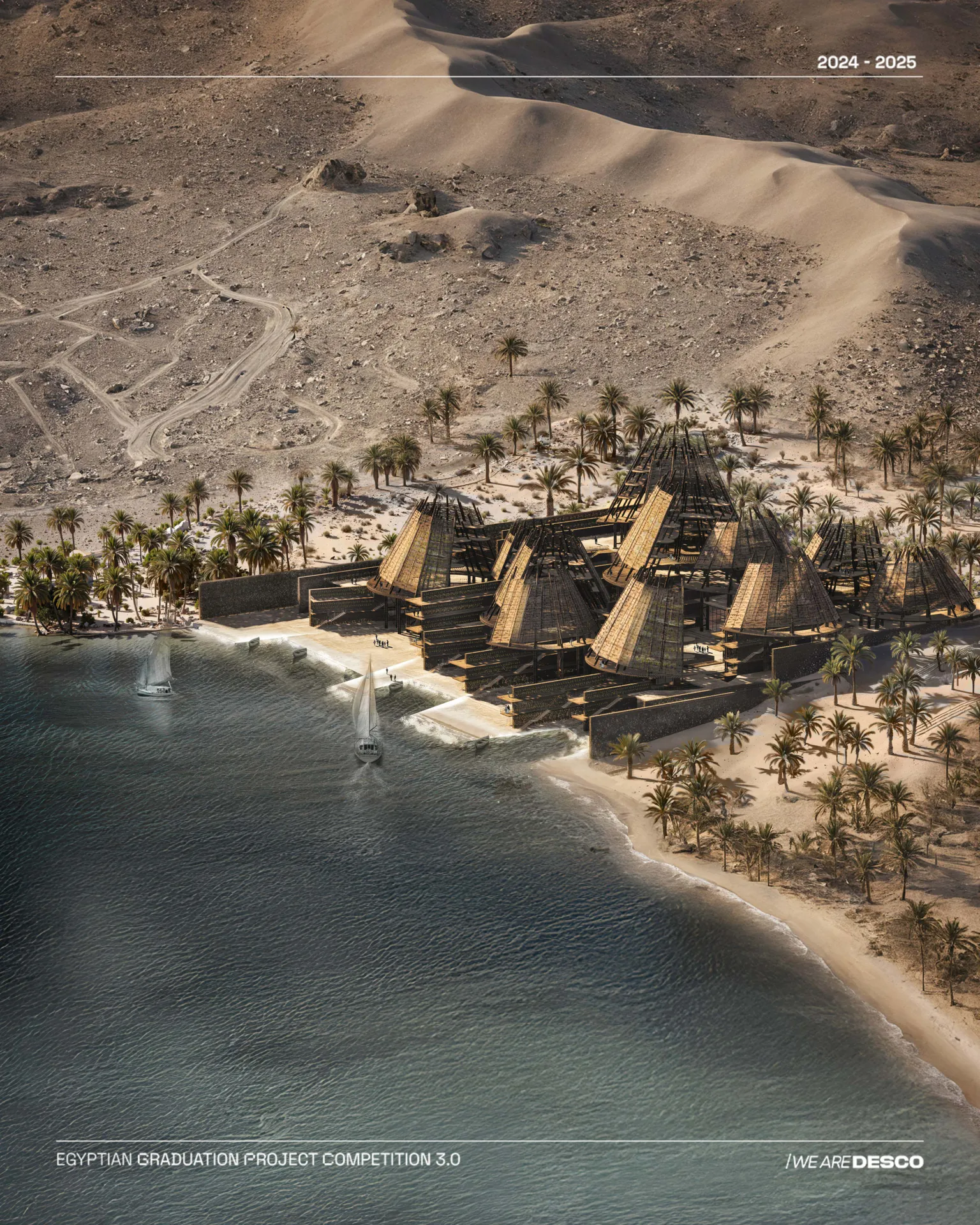
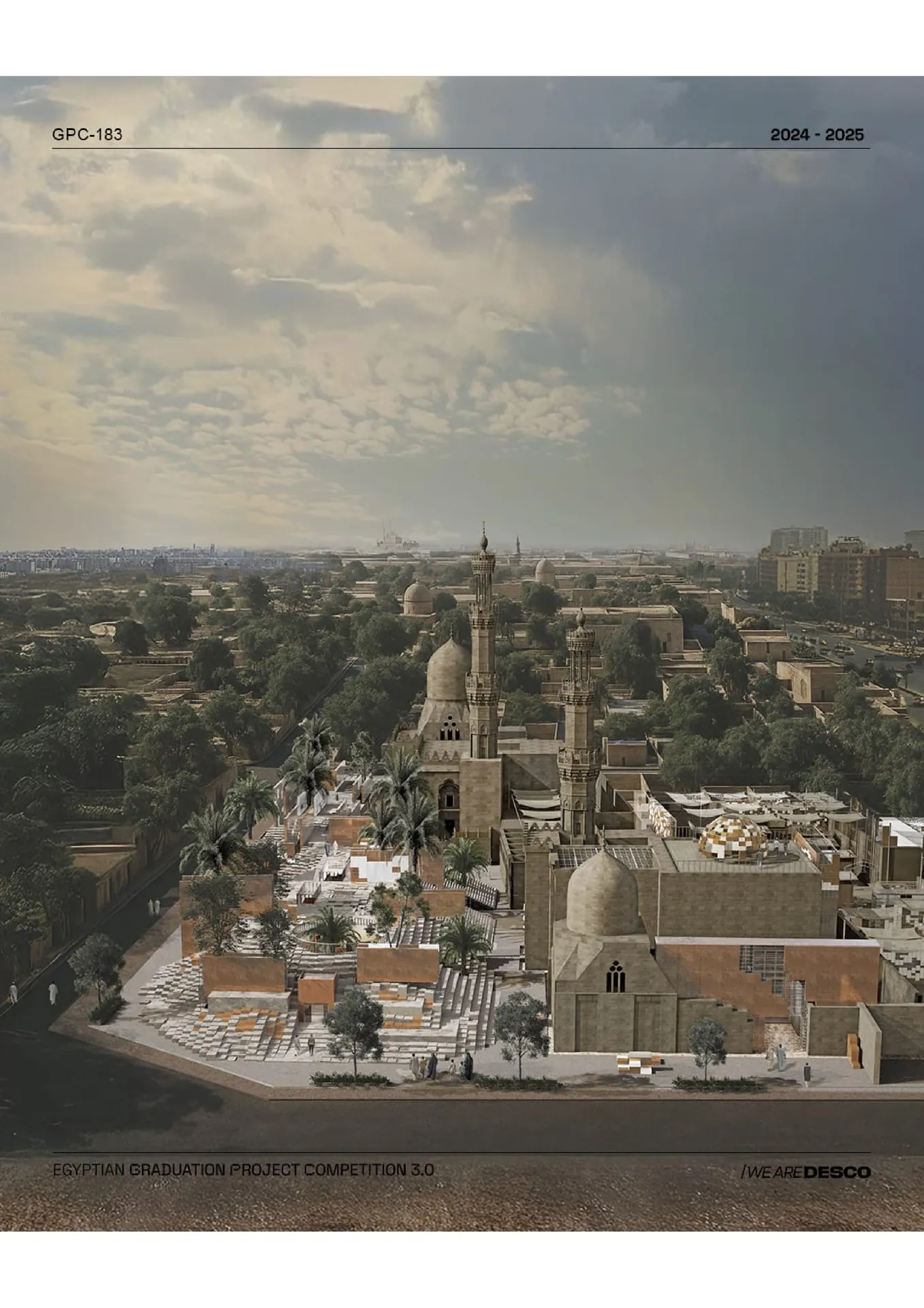
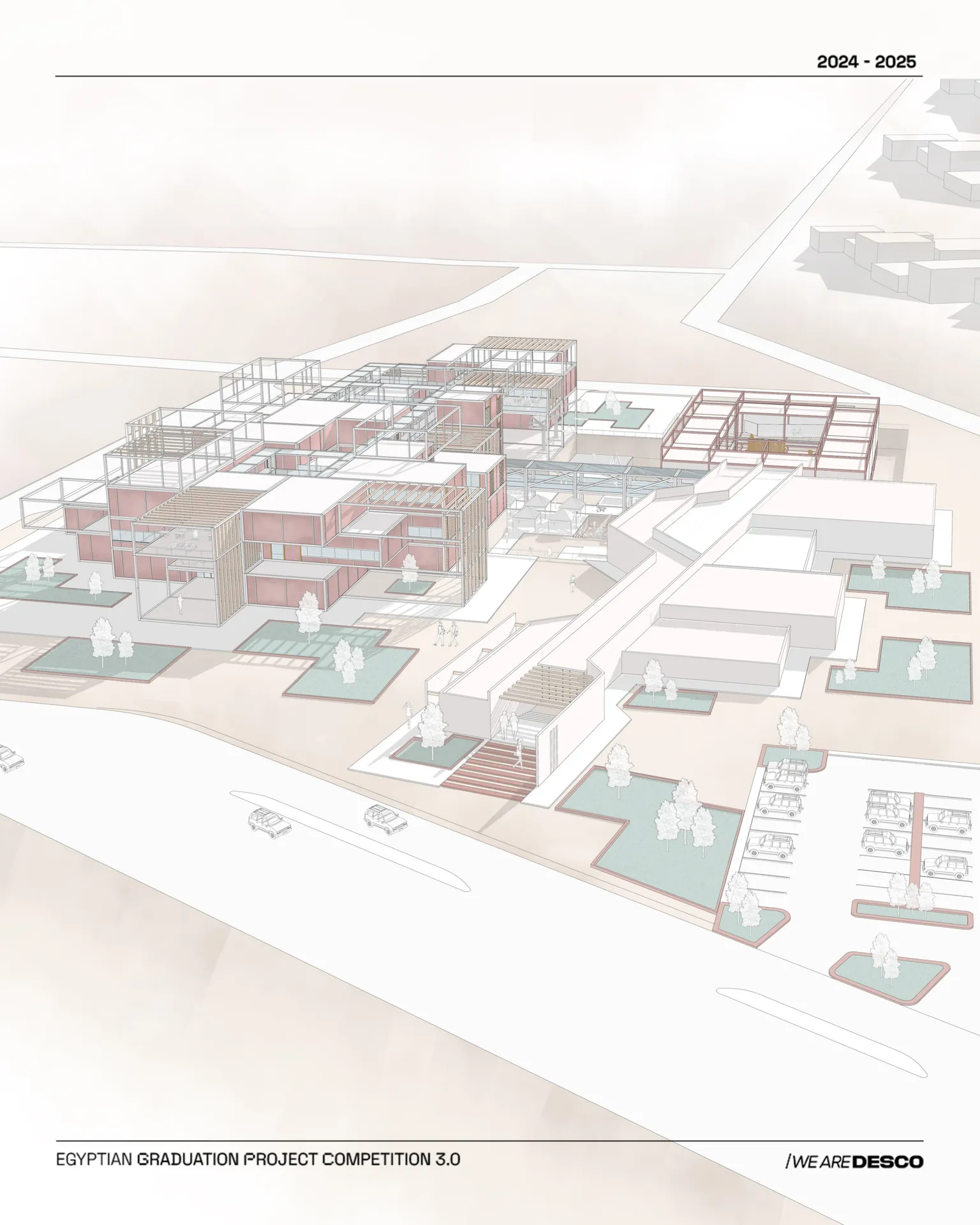
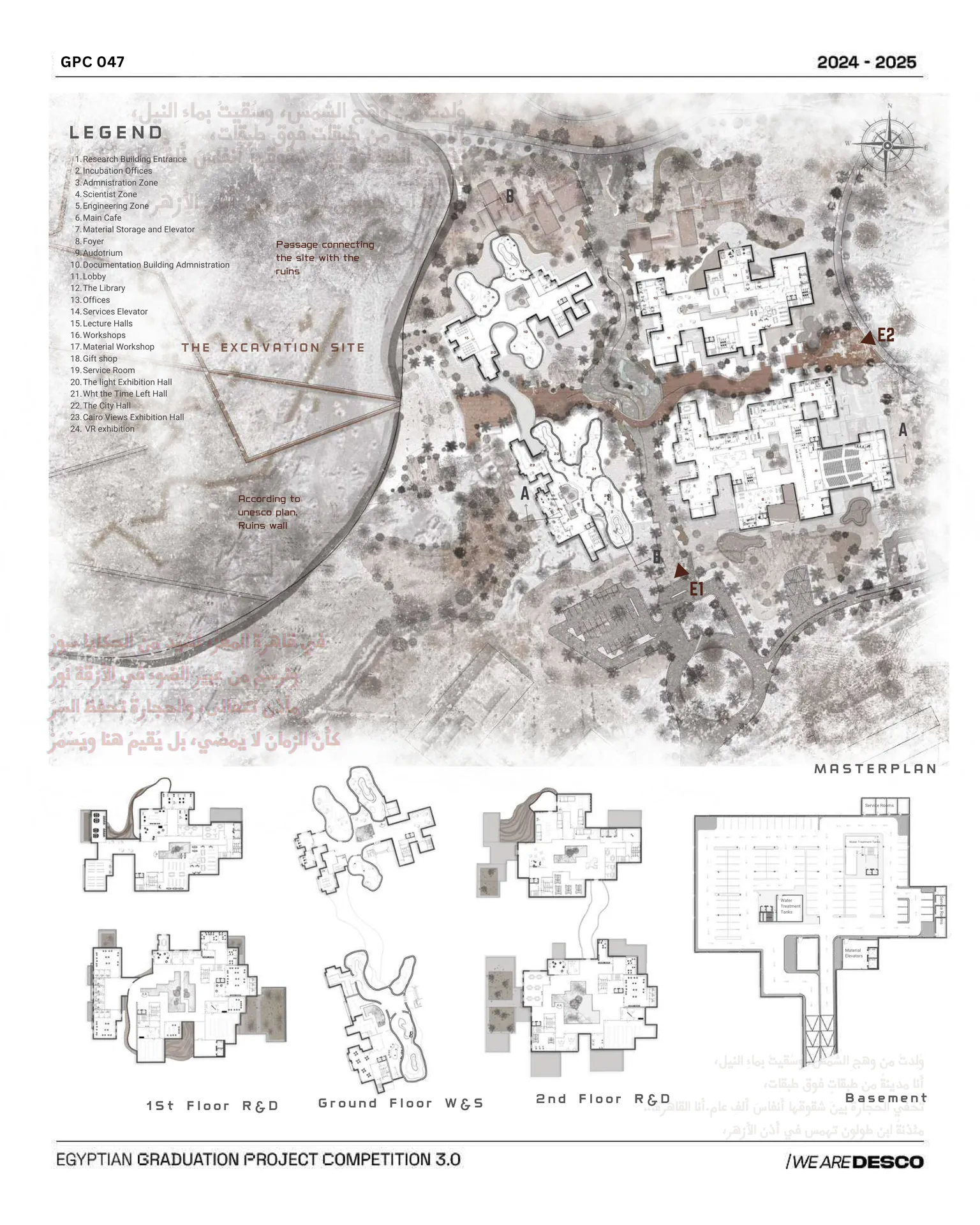
HAJR - حَجَر: what the time left behind
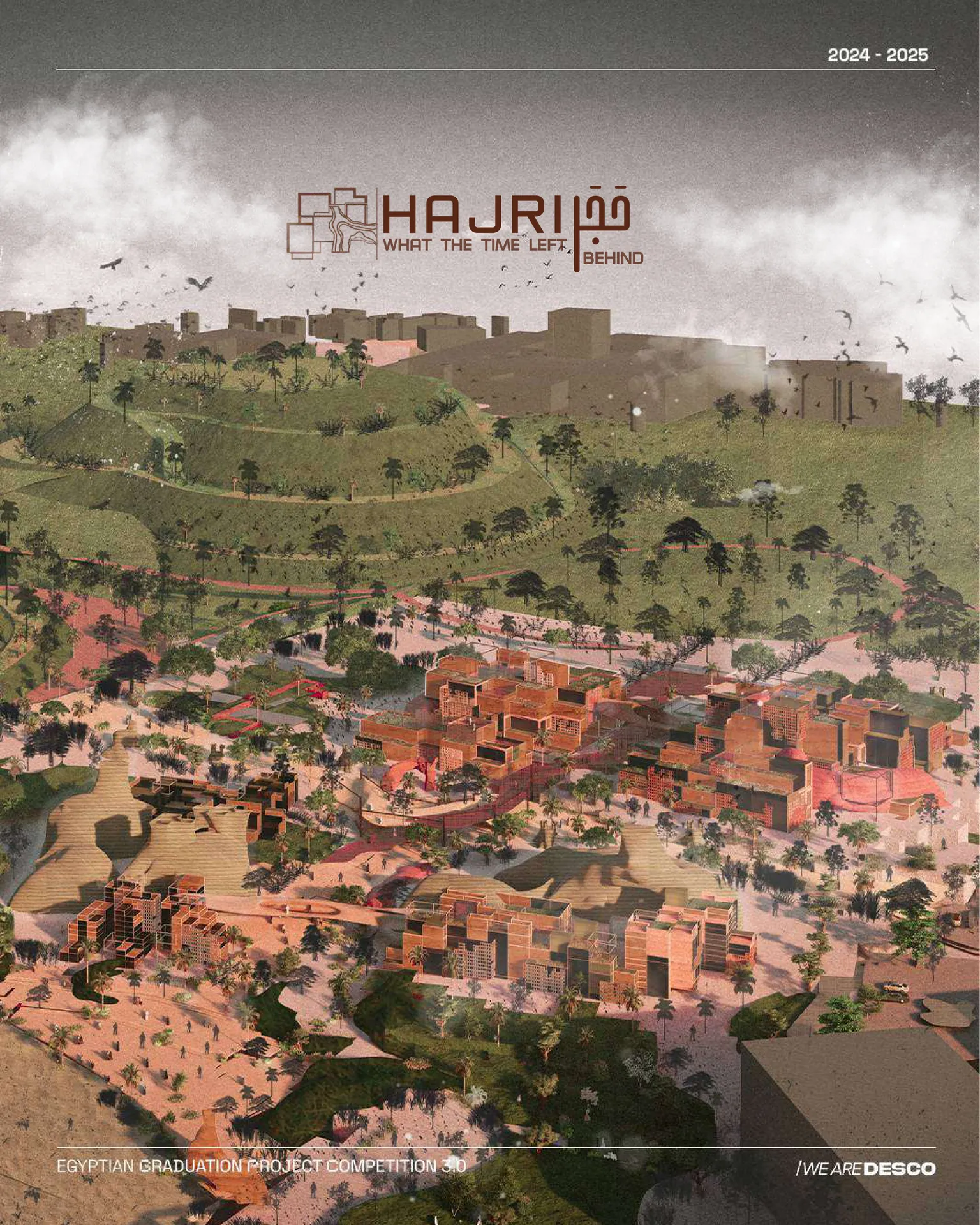
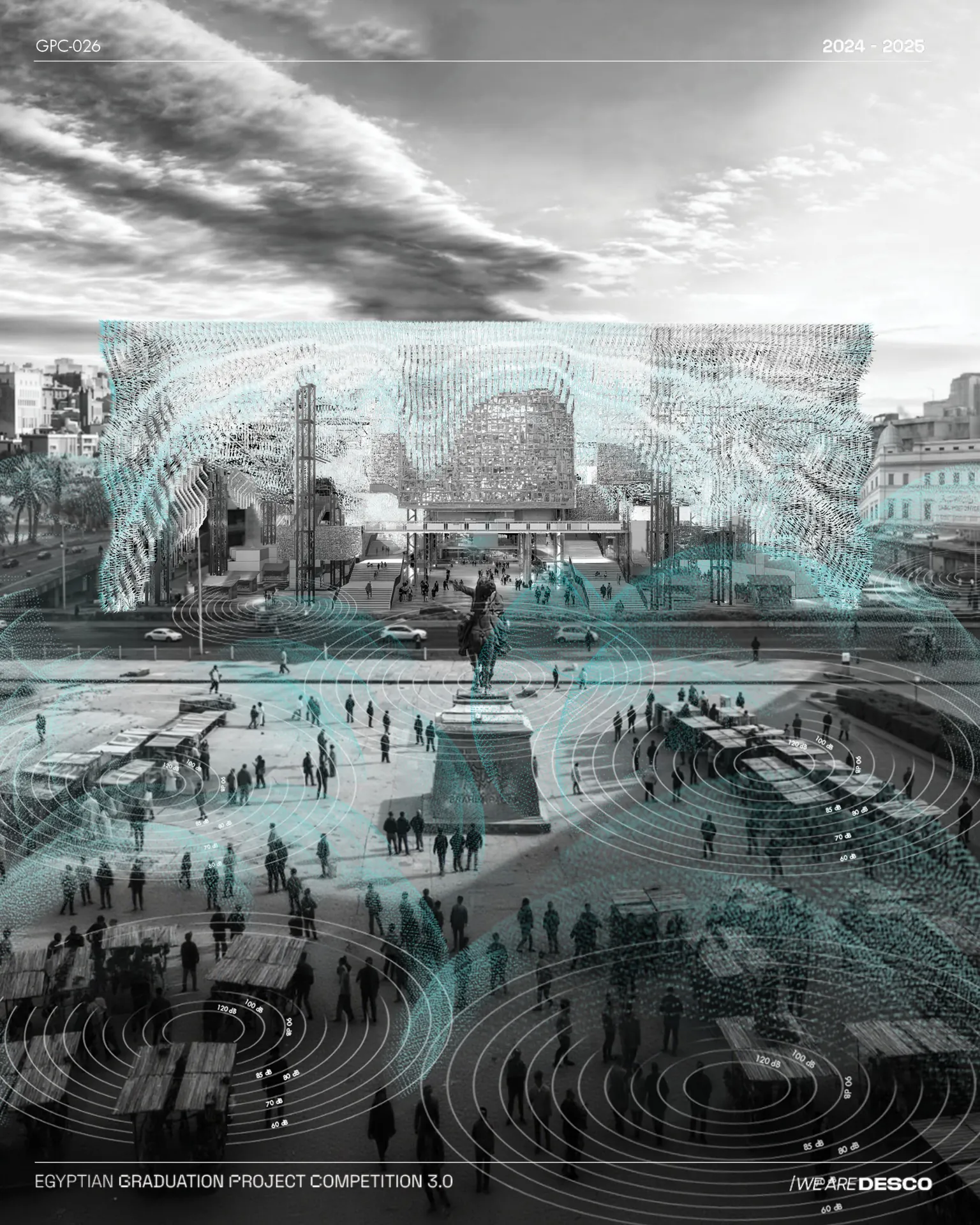
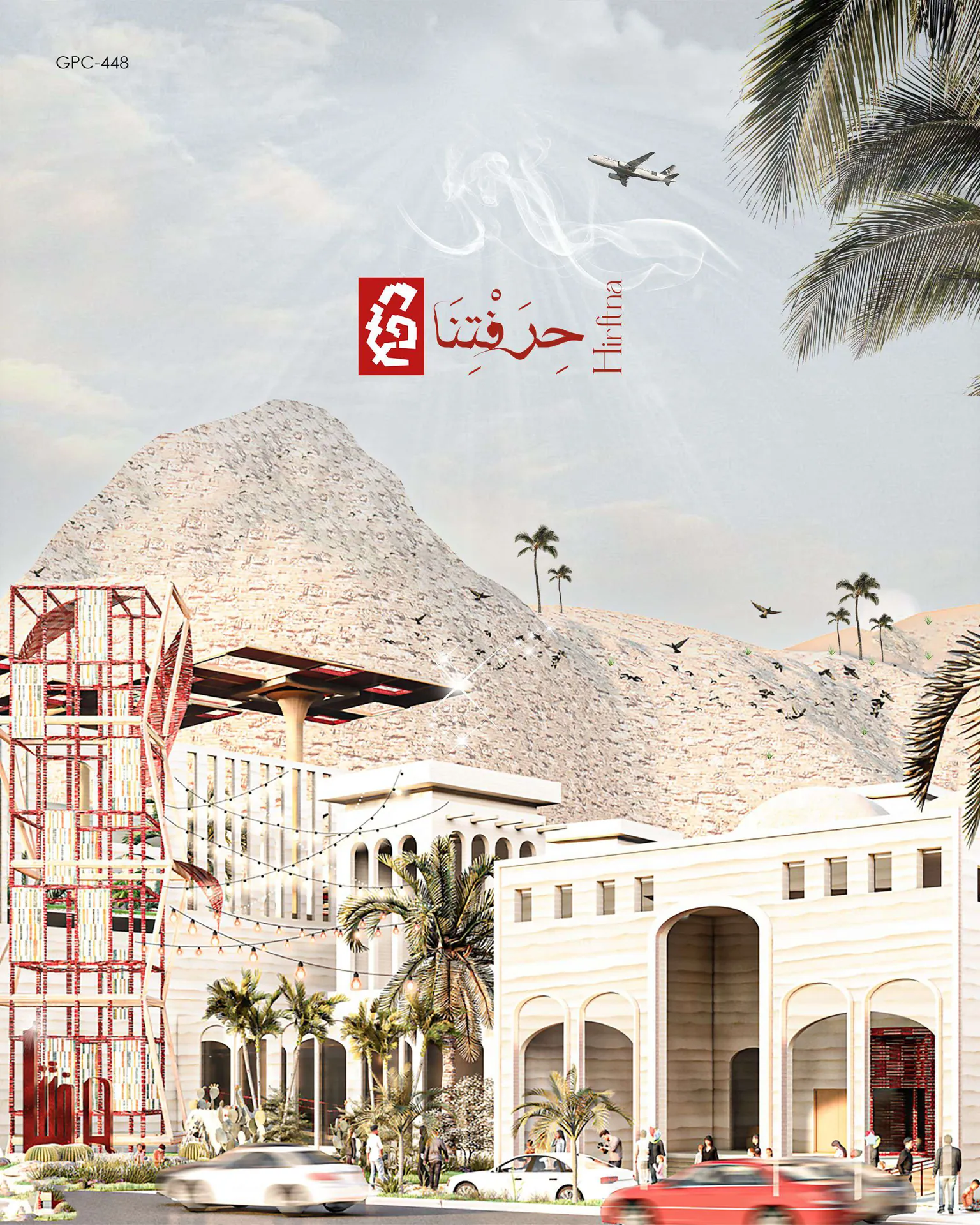
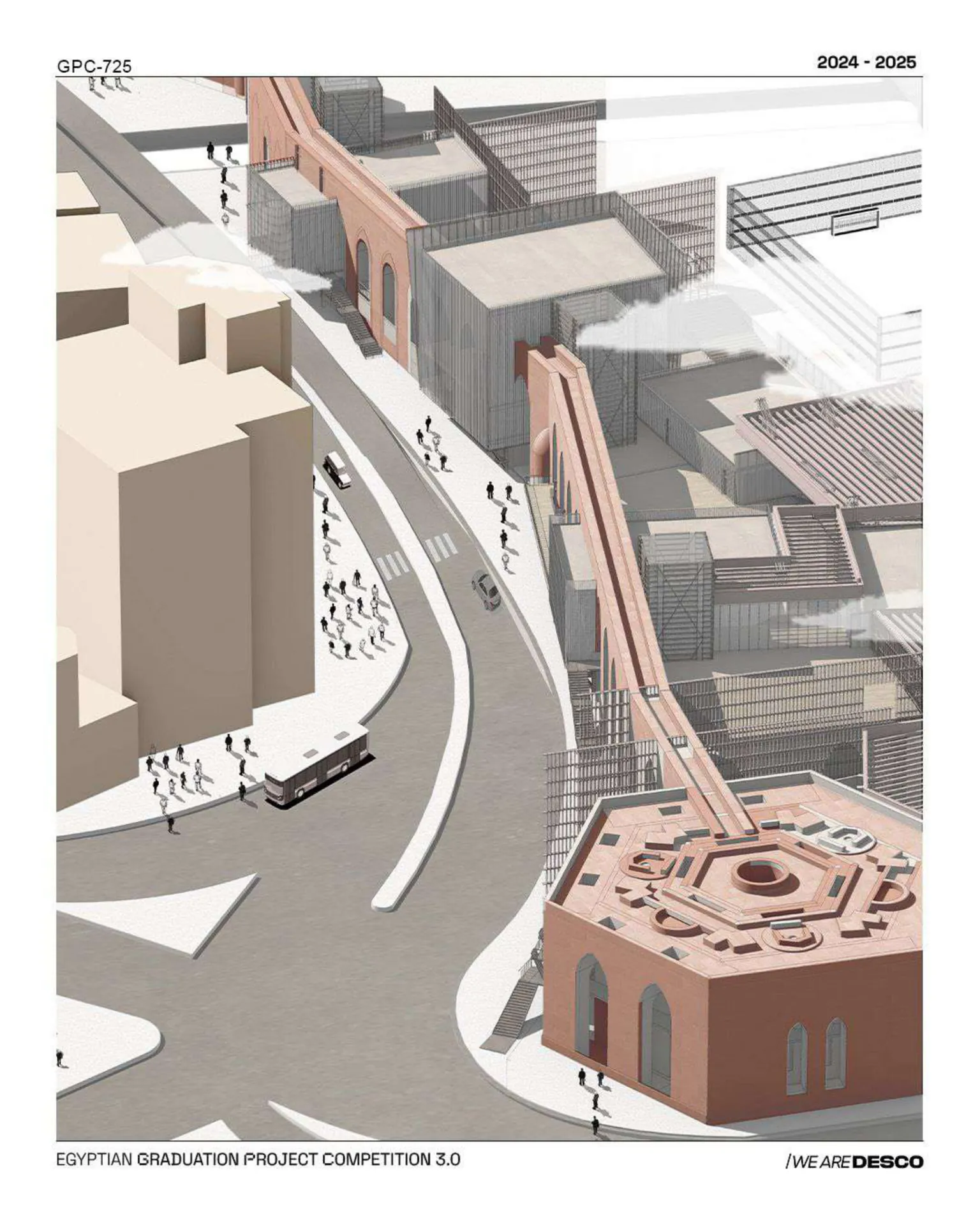
"HAJR — an Arabic word meaning “stone,” “abandonment,” “heritage of the earth,” and at times, “boundary” — forms the spiritual heart of a project rooted in Fustat, Old Cairo, where fragments of history still whisper beneath the dust. The Conservation Architecture Research Centre emerges as a living excavation — a sanctuary for material studies, VR and AR technological oriented heritage documentation, and restoration across the MENA region. From the earth, a pixelated terrain rises — an interplay of steel and 3D clay-printed structures, recalling the ruins scattered across the site. Its bridges and courtyards weave together scholars, craftsmen, scientists, engineers and visitors in a continuous dialogue between decay and renewal. Listening to its context, Hajr breathes through natural ventilation, shaded voids, and foundations that adapt to shifting underground waters. More than a building, it is an act of remembrance — an architecture that remembers, heals, and reawakens the stories TIME ONCE TRIED TO BURY ."
Winners
Fifth Prize Winner
Ingy Shourbagy
Cairo University
Project Brief
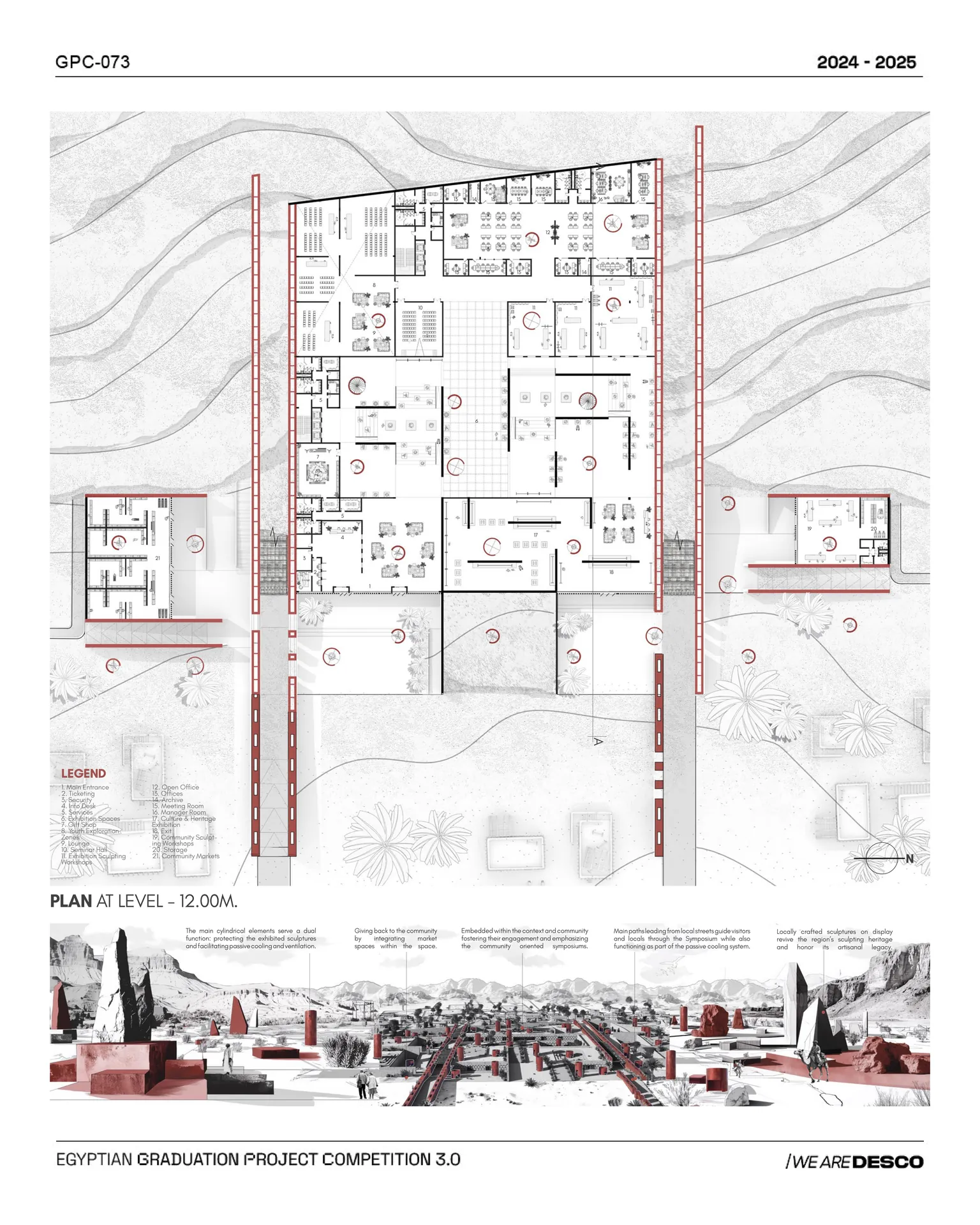
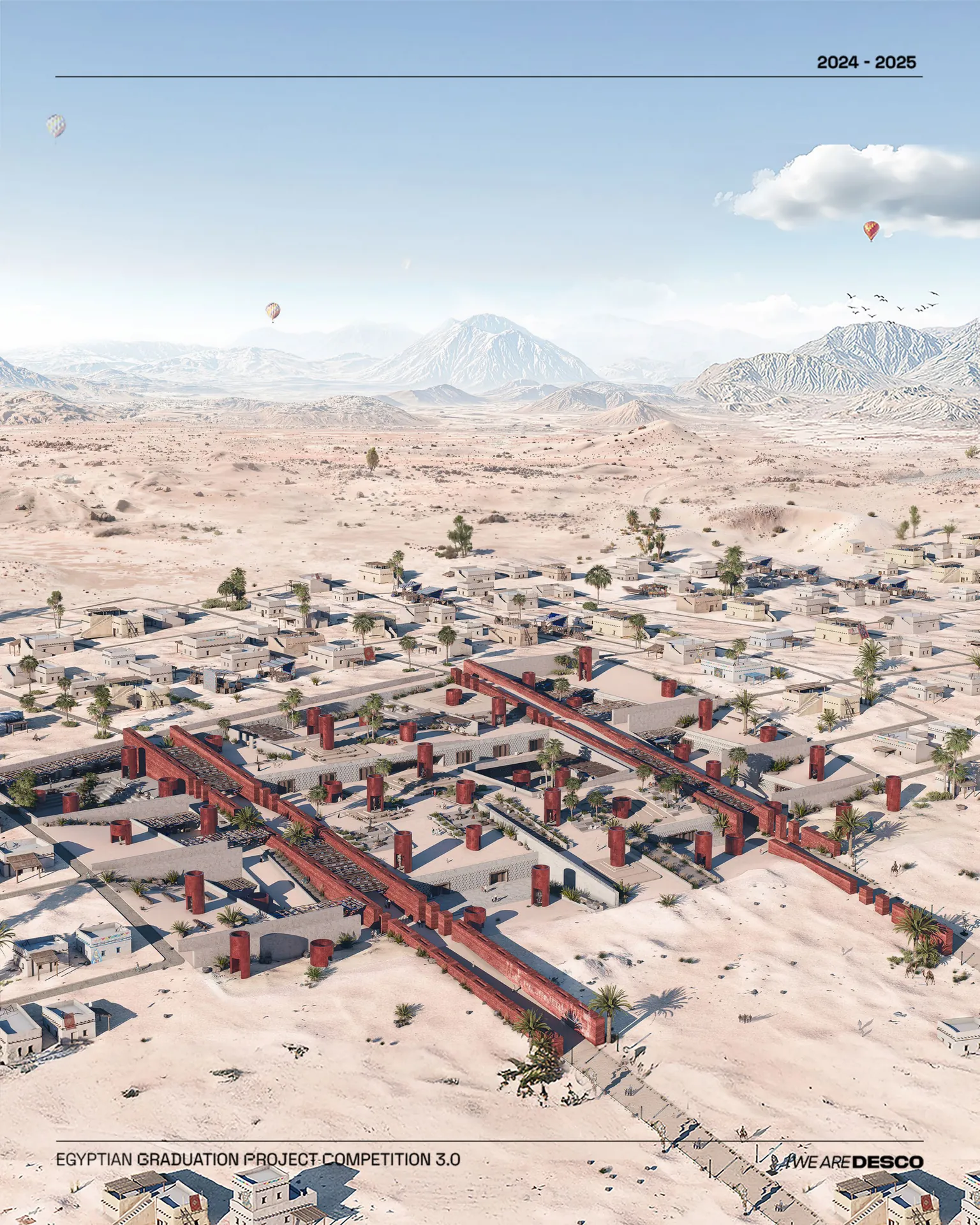
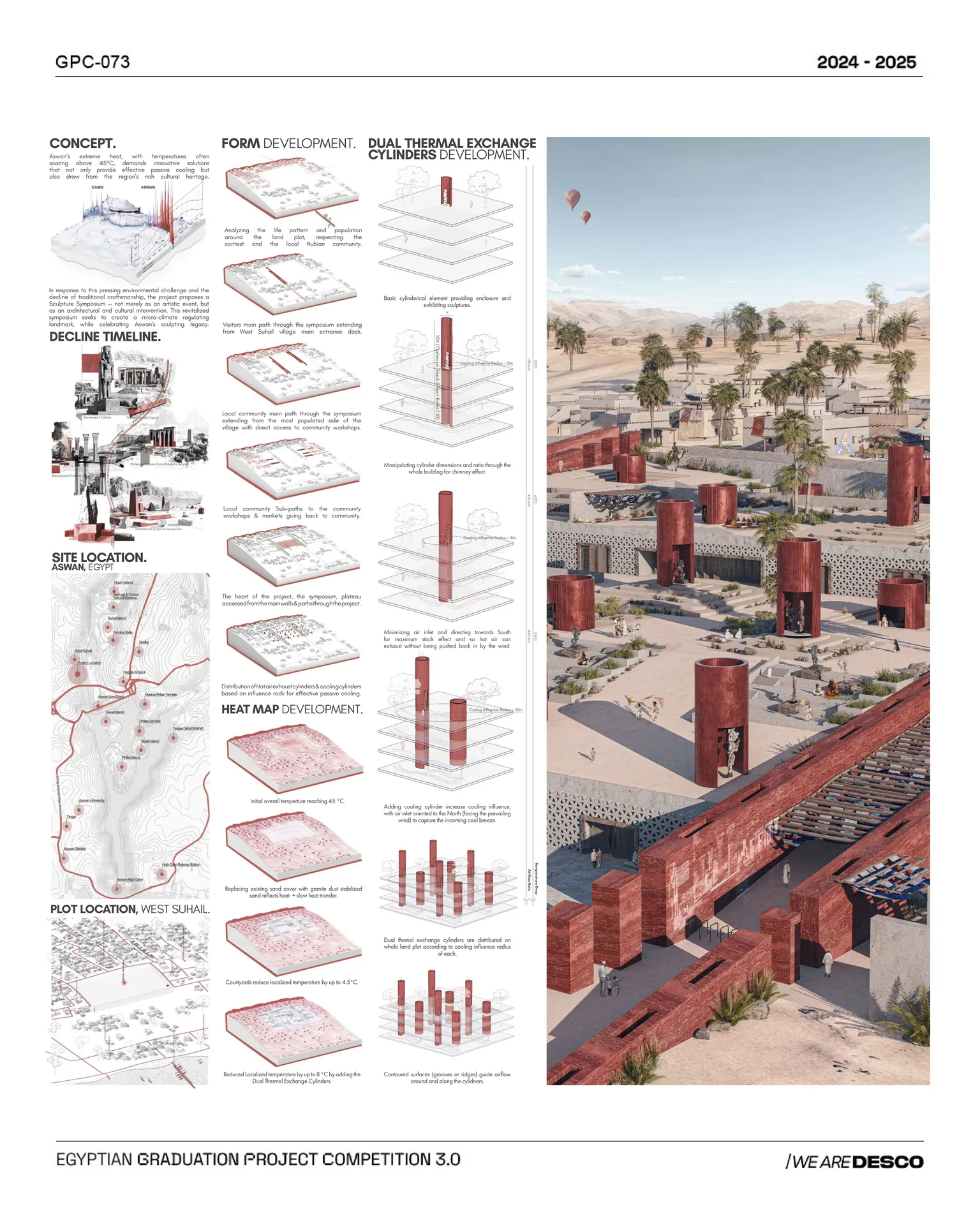
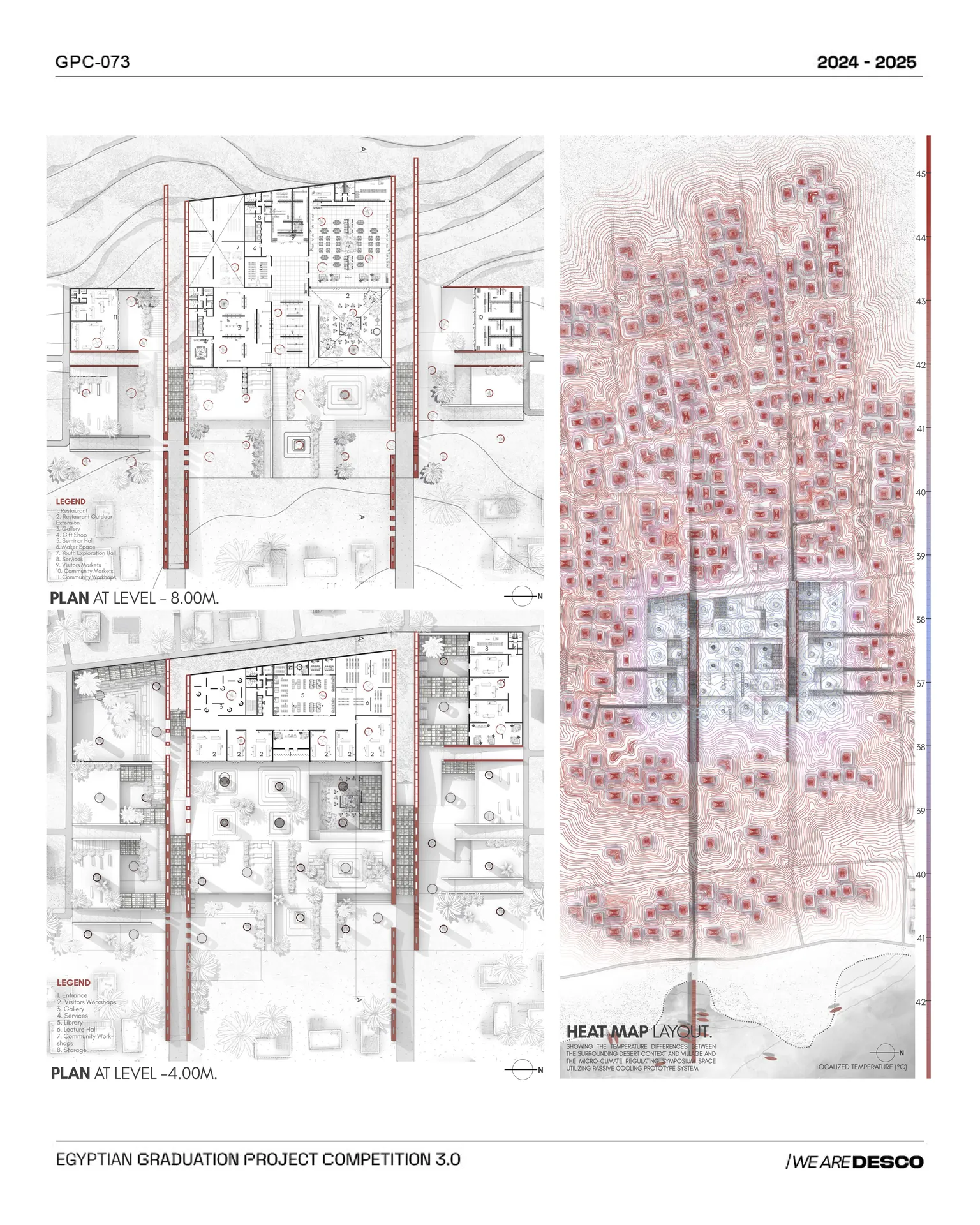
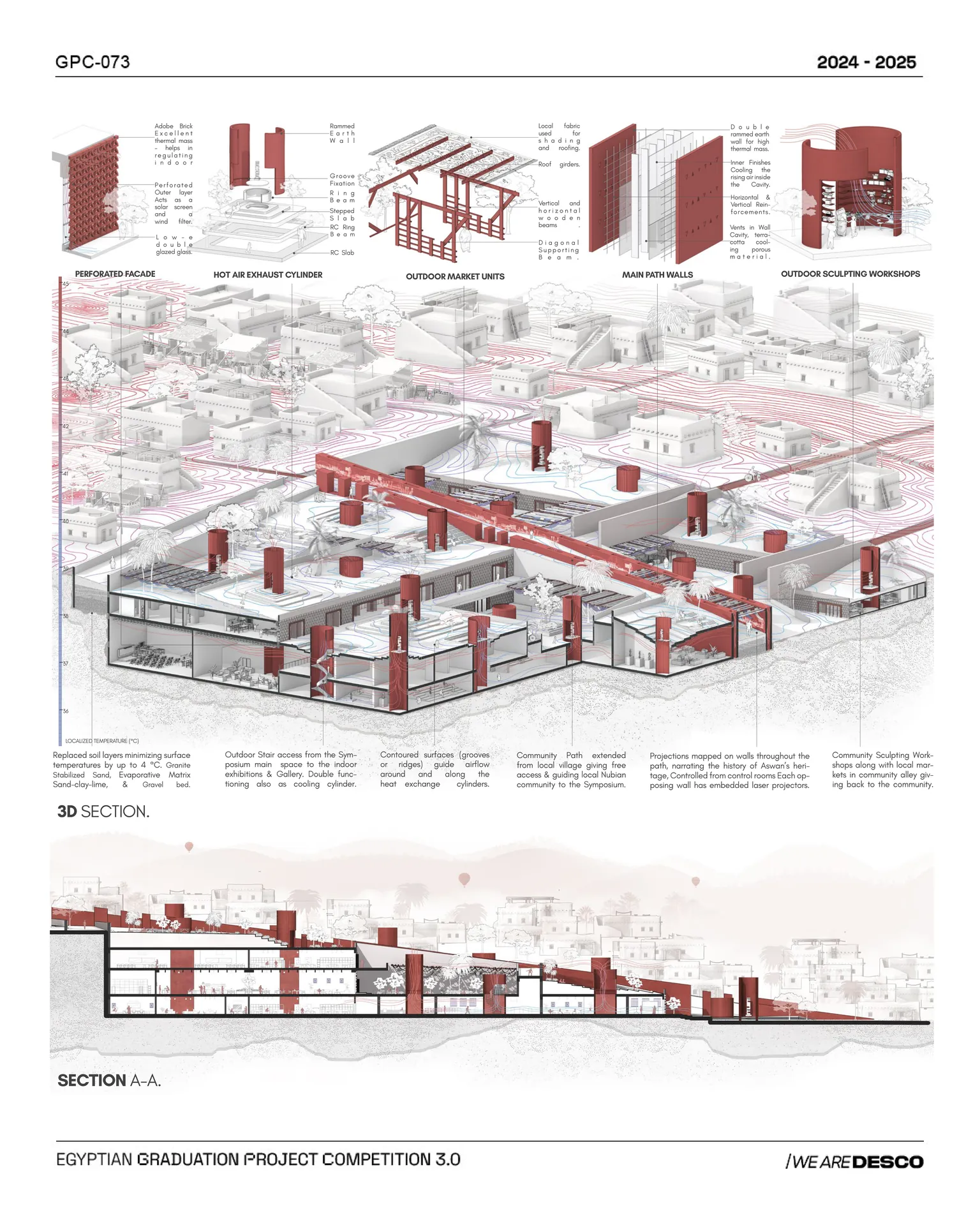
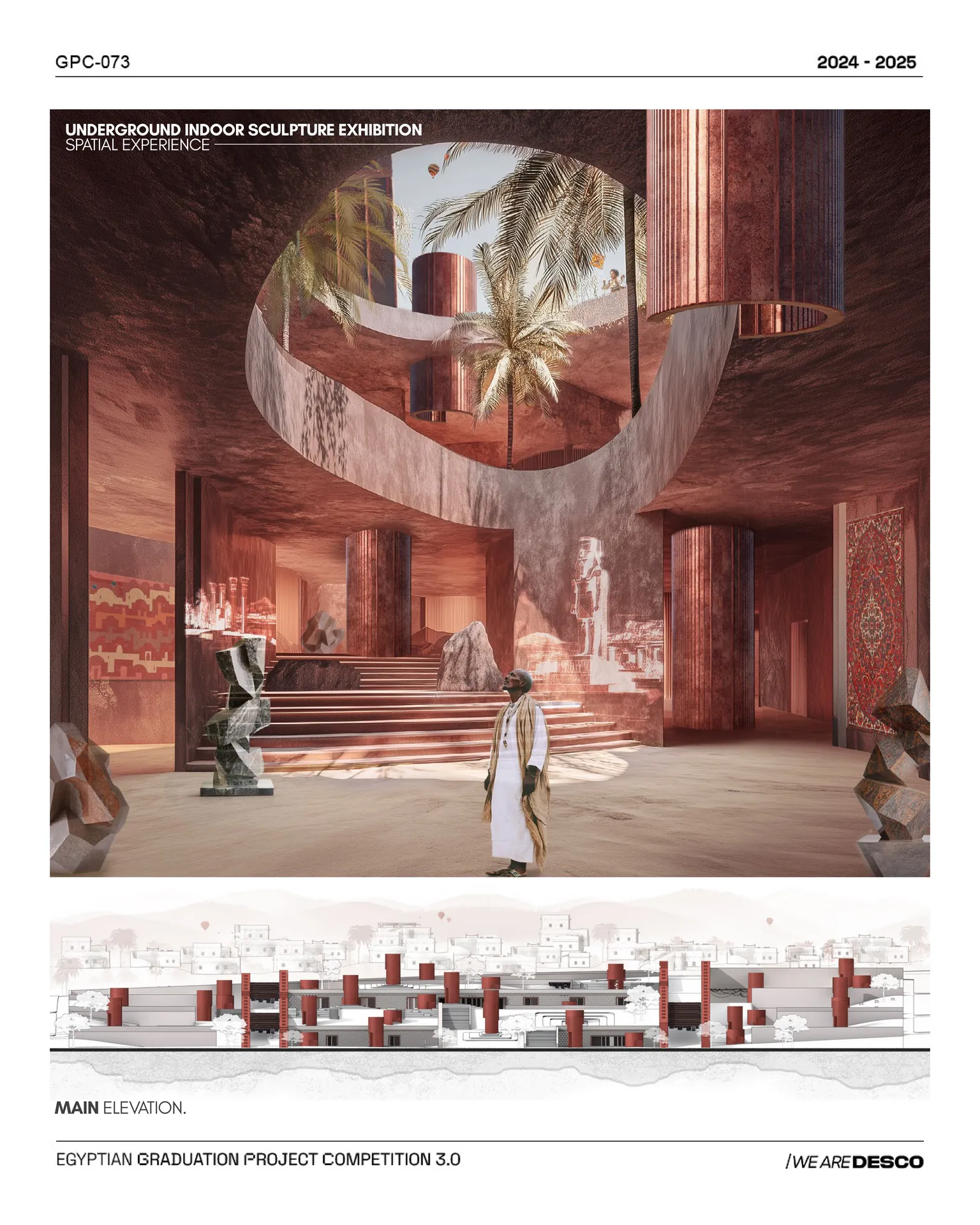
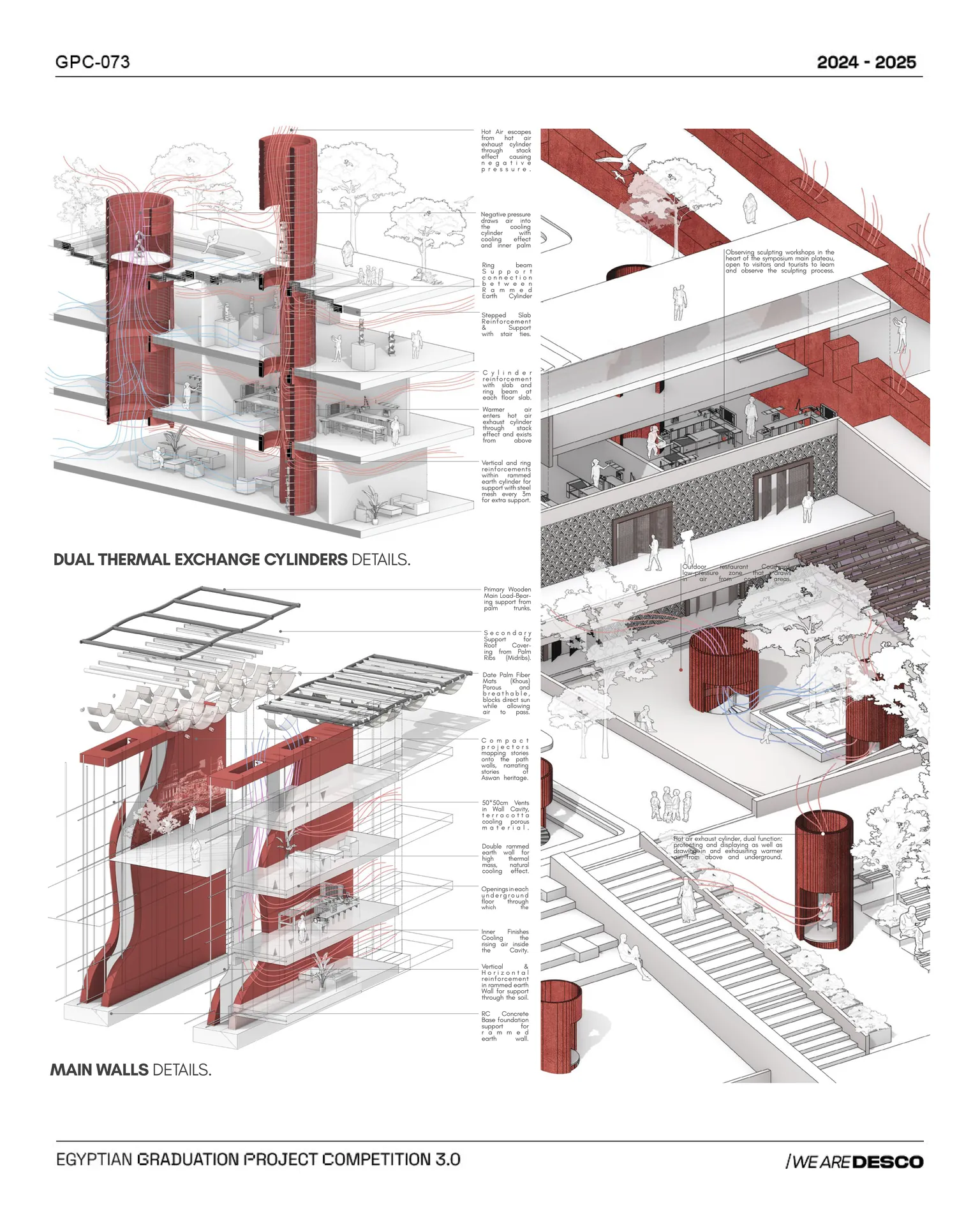
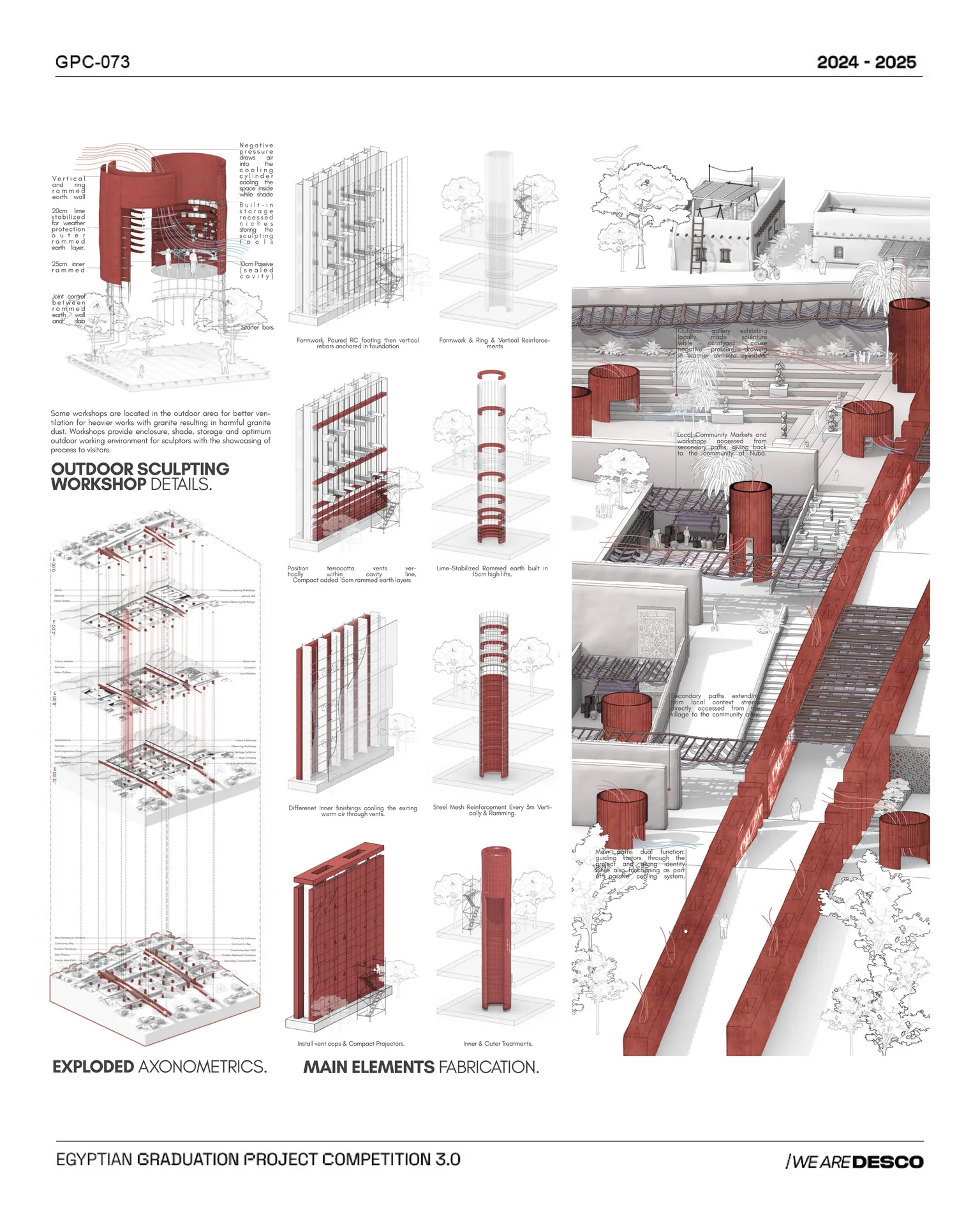
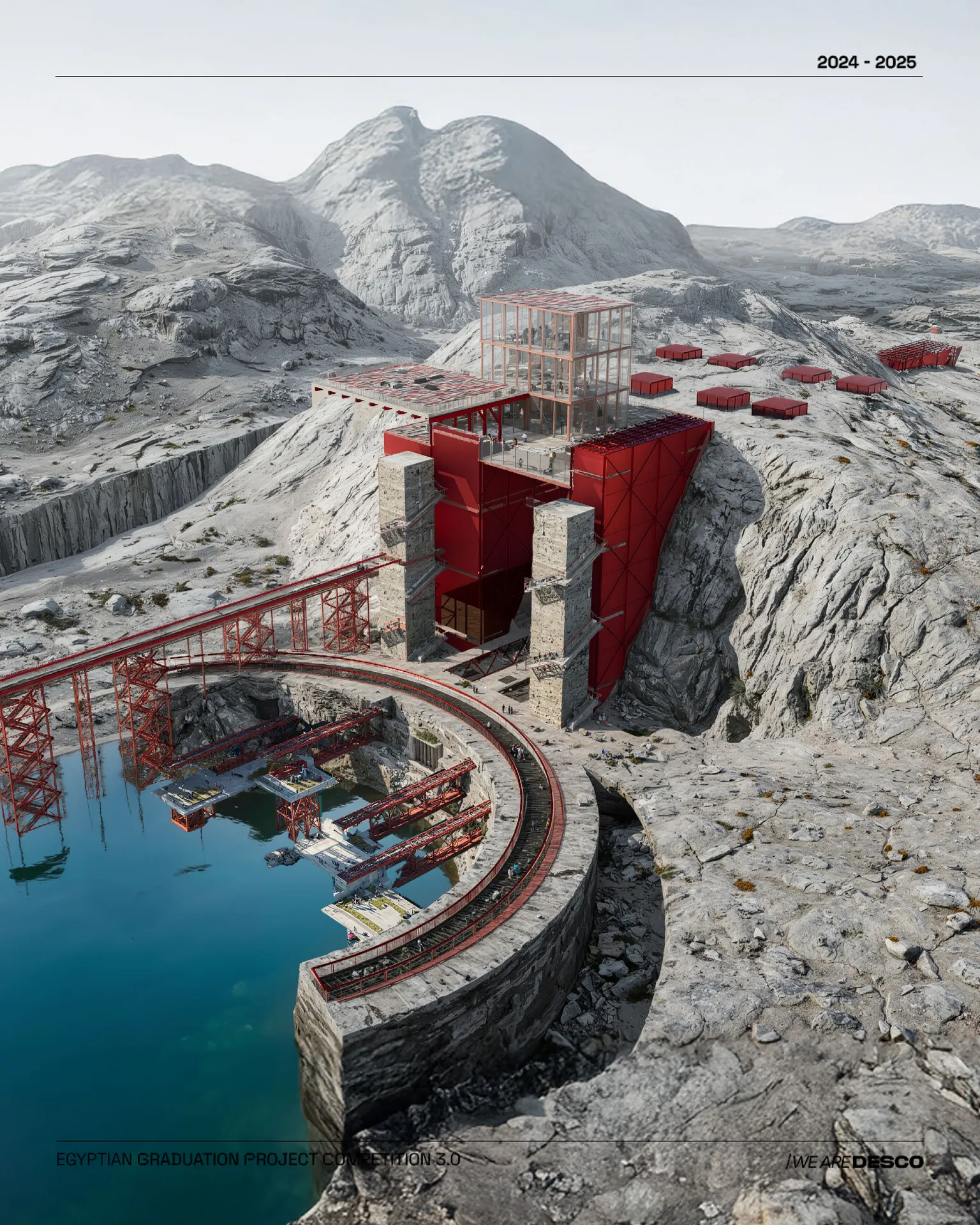
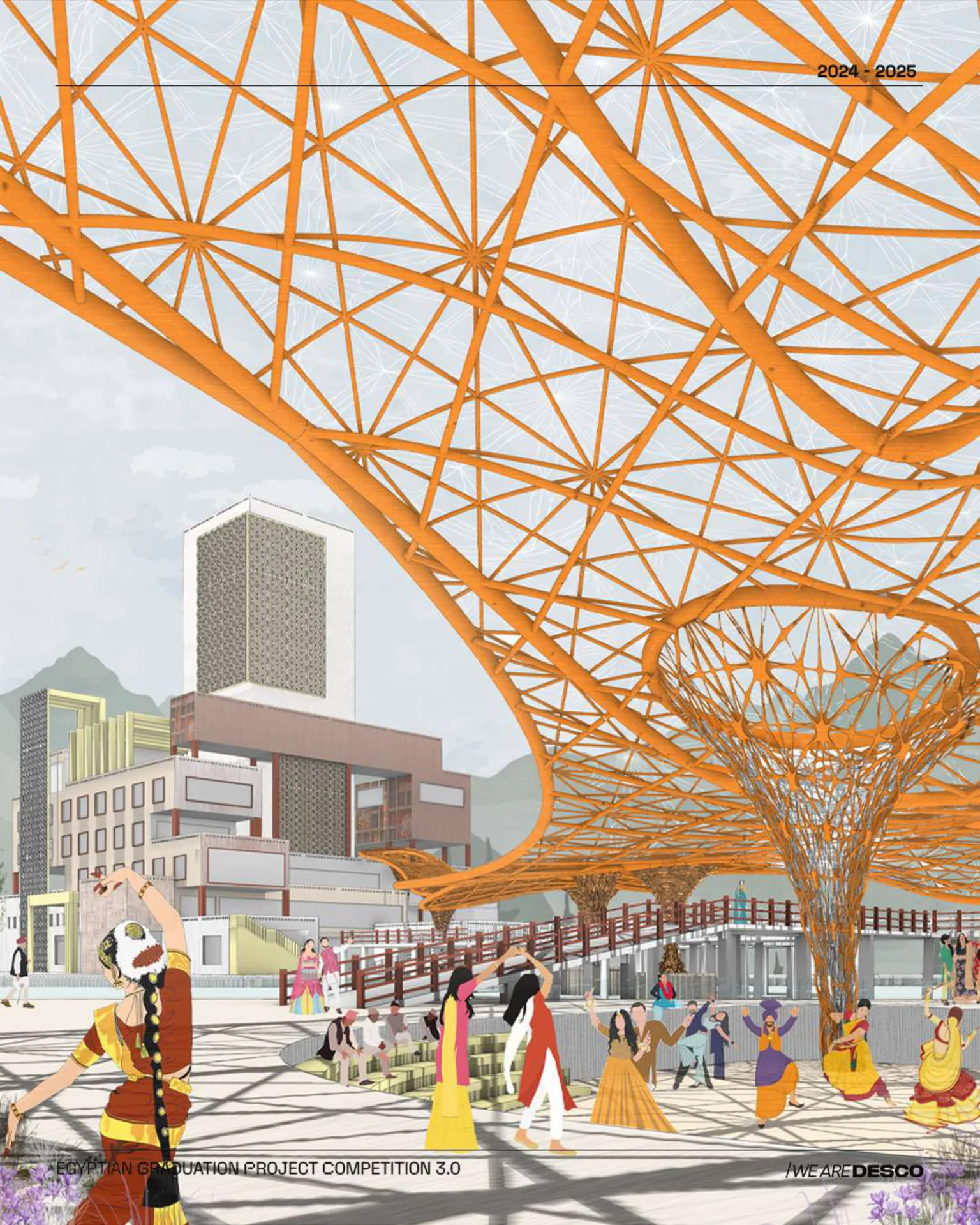
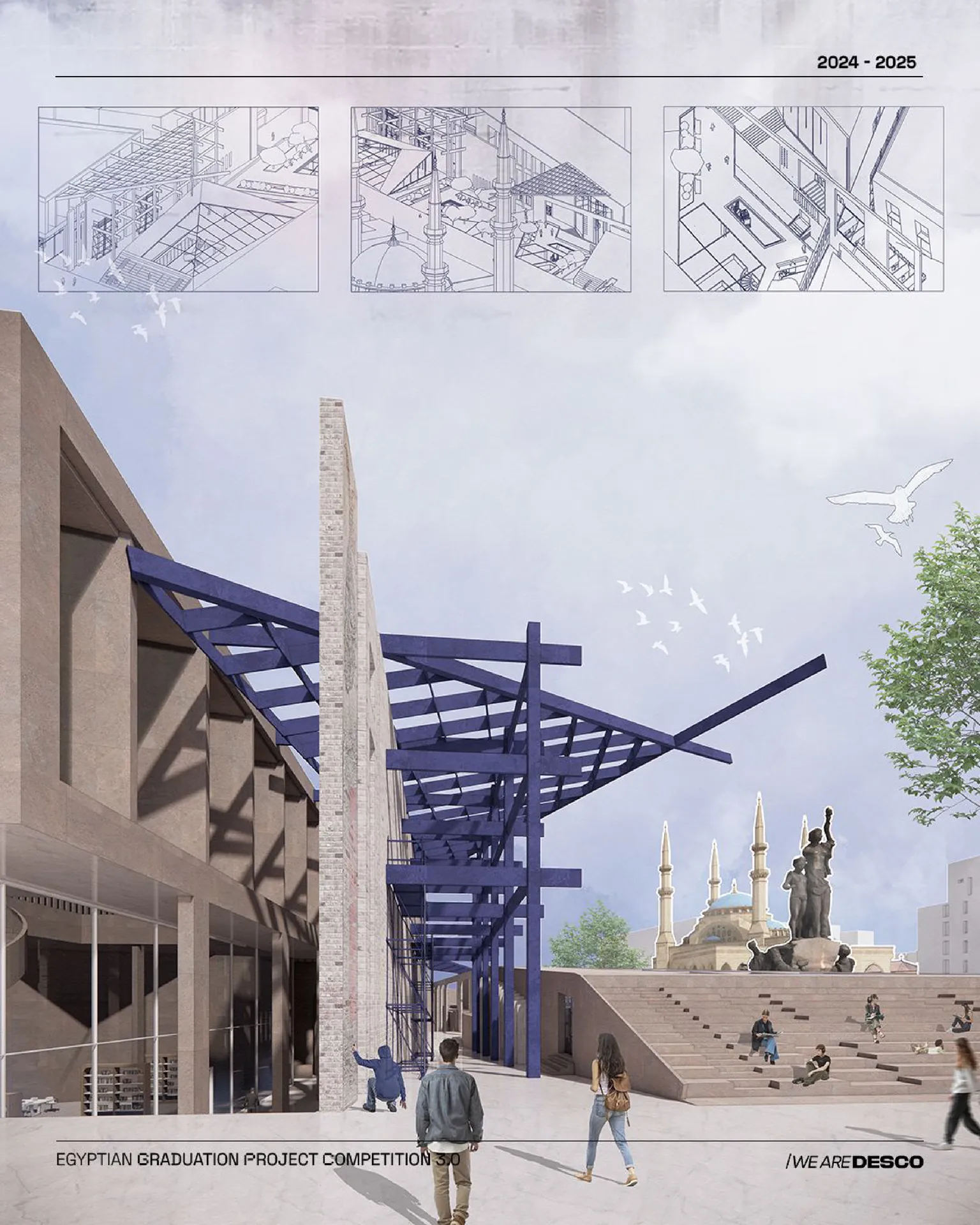
Living Symposium
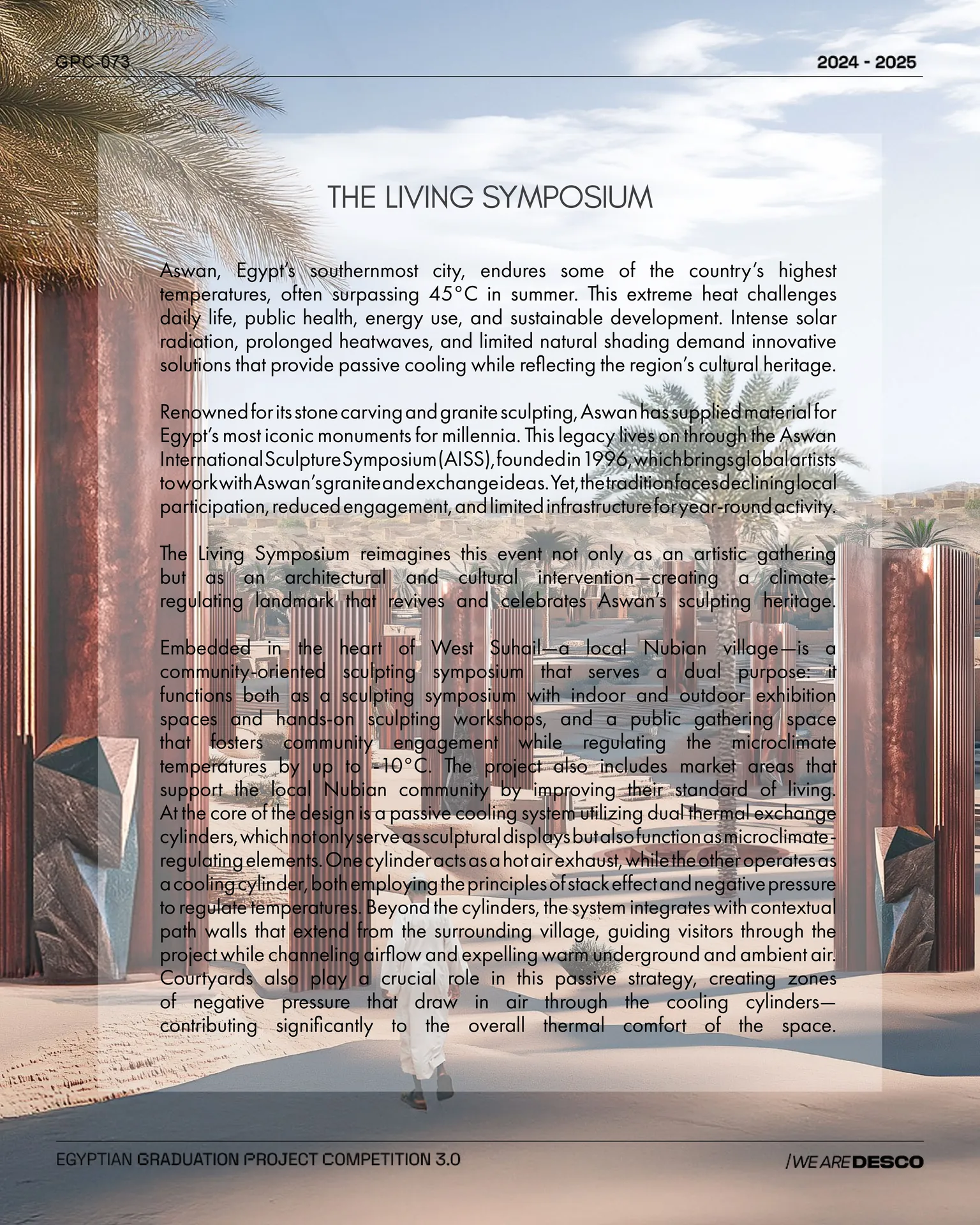
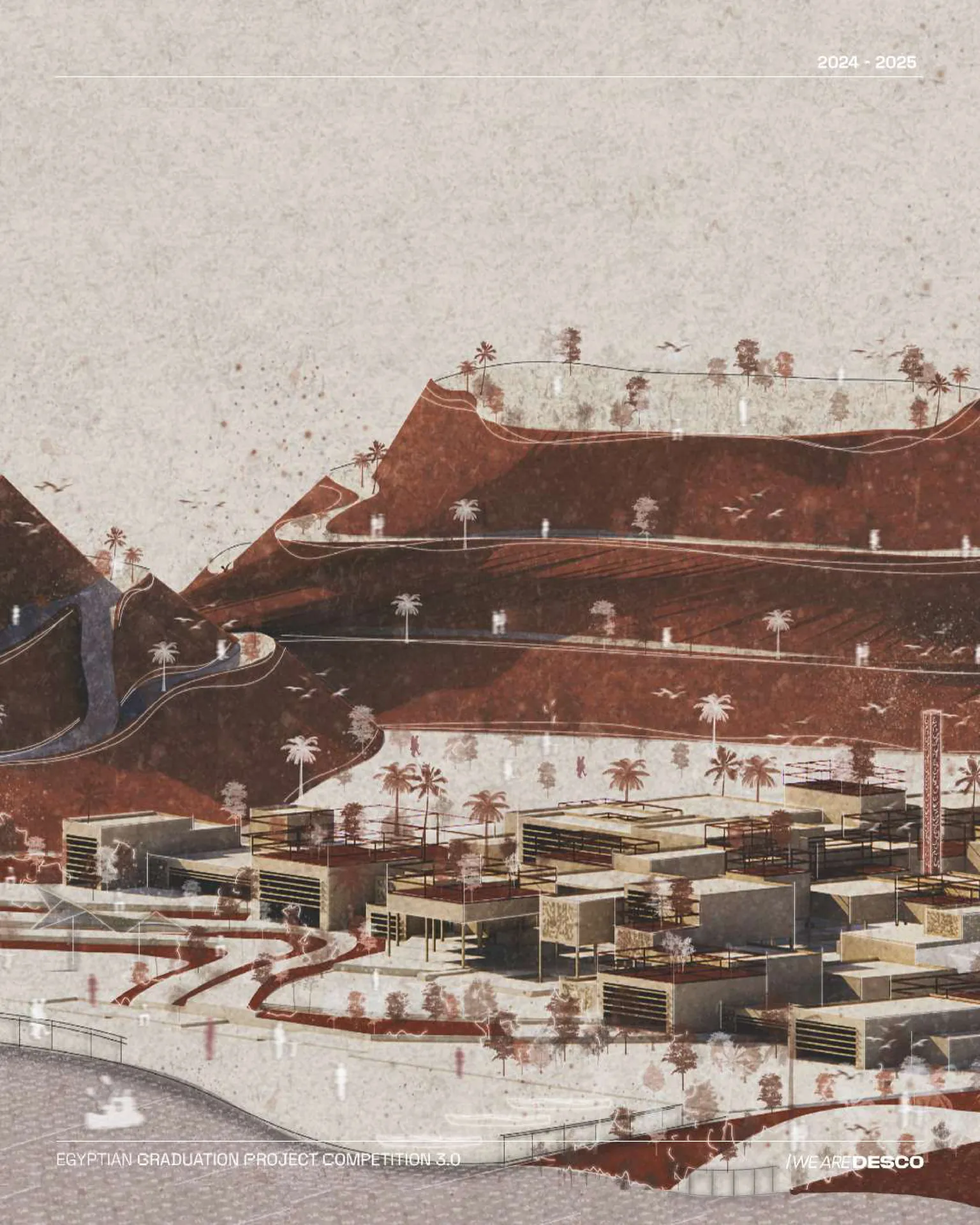
"Aswan, Egypt’s southernmost city, endures some of the country’s highest temperatures, often surpassing 45°C in summer. This extreme heat challenges daily life, public health, energy use, and sustainable development. Intense solar radiation, prolonged heatwaves, and limited natural shading demand innovative solutions that provide passive cooling while reflecting the region’s cultural heritage. Renowned for its stone carving and granite sculpting, Aswan has supplied material for Egypt’s most iconic monuments for millennia. This legacy lives on through the Aswan International Sculpture Symposium (AISS), founded in 1996, which brings global artists to work with Aswan’s granite and exchange ideas. Yet, the tradition faces declining local participation, reduced engagement, and limited infrastructure for year-round activity. The Living Symposium reimagines this event not only as an artistic gathering but as an architectural and cultural intervention—creating a climate-regulating landmark that revives and celebrates Aswan’s sculpting heritage. Embedded in the heart of West Suhail—a local Nubian village—is a community-oriented sculpting symposium that serves a dual purpose: it functions both as a sculpting symposium with indoor and outdoor exhibition spaces and hands-on sculpting workshops, and a public gathering space that fosters community engagement while regulating the microclimate temperatures by up to -10°C. The project also includes market areas that support the local Nubian community by improving their standard of living. At the core of the design is a passive cooling system utilizing dual thermal exchange cylinders, which not only serve as sculptural displays but also function as microclimate-regulating elements. One cylinder acts as a hot air exhaust, while the other operates as a cooling cylinder, both employing the principles of stack effect and negative pressure to regulate temperatures. Beyond the cylinders, the system integrates with contextual path walls that extend from the surrounding village, guiding visitors through the project while channeling airflow and expelling warm underground and ambient air. Courtyards also play a crucial role in this passive strategy, creating zones of negative pressure that draw in air through the cooling cylinders—contributing significantly to the overall thermal comfort of the space."
Awards

Honorable Mentions.

Sara Hussein
Cairo University
Mazen Salama
Cairo University
Mariam Saied
Cairo University
Farah Yasser
AASTMT Smart Village Branch
Clara Ashraf
Cairo University
Awards

Shortlisted Projects.

GPC-591_page_01
Yehia Mohamed
German University in Cairo (GUC)
GPC-650_page_01
Biesan Kandil
AASTMT Smart Village Branch
GPC-164_page_01
Habiba Fahmi
AASTMT Smart Village Branch
GPC-259_page_01
Mirna Nabawy
German University in Cairo (GUC)
Aya Elsheiwi
Aya Elsheiwi
Cairo University
Roqaia Ihab
Roqaia Ihab
AASTMT Smart Village Branch
Khadijah hamed
Khadijah Hamed
Cairo University
Ahmed NourElDin
Ahmed NourElDin
AASTMT Smart Village Branch
Aya Abdel-Samad Khafagy
Cairo University
Pierre Saweris
Pierre Saweris
Cairo University
Awards

Longlisted Projects.

Mariam mostafa
Mariam Mostafa
AASTMT Smart Village Branch
Abdelrahman El-Khashab
Cairo University
Muhammed Mahmoud
Muhammed Mahmoud
Cairo University
Rodaina ElKoreity
Rodaina ElKoreity
Cairo University
Youssef Mattar
Youssef Mattar
AASTMT Smart Village Branch
Noor Hesham
Noor Hesham
Nile University
Paula Yacoub
Paula Yacoub
Cairo University
Ghada Abdulrahim
Ghada Abdulrahim
Cairo University
Alyaa Ehab
Alyaa Ehab
Cairo University
Omar El Mazny
Omar El Mazny
Cairo University
Mostafa Zaky
Mostafa Zaky
Cairo University
Nourhan Yasser
Nourhan Yasser
AASTMT Smart Village Branch
Abdulrahman Hussien Kamel
Cairo University
GPC-192_page_04
Heba Essa
Cairo University
Ahmed Sameh
Ahmed Sameh
Helwan university
Abdulrahman Hussien Kamel
Ahmed Gamal Abd El_Nasser
Mansoura University
Mariam Khadrawi
Mariam Khadrawi
AASTMT Smart Village Branch
Mohamed Magdy
Mohamed Magdy
Helwan University
Maria Awad
Maria Awad
Cairo University
Mohamed Saad
Mohamed Saad
October University for Modern Sciences and Arts (MSA)
Marwan Magdy
Marwan Magdy
Misr Higher Institute For Engineering And Technology
Youssef HEMEDA
Youssef Hemeda
Ainshams University
Asmaa Ahmed Zaky
Asmaa Ahmed Zaky
Alexandria University
Marwan Rayan
Marwan Rayan
AASTMT Smart Village Branch
Nour Fekry
Nour Fekry
Cairo University
Nour Hossam
Nour Hossam
AASTMT Smart Village Branch
Basant Al naggar
Basant Al naggar
Cairo university
Jana Hesham
Jana Hesham
AASTMT Smart Village Branch
Menna Helmy
Menna Helmy
Ainshams University
Sarah Sharaf Eldin
Sarah Sharaf Eldin
AASTMT Smart Village Branch

THE TOP 50

GRADUATION PROJECTS WERE EXHIBITED DURING CAIRO DESIGN WEEK